
Rise of the Super-Sub: Mastering Supply Chain & Logistics for Offsite Construction


Last Updated Feb 5, 2026
Tom Park
Vice President, National Strategic Supply Chain
Tom Park is Vice President of National Strategic Supply Chain at Skanska. He has more than 20 years of experience leading global teams and managing complex supply chain relationships for high-tech and life sciences projects. He specializes in strategic sourcing, supplier quality and contract negotiations to ensure efficient procurement of key materials and services. Park drives operational excellence, implements supplier relationship programs and uses next-generation technology to optimize delivery and cost performance across large-scale biopharmaceutical and manufacturing facilities.
Kacie Goff
Contributing Writer
99 articles
Kacie Goff is a construction writer who grew up in a construction family — her dad owned a concrete company. Over the last decade, she’s blended that experience with her writing expertise to create content for the Construction Progress Coalition, Newsweek, CNET, and others. She founded and runs her own agency, Jot Content, from her home in Ventura, California.
Modern construction projects come with ever-increasing demands. Owners want to see more complex builds completed on tighter schedules. At the same time, general contractors (GCs) face challenges like the ongoing labor shortage and supply chain disruptions.
Enter: prefabrication and modular construction. Moving assembly offsite can improve safety and productivity, helping GCs drive projects forward with less risk. That said, extending the jobsite to the factory comes with its fair share of difficulties, too. From designing to the required level of detail to facilitating last-mile delivery of large components, this approach comes with its own unique demands.
In short, the promise of prefab and modular is huge, but the logistical challenge is even bigger. GCs who want to leverage offsite assembly need to understand the benefits and drawbacks. Then, they can find the right prefab/modular partners to help optimize outcomes.
Table of contents
What Prefabrication Can — and Can’t — Deliver to GCs
Some GCs operate under the impression that prefabrication or modular construction will help them lower costs. It won’t. In fact, it can be more expensive. For starters, offsite assembly requires a higher level of detail in design and coordination. Plus, GCs often face scope overlap between what’s happening in the factory and in the field.
There’s also a widespread assumption that prefabrication helps to accelerate project delivery. Even that may not necessarily be the case, though.
One of the big learnings is that prefabrication is generally not necessarily lower-cost. There are likely schedule benefits, as long as that scope is directly tied to the critical path of a project.
Tom Park
Vice President, National Strategic Supply Chain
Skanska
All of this said, when done well, prefabricated and modular construction can consistently help GCs in one key area: labor.
For starters, offsite assembly means the work can happen virtually anywhere, so it isn't tied to a singular jobsite. That expands the available labor pool.
Beyond that, prefab allows teams to tap assemblers rather than tradespeople. With a high level of detail completed in the design phase, creating the component requires less expertise.
On top of that, shifting assembly from the jobsite to a controlled setting increases:
- Ergonomics for the workers (e.g., racks can be built on the floor instead of at heights)
- Safety (by eliminating the hazards inherent on an active jobsite and giving workers clearer access to the necessary equipment)
- Efficiency and productivity, thanks to the dedicated work space geared toward the assembly of one specific component
- Quality, because all of the above benefits set workers up to focus on the assembly, minimizing risks and distractions
Reduction of field labor is one of the main drivers of prefabrication. Due to labor shortages in the trades now, especially around electrical and mechanical. We also see additional benefits around ergonomics, safety and improved quality.
With prefab, we don’t have to bring field labor to the site, which might be more complicated. Offsite prefabrication allows more efficient use of mechanical and electrical trade labor, which could be done in higher-capacity labor markets.
Tom Park
Vice President, National Strategic Supply Chain
Skanska
Stay updated on what’s happening in construction.
Subscribe to Blueprint, Procore’s free construction newsletter, to get content from industry experts delivered straight to your inbox.

Logistical Considerations for GCs in Each Phase of Prefabricated and Modular Construction
To reap the benefits of offsite assembly while minimizing risks, GCs need to find ways to optimize the logistics of prefab and modular construction.
Each phase of the project comes with its own unique considerations.
Design
All stakeholders, including the design team and the GC, need to know that the project will use prefabrication from the outset. For prefabricated elements to fit and function once delivered to the jobsite, design teams need to plan them to a specific level of detail (LOD). Generally, for prefabrication, accuracy needs to be within less than an inch.
Here, building information modeling (BIM) can be helpful, especially when the GC configures the BIM tool for prefab. Some modeling platforms allow GCs to pull in elements with all of the manufacturer’s specifications pre-loaded, for example. This ready-made precision helps achieve the required level of detail. Generally, when the model reaches LOD 400 or greater, it can be reliably used to create prefabricated elements.
The precise fit required for on-site installation isn’t the only reason prefab requires extra diligence during the design phase. Prefabrication facilities often use assemblers as laborers rather than tradespeople. Those folks don’t have the field experience to make the right decisions when directions aren’t explicit. A granular level of detail gives them the guidance needed to ensure proper assembly.
If a highly detailed design isn’t delivered by the architect or engineer the owner hired, the GC may need to hire its own architect and/or engineer to design to the required LOD.
Assembly
The GC can decide to self-perform the prefabrication or subcontract it out.
Self-Performance
Self-performance introduces its own logistical details. Namely, the GC needs to find a physical space that meets its needs (e.g., electrical requirements, loading dock size).
Then, they need to fit out the space for the prefabrication work.
Finally, they have to hire laborers for the assembly, plus people to supervise that work.
Subcontracting
If the GC subcontracts the prefabrication out, one of the biggest challenges arises around scope. With prefab in play, scope might be double-counted between the jobsite and the factory.
Say, for example, that the project requires 400 bathroom pods that will cost $4 million all-in. The GC finds a subcontractor to handle the pods, then invites other contractors to bid on the work left at the jobsite. The GC explicitly tells those contractors to take out the scope of the pods. Even so, in the majority of cases, the GC won’t see a $4 million deduction across the returned bids. The “savings” might be closer to half that.
To avoid double-counting scope — and consequently paying for work twice — best practice is to find subcontractors who will assemble the prefabricated element(s) and install both the prefabricated and non-prefabricated scopes.
When the GC self-performs the prefab or contracts it out, one thing is always true: they should start planning, design assembly as soon as possible.
You have to start planning and design for prefabrication much earlier than if you were stick-building in the field.
Tom Park
Vice President, National Strategic Supply Chain
Skanska
Delivery and Installation
The logistics surrounding the delivery and installation of a large-scale prefabricated element are very different from that of, say, a sheet of drywall or a sink.
Here, the GC needs to consider:
Transportation
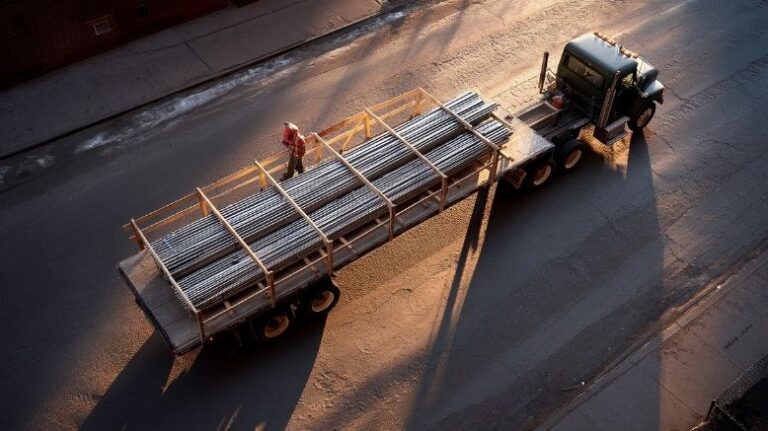
Prefabricated elements can be too large to fit onto a standard transportation vehicle. If getting the element from the factory to the jobsite means an oversized load, the GC needs to arrange with the authority having jurisdiction to get the required permit(s). Usually, this also means transporting the element at off hours (e.g., overnight), when roadways are clearer. This introduces challenges around noise, particularly if the jobsite is located in a residential area.
Storage of the Component
The GC needs to establish some kind of laydown yard where the prefabbed element(s) can be stored until installation. Even if it’s only for a few days, leaving assemblies exposed to the elements or simply under a tarp can introduce weather damage and other issues. Here, just-in-time (JIT) delivery can be helpful (but only when it comes to bringing the completed element to the jobsite — using JIT for the components needed to assemble that element exposes the GC to greater risk around supply chain disruptions).
Installation
In many cases, prefabricated elements are too large to be lifted into place by one or even a few individuals. Instead, the GC often needs to arrange for a crane to pick and lift the element into position. Because that crane represents an added cost, the GC’s team needs to plan to install the prefabricated elements as efficiently as possible.
Manufacturers as 'Super-Subs': The Key Piece for GCs
Companies that offer ready-built prefabricated elements help GCs tap into the benefits of offsite assembly while minimizing risks.
Hiring out for specific elements on the project lowers the GC’s exposure to supply chain disruptions and the firm’s need for labor. It shrinks the bill of materials for the project and offloads design and engineering to the manufacturer, too.
Some refer to original equipment manufacturers (OEMs) delivering prefabbed elements as "super-subs" because they have expertise across multiple trades.
These super-subs offer components like:
- Bathroom pods
- Clean suites
- Door units complete with hinges, hardware and frames
- Elevator/stair towers
- Modular roof truss packages
- Multi-trade racks (e.g., mechanical, electrical and plumbing [MEP] racks)
- Skids (e.g., electrical room skids, air handling unit skids)
- Wet wall assemblies
In an ideal world, the super-sub will also come install the element they’ve productized.
The more pieces of the project the GC can turn into an OEM component, the more they can shift risk to the super-sub.
An alternate approach to offsite manufacturing is to work with an OEM, a true manufacturer that can design a high-volume product that takes the place of a multi-trade prefabricated component.
If you really want to get synergy from prefab without having these scope duplication issues, hire a super sub.
Tom Park
Vice President, National Strategic Supply Chain
Skanska
To rise to the ever-increasing demands of modern construction projects, general contractors should aim to engage as early as possible with design teams, owners, subcontractors, and manufacturers. The super-subs offering prefabricated elements continually innovate. Collaborating with them early can help highlight new products that may better fit the project than what’s widely available.
This helps GCs stay on the leading edge. There, they can optimize their prefabrication and modular construction effort to achieve better and better outcomes.
Was this article helpful?
Scroll less, learn more about construction.
Subscribe to The Blueprint, Procore’s construction newsletter, to get content from industry experts delivered straight to your inbox.
By clicking this button, you agree to our Privacy Notice and Terms of Service.
Categories:
Written by
Tom Park
Vice President, National Strategic Supply Chain | Skanska
Tom Park is Vice President of National Strategic Supply Chain at Skanska. He has more than 20 years of experience leading global teams and managing complex supply chain relationships for high-tech and life sciences projects. He specializes in strategic sourcing, supplier quality and contract negotiations to ensure efficient procurement of key materials and services. Park drives operational excellence, implements supplier relationship programs and uses next-generation technology to optimize delivery and cost performance across large-scale biopharmaceutical and manufacturing facilities.
View profileKacie Goff
Contributing Writer | Procore Technologies
99 articles
Kacie Goff is a construction writer who grew up in a construction family — her dad owned a concrete company. Over the last decade, she’s blended that experience with her writing expertise to create content for the Construction Progress Coalition, Newsweek, CNET, and others. She founded and runs her own agency, Jot Content, from her home in Ventura, California.
View profileExplore more helpful resources

Does your asset management workflow actually work?
Every fixed asset installed on a project generates data long before handover. Is your team capturing it as it happens, or scrambling to reconstruct it after the fact? That question...

From spec book chaos to single source of truth
Picture this: An expansion is going in directly beside a high-volume line that cannot stop producing. Structural steel lands in March, mechanical completion is promised for August, and your only...
The hidden risk of relying on your EPC partner for project visibility
Many owners have thought some version of “We don’t need a capital project management platform — our EPC partner manages all of this for us.“ It’s a reasonable position. Your...

Why manufacturing owners are still managing capital projects like it’s 2010
There is a machine on your plant floor right now that knows it’s going to break. A sensor is reading a vibration signature on a bearing about three weeks before...
Free Tools
Calculators
Use our calculators to estimate the cost of construction materials for your next project.
Templates
Find a template to help you with your construction project tasks.
Material Price Tracker
Get the latest U.S. retail prices and view historical trends for common building materials.
Glossary
Explore key terms and phrases used in the industry.