
The power of project data: The hidden growth engine for specialty contractors

Last Updated Mar 13, 2026
Diane McCormick
Writer
57 articles
Diane McCormick is a freelance journalist covering construction, packaging, manufacturing, natural gas distribution, and waste oil recycling. A proud resident of Harrisburg, PA, Diane is well-versed in several types of digital and print media. Recognized as one of the premier voices in her region, she was recognized as the Keystone Media Freelance Journalist of the Year in 2022 and again in 2023.
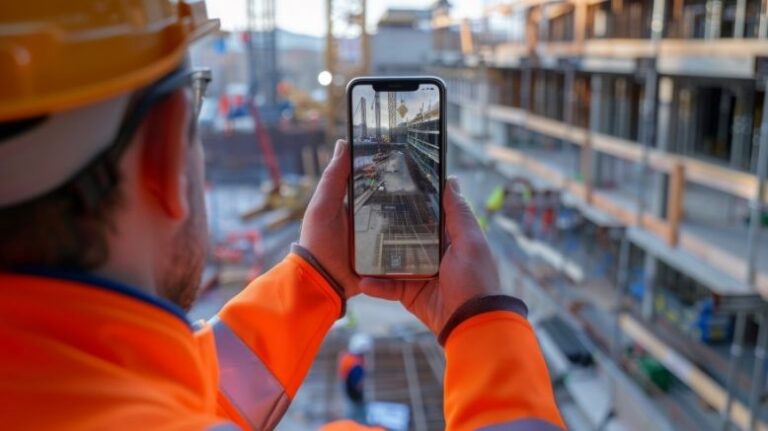
The most successful specialty contractors aren’t just building systems or structures — they are building digital assets.
Most trade contractors are actually building those assets for the GC collecting and inputting data every day: submitting RFIs, submittals, daily logs, safety incidents, and near-misses. But at the end of the project, subcontractors too often leave those “data assets” behind.
In an industry where GCs often control the flow of information, owning your own project data is the difference between being an indispensable partner and a replaceable commodity.
For specialty trades, data ownership is the only path to true independence. If you don't own your records, you’re working in the dark.
Table of contents
Why data ownership is your best defense
Relationships and quality are the bedrock of the business for many trade contractors, but data is what makes it profitable.
Many specialty contractors make the mistake of viewing data only as a "digital receipt" to win an occasional argument over a backcharge. While that protection is important, the bigger risk of not owning your data is losing your ability to improve.
When you rely on a GC’s platform, you lose access to your project records as soon as you close out the job. If you don't "take the data home," you can't go back and analyze where you actually made money versus where you lost it. Without your own records, you are forced to bid the next job based on a guess rather than hard evidence from your last one.
Owning your data — specifically your daily logs, production rates, and labor hours — allows you to stop guessing and start predicting. It turns your past work into a competitive advantage.
6 advantages of owning your data
For specialty contractors, owning the project data you collect is just as valuable as owning the tools of your trade. Like your tools, data is an invaluable asset that returns long-term value back into your business.
Here are six key advantages of maintaining full control and ownership over your project information.
1. Profit protection
Think of your data as a permanent library. By owning your own submittals, RFIs, and change orders, you have instant, unshakeable proof of what was agreed upon and what was built.
When a GC claims a scope of work wasn't finished, you can pull up the signed-off submittal in seconds. Financial risk drops when your payment is backed by evidence.
We've reduced rework by up to 15%. We've been able to create an audit trail to see where we have problems with followup corrective action. We've become more efficient, and improved every day. Our field is happier because we're being more productive, and they take more pride in their work.

Tim Anderson
CEO
Anderson Mechanical Services, Inc.
2. Resolving disputes: Bringing the receipts
The "he-said, she-said" school of construction disputes rarely favors the subcontractor. In court, the winning side is often the one with the most documentation. Owning your daily logs and timestamped photos puts you on the offense.
If a flooring contractor is blamed for scratches caused by another trade, a digital log with photos from the previous afternoon proves the floor was pristine when your crew left the site.
3. Bidding accuracy: Hitting the target
Stop guessing, and start making data-driven bids.
By analyzing a database of your past projects, you can see exactly how long it took to install 500 linear feet of conduit or 100 HVAC registers. This production data allows you to close scheduling gaps and bid the next job with surgical precision, avoiding the padded bids that lose you the contract.
4. Site readiness and project control
Real-time data gives you a satellite view of the field. By tracking quality issues and clash detections in your own system, you can see if a site is actually ready for your crew before you send the truck.
Using a 3D scan to confirm that the plumbing rough-in is clear before your drywall team arrives saves thousands in wasted labor hours.
5. Winning the talent war
The labor gap is real, but "digital-native" workers — members of the younger generations who have built-in technological experience — want to use their brains, not just their backs.
Organizations that use cloud-based mobile tools rather than messy paper clipboards attract higher-tier talent. These workers want to spend their time building, not chasing down a missing RFI.
The workforce planning tool gives us the ability to forecast manpower and needs across all locations. We run, on average, 200 active and ever-changing construction projects at any given time. If you don't have a system that can manage that, it's really difficult to understand where your labor needs may be in the next two months.

Dave Groen
Vice President, Construction
Classice Fire + Life Safety, Inc.
6. Becoming the "preferred" partner
Top-tier GCs want to work with SCs who make their lives easier.
When you provide clean, organized safety data and professional daily reports, you earn a reputation for transparency. This positions you as the first choice for the most prestigious and profitable projects.
You own your tools — who owns your project data?
General contractors and project owners often have exclusive ownership of project data. At the end of a job, they can revoke access, leaving you with no record of your own hard work.
Strategies built on data ownership are impervious to a volatile economy. When you own your data, your information is retrievable, organized, and high-quality. Don't keep your own expertise at arm's length.
Stop working in the dark. Own your tech, own your data, and own your growth.
Turn tech adoption into real ROI.
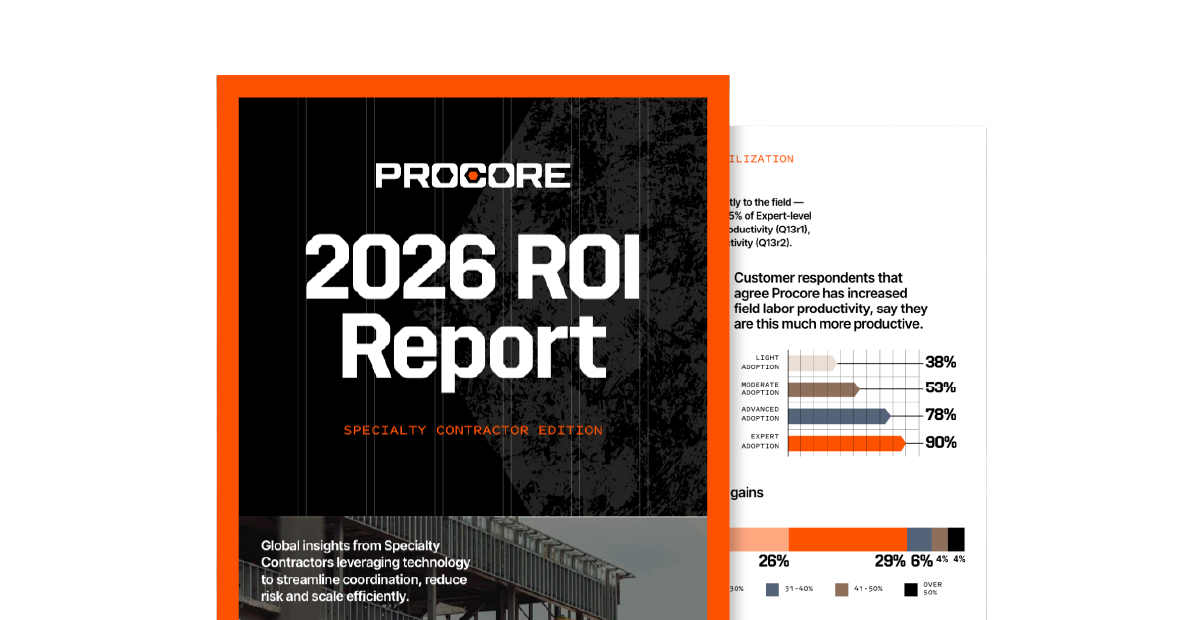
In this exclusive 2026 ROI report from Procore and Dodge Analytics, learn the strategies of top specialty contractors who are achieving measurable gains through data ownership, management, and analysis.
Was this article helpful?
Scroll less, learn more about construction.
Subscribe to The Blueprint, Procore’s construction newsletter, to get content from industry experts delivered straight to your inbox.
By clicking this button, you agree to our Privacy Notice and Terms of Service.
Categories:
Written by
Diane McCormick
Writer | Procore Technologies
57 articles
Diane McCormick is a freelance journalist covering construction, packaging, manufacturing, natural gas distribution, and waste oil recycling. A proud resident of Harrisburg, PA, Diane is well-versed in several types of digital and print media. Recognized as one of the premier voices in her region, she was recognized as the Keystone Media Freelance Journalist of the Year in 2022 and again in 2023.
View profileExplore more helpful resources
What I Learned the Hard Way: Fred Mills on changing the narrative of construction
Fred Mills, founder of The B1M, set out to change how the world sees construction. What began as an ambitious idea on a Post-it note grew into one of the...

Does your asset management workflow actually work?
Every fixed asset installed on a project generates data long before handover. Is your team capturing it as it happens, or scrambling to reconstruct it after the fact? That question...
From spec book chaos to single source of truth
Picture this: An expansion is going in directly beside a high-volume line that cannot stop producing. Structural steel lands in March, mechanical completion is promised for August, and your only...
The hidden risk of relying on your EPC partner for project visibility
Many owners have thought some version of “We don’t need a capital project management platform — our EPC partner manages all of this for us.“ It’s a reasonable position. Your...
Free Tools
Calculators
Use our calculators to estimate the cost of construction materials for your next project.
Templates
Find a template to help you with your construction project tasks.
Material Price Tracker
Get the latest U.S. retail prices and view historical trends for common building materials.
Glossary
Explore key terms and phrases used in the industry.