
How real-time reporting outruns change orders

Last Updated Mar 13, 2026
Marlissa Collier
42 articles
Marlissa Collier is a journalist whose work focuses on the intersections of business, technology, policy and culture. Her work has been featured in digital and print formats with publications such as the Dallas Weekly, XO Necole, NBCU Comcast, the Dallas Nomad, CNBC, Word in Black and Dallas Free Press. Marlissa holds an undergraduate degree in Construction Engineering from California State University, Long Beach and an MBA from Southern Methodist University’s Cox School of Business.
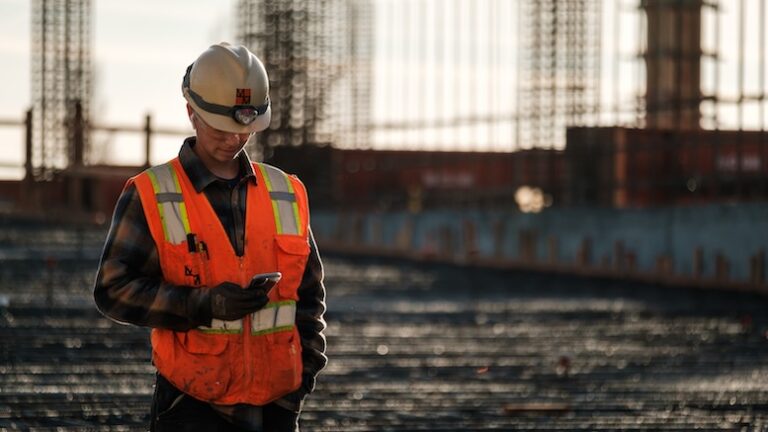
In construction, almost all information has an expiration date. A foreman spots a clash at 8:00 AM, but if the project manager doesn’t see it until Friday, the profit on that task is already gone.
For specialty contractors, that “latency gap” between the field discovering an issue and the office responding is where profits quietly bleed.
Traditional reporting, handwritten dailies, emailed timecards, weekly meetings — all these slower methods of communication can mean that by the time the office acts, work is either already incorrectly installed or costly rework is unavoidable.
Real-time reporting solves this problem. By using cloud tools to instantly sync field events, contractors can act the moment an issue arises, pivoting operations to prevent delays, reduce wasted labor, and limit the need for change orders.
Contractors who have made the shift say the difference can be dramatic. At Faulconer Construction, a heavy civil infrastructure and site development contractor based in Charlottesville, Virginia, leadership saw firsthand how slow information flow affected project performance.
When I first started, we were still printing six copies of every submittal and hand-delivering them to the GC’s office. We were also hand-delivering and emailing timecards every week, which meant it could take almost three weeks before we had cost feedback on completed work.

Mindy Colden
Chief Operating Officer
Faulconer Construction
That delay made it difficult for project teams to quickly understand how field decisions affected project costs.
Closing the 'latency gap'
Speed isn’t just a convenience in construction, it’s a strategy.
When field teams can upload photos, mark issues directly in the model, or log RFIs digitally the moment they’re discovered, conflicts can often be resolved the same day. A misaligned conduit doesn’t get installed twice, and a clearance conflict doesn’t stall multiple trades for days.
Electrical contractor RDP Electric experienced exactly this problem before adopting centralized digital reporting. Managing projects through spreadsheets, email threads, and printed drawings made it easy for crews to work from outdated information.
It was too easy for someone in the field to work off outdated drawings. There was a lot of rework and a lot of wasted wire and material.

Lorena Martinez
Senior Project Manager
RDP Electric
Once drawings and updates were centralized digitally, crews could catch revisions immediately. On one 200-unit multifamily project, a foreman reviewing updated drawings noticed a rerouted circuit before installation began. Catching that revision early prevented hundreds of feet of wire from being installed incorrectly and saved hours of rework.
Real-time visibility doesn’t just prevent mistakes, it also improves how teams collaborate. When the same information is visible to the crew, foremen, and project managers simultaneously, the conversation shifts from “Who caused this?” to “How do we fix it right now?”
Neutralizing the 'verbal directive'
Few things erode margins faster than informal on-site requests. The handshake, the “quick favor,” or a verbal directive from a GC can translate into undocumented hours and material waste.
Real-time reporting tools eliminate ambiguity: foremen log field-directed changes digitally, attach photos, and capture approvals in the moment.
The result? Accountability is baked into the workflow. Micro-scope creep, or those small, undocumented deviations, becomes instantly visible to both the field and office. GCs can’t later claim a request was never made, and contractors have verifiable records that protect margins without creating conflict.
Labor productivity: The early warning system
Real-time reporting isn’t just for problem-solving; it’s a proactive monitoring system for productivity.
By tracking daily output, foremen and PMs can spot trends the moment they emerge. If a crew falls 20% behind on fixture installation, the root cause, material delays, site congestion, or insufficient staffing, can be addressed immediately.
This early visibility enables instant corrective action and supports faster claims management. Notices of delay or adjustment can be filed in real-time with full documentation, making disputes far easier to resolve and often preventing them altogether.
Having all of our information in one place lends itself to transparency and accountability. Everyone on the team has access to the same data. If an RFI or safety inspection is overdue, it’s visible to everyone.
Mindy Colden
Chief Operating Officer
Faulconer Construction
At RDP Electric, that same visibility has improved communication with general contractors as well.
Being able to access everything in one place avoids confusion and makes everyone more confident. When field teams and office staff are working from the same real-time information, problems become easier to solve before they escalate.
Lorena Martinez
Senior Project Manager
RDP Electric
Keeping a competitive edge in today's market
In today’s tight labor market, contractors who can process and act on information the fastest often deliver the most reliable results.
Real-time reporting shifts contractors from reactive firefighting to proactive navigation. Instead of discovering issues after costs have accumulated, teams can intervene early, while solutions are still inexpensive.
For specialty contractors operating on thin margins, that difference matters. Closing the latency gap requires digital tools, disciplined processes, and a commitment to documenting work as it happens. But when those elements come together, the payoff is clear: fewer surprises, faster decisions, and projects that stay on track.
Turn tech adoption into real ROI.
In this exclusive 2026 ROI report from Procore and Dodge Analytics, learn the strategies of top specialty contractors who are achieving measurable gains through data ownership, management, and analysis.

Was this article helpful?
Scroll less, learn more about construction.
Subscribe to The Blueprint, Procore’s construction newsletter, to get content from industry experts delivered straight to your inbox.
By clicking this button, you agree to our Privacy Notice and Terms of Service.
Categories:
Written by
Marlissa Collier
42 articles
Marlissa Collier is a journalist whose work focuses on the intersections of business, technology, policy and culture. Her work has been featured in digital and print formats with publications such as the Dallas Weekly, XO Necole, NBCU Comcast, the Dallas Nomad, CNBC, Word in Black and Dallas Free Press. Marlissa holds an undergraduate degree in Construction Engineering from California State University, Long Beach and an MBA from Southern Methodist University’s Cox School of Business.
View profileExplore more helpful resources

What I Learned the Hard Way: Fred Mills on changing the narrative of construction
Fred Mills, founder of The B1M, set out to change how the world sees construction. What began as an ambitious idea on a Post-it note grew into one of the...

Does your asset management workflow actually work?
Every fixed asset installed on a project generates data long before handover. Is your team capturing it as it happens, or scrambling to reconstruct it after the fact? That question...
From spec book chaos to single source of truth
Picture this: An expansion is going in directly beside a high-volume line that cannot stop producing. Structural steel lands in March, mechanical completion is promised for August, and your only...
The hidden risk of relying on your EPC partner for project visibility
Many owners have thought some version of “We don’t need a capital project management platform — our EPC partner manages all of this for us.“ It’s a reasonable position. Your...
Free Tools
Calculators
Use our calculators to estimate the cost of construction materials for your next project.
Templates
Find a template to help you with your construction project tasks.
Material Price Tracker
Get the latest U.S. retail prices and view historical trends for common building materials.
Glossary
Explore key terms and phrases used in the industry.