
Overcoming preconstruction clashes: Why the most profitable contractors ‘build It twice’

Last Updated Mar 11, 2026
Marlissa Collier
42 articles
Marlissa Collier is a journalist whose work focuses on the intersections of business, technology, policy and culture. Her work has been featured in digital and print formats with publications such as the Dallas Weekly, XO Necole, NBCU Comcast, the Dallas Nomad, CNBC, Word in Black and Dallas Free Press. Marlissa holds an undergraduate degree in Construction Engineering from California State University, Long Beach and an MBA from Southern Methodist University’s Cox School of Business.
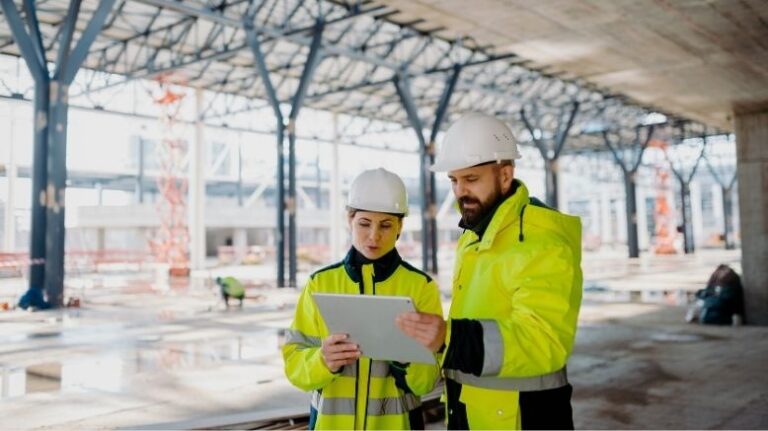
It’s a typical Tuesday morning. Crews are moving fast, materials are staged, and then it happens: the unmistakable grind of an oscillating multi-tool hitting ductwork that “shouldn’t have been there.”
Productivity halts. Materials are wasted. Fingers start pointing. And somewhere between the noise and the rework, morale and profit margins start draining away.
This common scenario isn’t a failure of craftsmanship. It’s a failure of foresight. A failure that specialty contractors can’t afford — one that eats into margins and forces crews to stay onsite to complete the rework.
Scenes like this play out daily across jobsites nationwide every day. Not because trades lack skill, but because coordination still happens too late.
The most profitable specialty contractors aren’t necessarily the fastest installers. They are the best predictors of the future, the ones who resolve conflicts before boots ever hit the ground.
That’s the promise of clash detection during preconstruction: identifying physical and spatial conflicts between trades before a toolbox leaves the truck. Instead of fixing problems with saws and welders in the field, contractors solve them with data, models, and collaboration, protecting margins long before materials are ordered or labor is spent.
The 'virtual first' advantage
Clash detection is built on a simple but powerful idea: Build the project twice. First in the cloud. Then in the dirt.
Using a cloud-based platform, electrical, plumbing, and HVAC teams can work inside a federated 3D model where each trade’s scope is visible and coordinated.
Everyone sees the same version of the truth. This means no outdated drawings, no isolated spreadsheets, and no assumptions about “who owns that space.”
The payoff is speed and precision. Moving a conduit four inches in a digital model takes seconds. Moving it in the field can cost hours of labor, wasted material, and schedule delays that ripple across the project. The earlier those decisions are made, the cheaper, and calmer, they are.
3 ways clash detection protects the bottom line
1. Eliminating rework before it starts
Clash detection identifies both hard clashes (pipe vs. steel) and soft clashes (clearance and access issues) before materials are installed. Each avoided rework cycle is preserved labor, preserved schedule, and preserved margin.
2. Enabling confident prefabrication
With clash-free models, specialty contractors can prefabricate assemblies in controlled shop environments, knowing components will fit the first time. This reduces field variability, increases labor efficiency, and keeps crews focused on installation, not improvisation.
3. Replacing finger-pointing with facts
When conflicts do arise, centralized data makes responsibility clear. Instead of heated site arguments, teams rely on objective model data that shows who owns which space, essentially de-escalating disputes before they become costly change orders.
Stay updated on what’s happening in construction.
Subscribe to Blueprint, Procore’s free construction newsletter, to get content from industry experts delivered straight to your inbox.

From reactive fixes to proactive control
The real shift here is cultural. Virtual Design and Construction teams become the scouts, identifying risks ahead of the crew instead of documenting problems after the fact.
Field feedback flows back into the model, improving coordination for every downstream phase. Each project gets smarter than the last.
Profit won't be found by reacting faster; it’s actually in never needing to react at all. In an era of tight labor markets and thinner margins, preconstruction precision is no longer optional.
Data visibility isn’t a luxury. It’s an insurance policy that ensures you keep every dollar you bid.
Was this article helpful?
Scroll less, learn more about construction.
Subscribe to The Blueprint, Procore’s construction newsletter, to get content from industry experts delivered straight to your inbox.
By clicking this button, you agree to our Privacy Notice and Terms of Service.
Categories:
Written by
Marlissa Collier
42 articles
Marlissa Collier is a journalist whose work focuses on the intersections of business, technology, policy and culture. Her work has been featured in digital and print formats with publications such as the Dallas Weekly, XO Necole, NBCU Comcast, the Dallas Nomad, CNBC, Word in Black and Dallas Free Press. Marlissa holds an undergraduate degree in Construction Engineering from California State University, Long Beach and an MBA from Southern Methodist University’s Cox School of Business.
View profileExplore more helpful resources

What I Learned the Hard Way: Fred Mills on changing the narrative of construction
Fred Mills, founder of The B1M, set out to change how the world sees construction. What began as an ambitious idea on a Post-it note grew into one of the...

Does your asset management workflow actually work?
Every fixed asset installed on a project generates data long before handover. Is your team capturing it as it happens, or scrambling to reconstruct it after the fact? That question...
From spec book chaos to single source of truth
Picture this: An expansion is going in directly beside a high-volume line that cannot stop producing. Structural steel lands in March, mechanical completion is promised for August, and your only...
The hidden risk of relying on your EPC partner for project visibility
Many owners have thought some version of “We don’t need a capital project management platform — our EPC partner manages all of this for us.“ It’s a reasonable position. Your...
Free Tools
Calculators
Use our calculators to estimate the cost of construction materials for your next project.
Templates
Find a template to help you with your construction project tasks.
Material Price Tracker
Get the latest U.S. retail prices and view historical trends for common building materials.
Glossary
Explore key terms and phrases used in the industry.