

Opening & Introductions
Nikolas opens with a provocative question: How do we make the construction industry attractive to young people in a world where there's convenience and everyone wants to be a YouTuber?
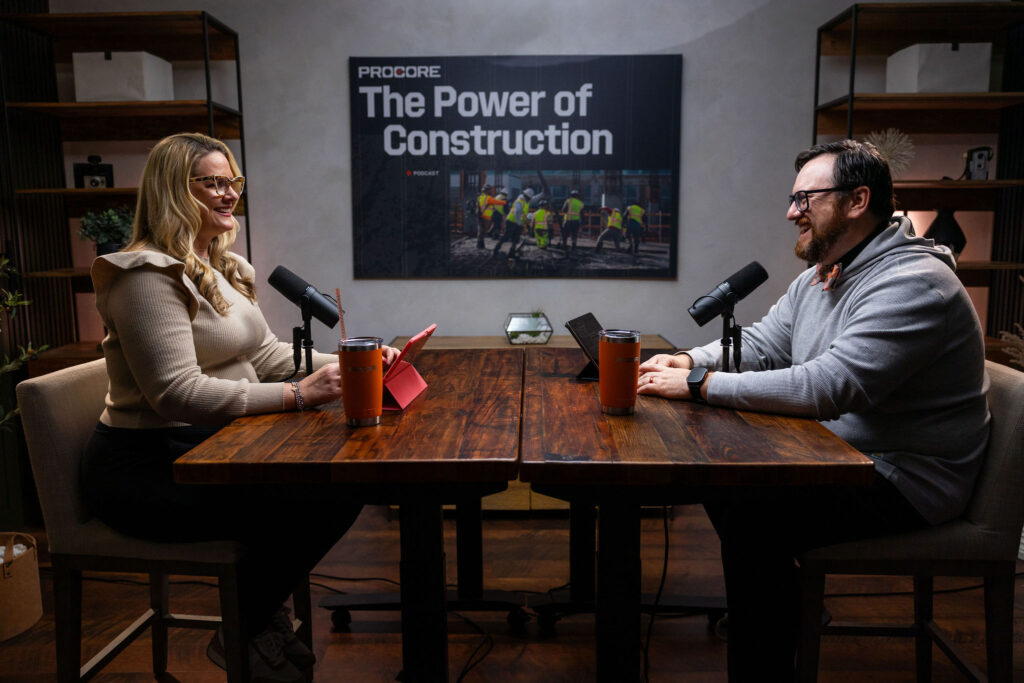
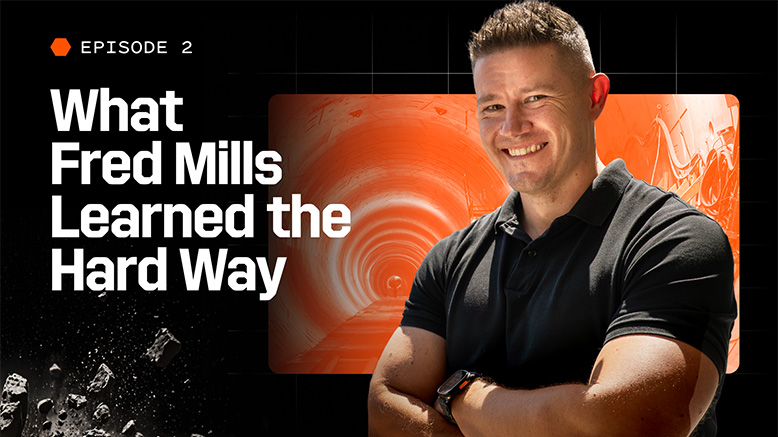
Kris Lengieza welcomes listeners to The Power of Construction, recording live at Groundbreak, and introduces Nikolas Badminton, Chief Futurist, Futurist Speaker, and Hope Engineer.
Discovering the Future
Nikolas shares his origin story with futures thinking, beginning with The Usborne Book of the Future that he discovered through his school book club in the UK. The book, which imagined the year 2000, featured fantastical illustrations of future cities with solar power, green spaces, robots, AI, flying cars, and Hyperloop systems.
He was further inspired by UK television programs like Tomorrow's World. His academic journey took him through computing, applied psychology, and artificial intelligence, with specializations in linguistics and organizational psychology. After 20-plus years working at the coalface of data and analytical systems across multiple industries, he's spent the last 15 years focused on futures work.
The key insight: the dislocation from today's work to explore future possibilities is critical for any business, but connecting those futures back to the present is the secret sauce.
The Plurality of Futures
Nikolas emphasizes a crucial distinction in futures work: there is not a single future, but multiple futures. There's a plurality. If you're trying to create one future, you're approaching it wrong.
You have to work out what different people need. When building spaces or industrial facilities, they must have flexibility to allow multiple futures to unfold. This imagining of futures ahead is critically important for the modern context of business and construction.
Futures aren't just something we live through—they can be designed and shaped by the choices we make today.
From Strategy to Foresight
Kris asks how foresight differs from traditional business strategy. Nikolas draws a clear line: anything less than 10 years is strategy. You're thinking about products, what to build, what to plan, what to deliver.
Futures work steps into a speculative area of inquiry. There's actually zero risk to doing futures work because it's cognitive—it's on a whiteboard, on paper. It's an idea that's really interesting.
Strategic foresight is the ability to reflect on what you find or what possibilities exist at those 10-, 15-, or 20-year horizons, and reflect that against your strategy today to work out where the gaps are. Whether thinking about data center growth, resiliency in water, energy, and food, or what's needed in an industrial facility to feed 4,000 people and keep the lights on—foresight provides the longer view while staying grounded in process.
Supercharging Strategy
Nikolas argues that companies should spend more time on futures work because it's a competitive advantage. He points to colleagues embedded as futurists in organizations like GE, Amtrak, Lego, Thales, and Google who are stepping up to do this work.
One example: Pre-pandemic futures work with Google led to considerations of global expansion and billions of dollars invested in Africa. The signals were clear: Africa will be 4.2 billion people by 2100. Lagos, Nigeria, will be 88 million people by 2100. Imagine a city of 88 million people—imagine what needs to exist, the construction projects required to make that work.
It's expensive when you get things wrong, especially in construction. Stories abound of projects that after two, three, even 10 years have to be redone because of changing environments or external pressures. With futures work, you can identify some of these challenges now and speculate on their likelihood of existence.
As Nikolas puts it: futures work is supercharging strategy, putting it on steroids. A strategist who looks at futures ahead of them is simply a better strategist. It's like advertising—creative with no strategy is just okay creative, but strategically informed creative is connection.
Signals, Scenarios & the Positive Dystopia Framework
Nikolas explains his Positive Dystopia framework, detailed in his book Facing Our Futures. He used to run an event for about six years called the Black Mirror of TED Talks—15 minutes per speaker, five speakers, no breaks, no wine, just dark futures. Companies like Microsoft and JP Morgan supported it.
This evolved into something deeper. When you consider how bad things can get—we're living in an industrial revolution 300 years in where a few people make all the money, there's lack of equity, collapsing systems, struggling industries, challenging political structures globally—you get dystopian scenarios.
But when you reflect on dystopian principles through the lens of hope with positive scenarios featuring equity, ownership, and participatory design, you get positive futures. When you have both pictures together and reflect them against each other, you can see what we've been getting wrong, what we could do better, and how to deliver a more positive future in total.
JP Morgan put the book on their summer reading list and gave it to 2,000 young executives. It hit a nerve because we're delivered challenging times daily. If we can look ahead to a better world and co-create it, that's good for humanity as a whole.
Spotting Signals & Thinking Weird
Kris asks how to train yourself to spot signals earlier and create space for that work. Nikolas introduces the frequency effect, sometimes called the Baader-Meinhof phenomenon: once you see something once, you'll see it everywhere.
He reads extensively—articles, academic research papers. While Twitter used to be an amazing place for futurists, many have migrated to LinkedIn, Reddit, and subreddits like Futurology. Setting up Google Alerts on "the future of X" or specific industries delivers diverse opinions.
Once you start gathering and scanning for signals, you see emerging trends everywhere. You start joining dots, and scenarios begin to play out. It becomes incredibly powerful—you become prescient, and it becomes second nature.
But Nikolas warns: at the beginning, you'll reach a point where you feel you've learned too much, and it's challenging to think about how to move through it to get to a better place. You must create resiliency and acceptance that this is how things are today, but also make a choice to build a more positive path forward.
He recommends looking outside your industry, not just inside. When you start doing futures work, you start thinking weird—strange chains of events like self-driving cars leading to fewer accidents, fewer organ donors, human organs grown in pigs, and questions about human-pig bacon. When you do this work, you start to see second- and third-order effects, and you can plan for what might come next. That's your advantage.
Bridging Productivity & Imagination in Construction
Kris shifts to construction-specific challenges: workforce shortages, labor gaps, productivity stagnation, new ways to use data for decision-making, and evolving design approaches including sustainable and rapidly iterating design. Why has construction struggled with productivity while other industries improved?
Nikolas identifies macro and micro effects. How do you make the industry attractive to young people in a world of convenience where everyone wants to be a YouTuber? There's the challenge of people aging out of the industry. By 2050, there will be three people over 65 for every child under five. An older population will keep working, but automation in the workforce becomes necessary.
He points to examples like FBR's Hadrian X, which redesigned the building, the brick, and the robot vehicle that lays the brick. That's what needs to happen in construction.
Modularity, circularity, and reuse will be significant drivers of construction's future because they're simpler to build at small, medium, and large scales. But expectations must shift about what gets delivered. It doesn't mean expecting less—it means expecting different.
Storytelling as a Tool for Change
Kris notes that kids wanting to be YouTubers connects to something Nikolas emphasizes: storytelling and writing science fiction to paint pictures of potential futures. Construction may not do this well enough. Perhaps the younger generation needs to help create that storytelling.
Nikolas explains there's nothing more inspirational and connective than imagery. He does speculative fiction and creates design fiction objects that don't yet exist but could potentially exist—this gets people asking questions.
For a food client, he created a Kellogg's box of cellular pork with a fox giving thumbs up and winking. What does that look like on a shelf next to cellular chicken and cellular beef? Suddenly you get a feeling—shock, opportunity, questions.
Dubai recently announced its 2050 city plans with Midjourney images of something that's likely not going to be Dubai in 2050. But the suspension of belief—of what comes next or what's expected—is valuable for pushing people into new realms. We can't become complacent or treat it as fiction. When we think this might be real, it connects us more deeply to possibility.
Films like Her, Gattaca, and Minority Report demonstrate this. Minority Report had people like Jaron Lanier reimagining virtual reality and thinking about interface design. Philip K. Dick wrote the short story it came from. We can't write it off as fiction—we have to think about what that reality means.
Confronting Fear of the Future
Kris raises the human component and the fear that comes with imagining futures. Construction is a risk-averse industry. If people are afraid of the pictures being painted, is their fear valid? Should we lean into it or try to flip that future?
Nikolas explains that fear is a raw and visceral response to the unknown. When you paint pictures of things ahead with big questions, they're not unknown anymore—they're potentialities. The fear dissipates when you can prepare.
He uses Denver International Airport as an example: the washroom is also a hurricane shelter. That's futures thinking—applying a known quantity to an unknown situation. You know a hurricane will come; the space transforms to meet that need.
The unknowns ahead create fear. Nikolas isn't fearful of the future—he's realistic. When people say they're scared about climate change, he acknowledges it's a raw, visceral response. If you live in Orlando, you can't get insurance. If you live in Toronto, it's 25 degrees Celsius in mid-October. Nothing good comes from this.
But what do you do? You create resiliency and put mechanisms and processes in place to survive. Humans are good at survival, resiliency, and finding ways to thrive. We forget this.
Engineering Hope & Protopian Futures
Kris asks about being a hope engineer and creating hope to get through challenges or achieve futures. Nikolas cites research showing students with higher hope levels, motivated by someone or given incentives, achieve more. Businesses achieve more. High-hope executives inspire teams to become hopeful themselves. Company performance lifts as a whole.
Building hope is a superpower in organizations that's often been forgotten or discounted. At an executive session, someone rolled out the trope "hope is not a strategy"—co-opted by politicians. But actually, in certain contexts, hope is all we have. It's better to have hope than feel hopeless, because hopelessness achieves nothing.
Nikolas references researcher Charles Snyder's pivotal paper Rainbows in the Mind, which discusses setting audacious goals and agency-driven pathways forward—making things happen because we know where we're going. Futures work gives an even further horizon.
How often do organizations celebrate work on a weekly basis? Usually it's once a year at a conference with principles on the wall. But celebrating what individuals accomplish each week—because it makes a difference and ripples through the organization—that's how to build hope in organizations and teams.
Nikolas introduces Protopian Futures—an idea originally coined by Kevin Kelly. Protopia means you can't imagine better futures 10-plus years out, but every year you make progress toward it. When a country leader says "We're going to be zero carbon by 2075," it's better to frame it with year-by-year targets on decarbonization, emissions reduction, measuring progress consistently.
Even though we imagine futures ahead, if we want to deliver on them in construction or otherwise, we must measure year-on-year progress and understand it takes time. Our industrial revolution has been created over 300 years. When steam-powered trains existed 300 years ago, we weren't aiming for Mars or the moon. But year by year, innovation built on itself. As you make progress, more invention and innovation unfolds, changing the futures. There's adaptability.
Living the Future Now & Rapid Fire Wrap-Up
Kris asks if construction lacks confidence today, creating a barrier to thinking about big futures, because the industry hasn't seen as much change as others. Nikolas agrees it's confidence, investment, and belief. Participatory futures can take people along on the journey.
How often do we have conversations with clients commissioning projects asking them to look further than current requirements—to really go beyond? In the Middle East—Saudi Arabia, Dubai—they're pushing boundaries. They have investment behind projects like Neom and The Line. In 50 years, it will exist in an impressive form. Toronto, the fastest-growing city in North America, continues growing based on a future vision of productivity and economic growth in Canada.
Asked what future thinking has taught him about living in the present, Nikolas says it's taught him to cut through noise. Everyone wants you to buy a widget, buy the dream. Every tech entrepreneur wants you to believe the world will be better by buying their software or platform. You have to cut through noise and qualify if it's true.
Companies like Procore, OpenAI, Amazon—how did they grow so significant? They found ways to help people deliver on what's critical day-to-day. Understanding what that looks like in 5, 10, 20 years is crucial. It's about the journey—inviting clients to come on the journey. Clients willing to invest and do the work are the ones who reap benefits and give you energy for change.
Rapid-Fire Questions:
Book Recommendation: The Hitchhiker's Guide to the Galaxy—hilarious, takes us into possibilities, discusses simulation, makes you think.
Source for Different Perspectives: His think tank of people around the world doing different work, plus friends doing radically interesting R&D. He notes the counterculture used to be a space for creation and pushing boundaries, but has been squeezed out of existence in 2025 through social media normalization. We need to find and celebrate more crazy people—"Here's to the crazy ones."
Advice to Younger Self: Start working on futures 20 years earlier. For his five-year-old: Focus on developing your own personality independently of algorithms trying to make us homogenized consumption machines. Be careful of the internet.
Trend Shaping Construction's Future: The water-energy-food nexus. We're seeing calamities around water sovereignty. Canada has 21% of the world's fresh water—it's known for oil but will be known for water tankers. The water-energy-food nexus is critical under duress from climate change, collapsing systems, and overconsumption. We have the technology and wherewithal. Trillions of dollars will be invested. Construction will build this infrastructure. Engineers will take us into new realms. Futurists will ask: in 50, 100 years, at certain heat levels, weather chaos, and city growth—how will we thrive and survive for the next 20,000 years as humans?
Industry Tagline: After thoughtful consideration: "Construction in 20 years: Rising from the grips of collapse into a new wide world."