


Celebrating Failure: The Wile E. Coyote Awards
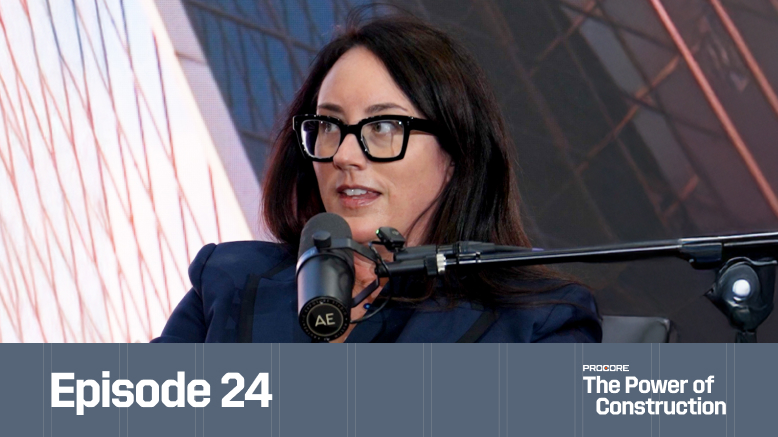
Amy Marks opens the episode with an unexpected story about failure awards at Compass Datacenters. Employees nominate themselves for the Wile E. Coyote Awards when they've failed at something, and the company celebrates these failures publicly at all-hands meetings.
When Amy won her first failure award after being at Compass for a year, she not only received applause and recognition but also discovered an envelope with a $500 gift card. The company pays people to admit failure, learn from it, and share those lessons with others. As Amy puts it: "If you fail, that's a good thing. Just learn from that and move on."
Redefining Innovation At Compass Datacenters
As Senior Vice President of Innovation at Compass Datacenters, Amy oversees several pillars: new ways of making, new technologies, sustainability, worker-centric initiatives, workforce development, and safety. It's a comprehensive role that reflects how Compass thinks about innovation holistically.
Amy explains their philosophy: "We do the right thing all the time, and then the right outcomes happen." When making decisions about sustainability, safety, or workforce development, they focus on making the right business decisions based on culture, employees, stakeholders, and neighbors. Because they're thinking about hundred-year campuses, these right choices naturally lead to better sustainability outcomes, safety records, and return on investment.
She challenges the industry mindset that says "I would do BIM if the owner required it" or "I would be more sustainable if someone made me." Amy believes it's still the owner's responsibility to require and demand innovation because the industry must build more with less. Productivity now means combining amplified intelligence with human intent to achieve desired outcomes, not just placing more bricks with fewer people.
The Meaning Of True Partnership
Compass doesn't use the word "partners" lightly—they say "closely coupled partners." Amy points out that many companies throw the word "partners" around, but at Compass it means something concrete: both parties are writing checks, they're connected for long periods of time, and they don't have to do many transactions after the first one.
Amy uses a Step Brothers movie reference to illustrate the point: "We've already built bunk beds, so we have lots of room for innovative activities." Once the transactional bidding and fighting is over, they can focus on product development, creating more sustainable solutions, and building enjoyable experiences for everyone involved.
This approach yields empirical results. Compass has data showing smaller carbon footprints from products they've co-developed with partners like Vertiv (hybrid liquid air cooling units) and Schneider (power centers). Amy challenges the industry: "Why would you deserve their best if you're only gonna hire them once? And they have no idea if you're ever gonna hire them again?"
True partnership means treating people the way partners should treat each other. It starts at the top with good people running the company who genuinely want to do the right thing, not just use seemingly good words.
Building The A-Team For Every Campus
Brett asks about partners choosing Compass, and Amy emphasizes that in today's market, partners don't have to work for anyone they don't want to work with. There's plenty of work available for everybody.
Compass wants the A-Team—not just on one project, but on every campus forever. They don't want to switch partners. They want to work, learn, and grow together without having to relearn everything. The efficiencies gained from working with the same people on every single building, from campus to campus, are substantial.
While this makes it harder for new partners to break in, Amy notes that should actually encourage companies to want to be in the ecosystem because once you're in, it's hard to get displaced. This dynamic keeps everyone hungry and committed to excellence.
Transparency Over Territory
Kris asks about transparency and intellectual property, noting that you'll never hear the words "intellectual property" come out of Compass's mouth. Amy explains that CEO Chris Crosby sees the company's intellectual property as the culture and the people, not the products they develop.
When Compass co-creates products like new power centers or cooling methods with partners, they've never said "only for us and nobody else." They want first access and guaranteed supply from partners, which is secured through commitments. But if partners want to sell to others, that's great too—Compass wants partners to be healthy businesses.
This transparency creates remarkable outcomes. Partners have given Compass money back when they've become more productive or efficient than expected, saying "You've given us too much money. This is not fair at this point." When you start with transparency and fairness, people act like good humans and want to do best by their partners.
Chris maintains weekly or biweekly calls with CEOs of multi-billion-dollar partner companies, building real relationships from the top down to everyone working together. Everybody has a voice. Everybody can disagree, ask for easier ways, or suggest better approaches. While NDAs exist, anything Compass makes with partners can be bought on the open market.
Chris believes in raising all boats. With the massive scale in data centers right now, what they're learning together—the products, the processes, the technology applications—will trickle down from these large projects into manufacturing buildings, multifamily residential, and hopefully single-family housing one day. As Amy puts it: "Disruption happens top-down for an ecosystem."
Changing The Language Of Construction
Kris observes that transparency is what drives success and profit in modern partnerships, contrasting with the traditional broken model where opacity drove profit. Amy agrees and expands on the language problem between owners, GCs, and partners around business models.
Amy shares a story from her childhood when her father would drive past jobsites and see tradespeople pointing at the ceiling. He'd say: "We're either making a lot of money right now, or we're losing a lot of money right now. I don't know which. But some misinformation, some lack of information—something has happened."
In today's world with AI and the ability to track everything, Amy challenges anyone making money on waste, misinformation, or taking advantage of information gaps: "You're probably not going to be in business much longer. You've got to find a way to make money on value now that the world is very transparent and open."
The language shift extends to operational terminology. Construction doesn't talk about "level-loaded production" or "forecasting" the way manufacturing does. When working with manufacturers like Vertiv or Schneider, there's a disconnect in business vocabulary. GCs think about contingencies and fear-based processes, while manufacturers talk about transparent margins, QA/QC programs, and lean manufacturing.
Amy recalls a GC CEO saying "We're like a systems integrator" to a data center customer. The customer responded: "Great, we'll send you our systems integrator contract." The GC didn't understand the terminology or what was being asked—they had to Google phrases because they didn't do any of those things. Knowing the word doesn't mean you know how to do the behaviors that match it. The industry needs to learn not just new vocabulary but new ways of operating.
Who Owns Innovation?
Kris asks about new business models for GCs and trade partners. Amy challenges the notion that innovation is a side job or something you only do when owners ask. Many GCs now have innovation teams, but they don't proactively reach out to partners on a monthly basis to share what they're doing and collaborate.
In Compass's 2026 goals, they want to leverage closely coupled partners even more by regularly talking to ensure they're either working on complementary things together or purposely not working on the same things, so they can do more with less while moving in a good direction together.
The assumption that partners will always be together going forward should change how innovation happens—it can't be treated as an occasional activity or something done in isolation.
Teaching People How To Innovate
Amy emphasizes that Compass wants small incremental improvements more than grand slams. But first, people need to learn the language of innovation itself.
When Amy asks groups if they're in a period of change requiring innovation, everyone agrees. But when she asks "How many of your companies teach you how to innovate?" people are surprised: "Wait, what? Well, I can learn how to innovate?"
You don't have to be born with pattern recognition to innovate. Companies need to teach people to ask daily: "Is there a better way to do this?" Then provide a framework to implement ideas, bring attention to them, and create air cover to try things safely. Having been what she calls "a troublemaker my whole life—innovator" (though people used to say "bully"), Amy believes air cover is essential.
You need safety to say "I think differently, and I think we could be doing these things," and build coalitions within a safe framework where someone says, "And by the way, if you fail, that's a good thing."
The Wile E. Coyote Awards embody this philosophy. Employees nominate themselves for failures, everyone learns from them publicly, and winners receive $500 gift cards. After winning her award, Amy thought: "That was not really that painful—to actually win a $500 gift card just to admit that I had done something wrong and learn from it and share about it." She asks: "Who does that in construction? We're like, no, don't say anything's wrong, ever."
What Productization Really Means
Kris asks Amy to explain productization in practice. Amy first references a Rogers-O'Brien chief innovation officer from the executive forum who said you must put language to things before you can create change.
Amy has spent time in hotel rooms before presentations creating terms like "productization," despite it being a mouthful. Words like "industrialized construction," "offsite," and "the offsite continuum" didn't exist until people created them and others adopted them. When you make up words to create change, you have to let them go—if nobody else uses them, you're not a thought leader, those are just still your own thoughts.
Productization isn't just about the physicality of a component part. It's about the data associated with that component, its lifecycle, reusability, and standardization. At Compass, they have prototype designs that are standard reference designs, fungible when they need changes, but fundamentally "the design is the design is the design."
Standardized physical components lead to less digital waste and exponentially less physical waste in landfills. Working with Schneider, they have proof: the factory side that produces only Compass standardized product looks almost empty, super clean, with very little packaging and few people. The other side doing iterative product has more people, more packaging, and more waste.
When Amy asks why the standard side is better, Schneider explains: "We make more money. It's easier, less carbon footprint by far, less copper, less packaging." But Amy emphasizes: "The standard doesn't make it so. It's the partnership—that we decided we would have a standard—that makes it so." If you leave out that hard, heavy lift of building partnership, you've missed the point.
The IKEA Lesson: Understanding Upfront Investment
Kris asks how standardization has changed profitability. Amy asks the audience rhetorically: wouldn't having a standard product with a standard team working on iterations make a difference for everyone? The industry has complained for years that everything's so bespoke, such a snowflake.
Amy shares an old story that came to mind: A GC once told her, "I want to make it like IKEA. On Tuesday I ordered a dresser, and my 12-year-old daughter and I were gonna put it together on Saturday, but by Friday I wasn't home yet and she put it together all by herself. I want things to be that easy—just like it was to put together that IKEA dresser with one tool for my 12-year-old."
Amy responded: "Yes, except what you didn't discuss is how many engineering hours went into the fact that they had to think about, if a 12-year-old put this together, what should the only-picture directions look like? How do we make it so she only has to hold one tool? And what's the easiest way to package this so that she knows what every single piece is?"
The lesson: if you don't want to put that upfront work in, you can't expect the easy outcome. "You gotta do all that so that your 12-year-old can put it together. That's what you should really learn from the experience—not that she was able to put it together on a Friday without you."
Data Ownership And Visibility
Kris shifts to data control and visibility. Many companies, especially owners, don't own their data or can't access it meaningfully. This leads to disconnected platforms and lack of visibility, making innovation difficult.
Amy explains that data is everything—not just project data but innovation team data. When she arrived at Compass, they had spreadsheets tracking ideas and daily requests to fix or change things. She asked Chief Innovation Officer Nancy: "How do we slow that down so that we really do what the business needs and not what the business wants on a daily basis?"
They use Procore for project data but needed something for innovation management. They found Huelu and created an innovation board tracking all use cases, metrics, and daily ideas. They match ideas to use cases in ESG buckets to ensure they're doing the right thing. They can hit a button and see everything they're working on—every pilot, every ask, everything at any stage.
This allows them to own their data and drive daily behavior in innovation. Amy emphasizes: if you're not the CEO, there are little things you can do with your budget to take control of some portion of your data that allows better decisions.
Since creating the board, several groups have approached Amy asking about it. One person said: "That board is legit." It didn't take long to build, didn't require much permission, and was a small investment—but it lets them take their own data and drive behavior in the right direction every day.
Organizing and Prioritizing Innovation Visually
Brett asks about prioritization—how do you avoid whoever shouts loudest getting priority once you have a visible board?
Amy explains that once you organize things, you can start filtering and prioritizing—but you can't do that until you've organized and made it visual first. Visual-first is a priority in Compass culture.
With only 180 employees for such a large company, they don't have capacity for everything. The visual system also helps vendors—they don't want vendors calling 15 people to get a new idea across. They want one person who can bring it to 15 people, discuss it, and say yes, no, or "call us in six months."
Just organizing things visually and measuring them with group input dispels waste. When 15 people are in a room and someone wants to do something, they can see there are six other things competing for priority. "Which one's more important?" becomes clear.
Their system has a "kill button" that says "No steward, no champion." If something is the best idea but no one has time to steward it, they don't have bandwidth. The board allows them to filter every three months: "What are the things we said were commercially viable but didn't have a steward?" One button press generates a chart showing what problems they solve and what metrics they associate with.
For Amy, who was diagnosed on the spectrum in second grade, spreadsheets caused hives. She'd go to bed not knowing what to work on. Now she wakes up confident: "We don't have time for that." She loves saying no when appropriate. As she puts it: "More room for activities. We made bunk beds with our halo board, and we have room to do things because we've really culled first. We got rid of some stuff first that was noise in the system."
Rapid-Fire: Mindset, Mentorship, And Money
Recommended Book: It Starts with One by J. Stewart Black—particularly page 28, which has a great graph about change.
Source for Different Perspectives: Amy's 17-year-old daughter, who loves telling her "the real hard truth" and frequently uses words like "hideous."
Advice to Younger Self: "Man, it's going to be rough, but push through—because it was a little rough. Push through, because you're incredibly resilient, more resilient than you know. And there are good people out there that are going to sponsor you in life." Amy gives special thanks to Nancy Novak for always sponsoring her through reciprocal sponsorship.
Trend Shaping Construction's Future: Mindset shift. "We gotta stop. Everyone has to stop trying just not to lose, and we should just try to win once in a while. Mindset shift to win."
Industry Tagline: "I make as much money as the men in this space. You should come here. Maybe I make more, just for the record."