
Defending Against Financial & Legal Risks on Megaprojects


Last Updated Dec 18, 2025
Paul Almen
Vice President and General Counsel
Paul Almen is the Vice President and General Counsel at Knutson Construction Services, where he brings extensive in-house experience to high-stakes construction matters. Previously serving as Associate General Counsel at Ryan Companies, Paul specializes in negotiating nine-figure contracts and managing complex disputes, including delay claims and litigation. He is also a dedicated industry leader, having served as President of the Board for the Minnesota Construction Association.
Kacie Goff
Contributing Writer
99 articles
Kacie Goff is a construction writer who grew up in a construction family — her dad owned a concrete company. Over the last decade, she’s blended that experience with her writing expertise to create content for the Construction Progress Coalition, Newsweek, CNET, and others. She founded and runs her own agency, Jot Content, from her home in Ventura, California.

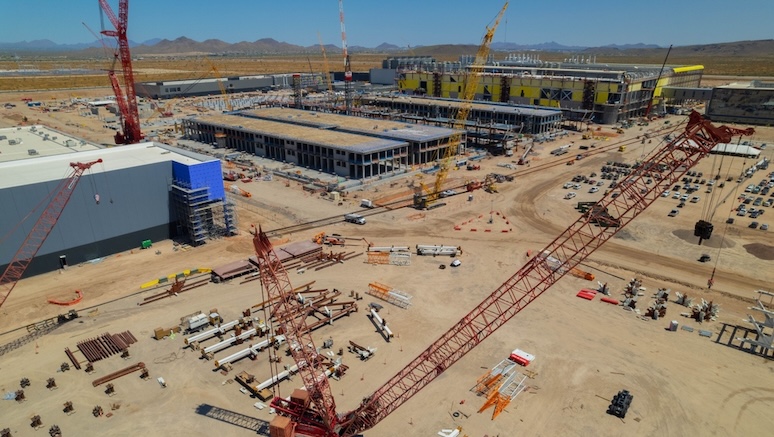
The construction industry has seen marked growth in megaprojects. Some experts classify any project over $500 million as a megaproject, while others argue that the build needs to be $1 billion or more. Wherever the threshold lies, one fact remains: these are complex, high-risk builds. One study out of Oxford University says that nine out of 10 megaprojects have cost overruns.
Even so, they come with some notable upside for general contractors (GCs). The major budget means a lot of money stands to be made. Even better, owners who are building on this scale tend to pay on time.
For GCs to realize the upside of megaprojects and defend against losses, they need to manage the financial and legal risks that come with building at this scale.
There’s a growing interest in moving into megaprojects. It really revolves around the data center world. There’s so much of that work and people want a part of it.
Paul Almen
Vice President and General Counsel
Knutson Construction Services
Table of contents
5 Common Risks With Megaprojects
Successfully managing a megaproject requires GCs to keep a lot of plates spinning. The ones most likely to drop stem from issues with the following.
1. Reliance on Specialty Contractors
On projects of this scale, GCs often deal with massive subcontracts (e.g., $300 million+). Only a handful of contractors across the country can financially qualify to take on projects of this scale. As a result, the pool is shallow, giving the specialty contractor leverage in contract negotiations.
On top of that, there’s always a risk of subcontractor default. If a major trade partner defaults, it can send the project sideways fast.
The Fix
With large subcontracts, negotiations that protect the GC become paramount. The GC’s legal team can help them establish contract language that makes sure that risk from the specialty contractor flows through the GC up to the owner. Those contractual clauses need to be in the owner’s contract, too.
Then, to defend against default as the project progresses, the GC has three options:
- Rely on the parent company (when applicable). Many large subcontractors have parent companies behind them. The GC can determine if that parent company could reliably handle the default should that situation arise.
- Use subcontractor default insurance. These policies specifically defend against the financial losses that come with a trade partner going under. That said, the policy limit might exceed what’s needed on a megaproject. If the GC is engaging a subcontractor for $320 million of work but the SDI policy has a $100 limit, for example, it obviously falls short. Here, the GC can break the project up into four phases, each with its own contract. The resulting $80 million agreement of each phase would be fully covered by the SDI policy limit. If the GC goes this route, their contract with the owner should be phased the same way.
- Have the speciality contractor self-bond. The GC can have the specialty contractor buy their performance bond for the project themselves.
2. Funding Gaps
Because megaprojects require massive budgets, funding might come from multiple sources. A public-private partnership might be in place, or the owner might be relying on cross-border financing.
The GC needs to be sure that the necessary funding is in place and likely to stay in place for the life of the project. If they don’t, they risk a gap that could slow the project or even grind it to a halt. If that happens, their general conditions don’t go away, meaning they start to take on losses.
The Fix
Fortunately, it’s fairly standard practice, particularly on megaprojects, to include contract language that gives the GC visibility into the project’s funding sources. Often called a proof of financing clause or owner’s financial capability clause, this protects the GC from unwelcome surprises here.
3. Regulatory Changes
As all of the recent fear around tariffs underscores, the regulatory environment can have a direct impact on construction projects.
The Fix
To protect against the unknown, GCs can include contract language that states that when any change in law, regulation, rule, tax, tariff, etc. is implemented after the execution of the contract, compliance with that allows the GC to seek a change order. In this way, the GC can pass the cost of compliance on to the project owner.
4. Safety Issues
With hundreds of people on the jobsite every day, megaprojects require an extensive amount of oversight to limit safety incidents. That includes both safety specialty personnel guiding overarching programs and field people overseeing the implementation of and compliance with those programs.
This is particularly true for data center projects, where the amount of electrical work heightens the hazard exposure for everyone on site.
The Fix
GCs can and should include contract clauses that clearly state how they will staff for safety (e.g., “A minimum of [insert number] safety specialists will be on site daily.”)
Then, they need thorough documentation of what’s happening on site as it pertains to safety. Tracking incidents, near-misses and wins helps the GC verify that the proper measures were taken. The firm can also use this information to improve those measures moving forward.
5. Variability With Materials
Megaprojects often require large volumes of materials. As tariffs and supply chain issues compound material problems and lead to increased costs, GCs can run into issues trying to procure what the project requires.
Plus, if the build needs specialized equipment, lead times can get extensive (think: a year or more).
Not having the material ready for install leads to labor wastage, schedule delays and the potential for liquidated damages.
The Fix
The GC should establish a process for building a schedule that aligns closely with procurement. That will ideally trigger strategic sourcing early enough to allow for on-time delivery.
It should also task team members with keeping that schedule updated, including factoring in any delays and lead times for new materials that need to be ordered.
Firms often benefit from including a price escalation clause in their contracts, too. When tied to an established index (e.g., the consumer price index), it defends GCs against material cost changes.
Finally, the GC should be strategic when establishing contingency for the project, allowing for potential fluctuations based on the type, cost and availability of required materials.
Stay updated on what’s happening in construction.
Subscribe to Blueprint, Procore’s free construction newsletter, to get content from industry experts delivered straight to your inbox.

Dual Keys for Risk Management on Megaprojects
The above list is by no means exhaustive. Each megaproject comes with unique challenges. To be ready to rise to meet them, general contracting firms should put effort into two strategic areas: their legal counsel and their documentation platforms. Strong risk mitigation lies in establishing these foundations at the project’s outset.
1. Give legal counsel a seat at the table — early.
Sometimes, project teams hesitate to bring in legal, partially because of the way some companies structure their billing. If the project team has to bill for the legal team’s time, it disincentivizes them from bringing counsel in early.
That can lead to problems, though. If something gets missed, the cost of the fallout can balloon.
The sooner you get legal involved or the more you have legal involved, the easier it is for the legal person.They know more about the job. It doesn't become two hours of learning to get caught up. You're part of the team and you know what's going on and it's a two-minute phone call instead of a 20-minute back and forth, saying, ‘Catch me up to what's going on.’
Paul Almen
Vice President and General Counsel
Knutson Construction Services
Ideally, legal counsel should be at the kickoff meeting and looped in moving forward.
This way, they can help avoid costly missteps in creating contracts. Legal will know to check that specific contractual boxes are checked, protecting the GC. Those include:
- A mutual waiver of consequential damages
- A mutual waiver of subrogation
- Clear contract language around what constitutes excusable and compensable delays
- Insurance requirements, and the reasonableness of the required limits
- Confidentiality requirements
- Contingency
- Cybersecurity requirements (e.g., CMMC on DOD projects)
- Indemnification
- Warranty obligations and the reasonableness thereof
Even when stakeholders are using a templatized contract, legal review is important to make sure the language in standard sections hasn’t been shifted to favor one side more heavily.
Legal can also help to deal with subcontractor markup quickly. Then, the project team has a leg to stand on when negotiating, limiting back and forth and helping them resolve things more efficiently with the trade partner.
2. Establish and maintain a unified documentation platform.
Megaprojects have thousands of moving parts. That introduces a myriad of risks for GCs. They consequently need strong documentation to track what’s happening where, when, and by whom.
A unified documentation platform where legal, financial, and operational data connect helps the firm keep the project on track. And when issues do arise, it aids them in resolving disputes, substantiating insurance claims and providing the necessary audit trails.
These are hugely complex, expensive, dangerous and fast projects. “Have a reliable place where everything’s stored and accessible. If there’s a problem I have to clean up, I don’t want field notes in ten different places. I don’t want dailies all over the place. I want it centrally located in one spot so that I know where it is and if there’s an issue, I know where to go find it.
Paul Almen
Vice President and General Counsel
Knutson Construction Services
Identifying a single source of truth is a start. But the documentation will only be as good as the information that people put into it. Everyone at the firm needs to buy into the importance of strong documentation across the megaproject.
That might require the GC to add extra staff to the project. Piling more work onto already overtaxed employees results in gaps. Because thorough documentation is paramount in risk management, any GC firm that wants to position itself for success on megaprojects needs to invest here.
Fortunately, as technology advances, documenting things like project progress and communication with stakeholders is becoming easier. The right tech can help GCs scale up their risk mitigation efforts in line with the scale of the projects they’re building.
Was this article helpful?
Scroll less, learn more about construction.
Subscribe to The Blueprint, Procore’s construction newsletter, to get content from industry experts delivered straight to your inbox.
By clicking this button, you agree to our Privacy Notice and Terms of Service.
Categories:
Written by
Paul Almen
Vice President and General Counsel | Knutson Construction Services
Paul Almen is the Vice President and General Counsel at Knutson Construction Services, where he brings extensive in-house experience to high-stakes construction matters. Previously serving as Associate General Counsel at Ryan Companies, Paul specializes in negotiating nine-figure contracts and managing complex disputes, including delay claims and litigation. He is also a dedicated industry leader, having served as President of the Board for the Minnesota Construction Association.
View profileKacie Goff
Contributing Writer | Procore Technologies
99 articles
Kacie Goff is a construction writer who grew up in a construction family — her dad owned a concrete company. Over the last decade, she’s blended that experience with her writing expertise to create content for the Construction Progress Coalition, Newsweek, CNET, and others. She founded and runs her own agency, Jot Content, from her home in Ventura, California.
View profileExplore more helpful resources

What I Learned the Hard Way: Fred Mills on changing the narrative of construction
Fred Mills, founder of The B1M, set out to change how the world sees construction. What began as an ambitious idea on a Post-it note grew into one of the...

Does your asset management workflow actually work?
Every fixed asset installed on a project generates data long before handover. Is your team capturing it as it happens, or scrambling to reconstruct it after the fact? That question...

From spec book chaos to single source of truth
Picture this: An expansion is going in directly beside a high-volume line that cannot stop producing. Structural steel lands in March, mechanical completion is promised for August, and your only...
The hidden risk of relying on your EPC partner for project visibility
Many owners have thought some version of “We don’t need a capital project management platform — our EPC partner manages all of this for us.“ It’s a reasonable position. Your...
Free Tools
Calculators
Use our calculators to estimate the cost of construction materials for your next project.
Templates
Find a template to help you with your construction project tasks.
Material Price Tracker
Get the latest U.S. retail prices and view historical trends for common building materials.
Glossary
Explore key terms and phrases used in the industry.