
5 Construction Tech Trends in 2026 That Will Drive True Transformation

Last Updated Feb 19, 2026
Kris Lengieza
Vice President, Global Technology Evangelist
30 articles
Kris Lengieza is the Global Technology Evangelist at Procore Technologies. Kris brings a wealth of experience and passion to the intersection of construction and technology. Previously serving as the VP of Global Partnerships & Alliances, Kris oversaw a diverse ecosystem spanning channel, ISV, public, and association partnerships. His recognition as one of the Top 40 Construction Professionals Under 40 by ENR and BD&C underscores his impact in the industry. Kris’ journey began with 15 years working in the construction field, where he embraced technology as an early adopter and strived to seamlessly integrate data across all construction solutions. As a futurist and construction tech evangelist, Kris now collaborates extensively with industry innovators, tech organizations, and construction companies. Together, they explore transformative technologies that promise to revolutionize our work processes. Kris has played a pivotal role in Procore’s product strategy, delivering industry and technology insights to improve how Procore’s solutions serve the industry.
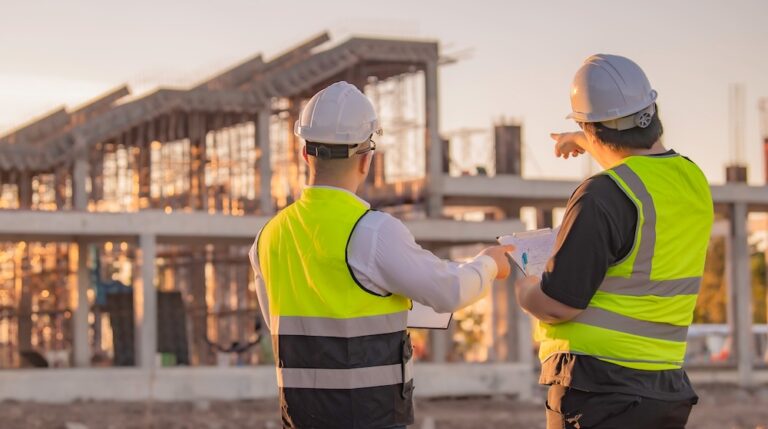
I was walking a site recently with an old friend — a superintendent I’ve known for years. He pointed at the stack of devices on the table and gave me a reality check: "I thought the digital revolution was going to save me time, but sometimes it feels like we just traded the clipboard for a charging cable."
It was a fair point. For the last decade, the industry's focus has been on "digital translation" — bringing what was offline, online. But as we look toward 2026, it's clear that digitization alone isn't enough. The industry is approaching a hard pivot. The era of adopting more apps and technology without a fundamental shift in how we work is over.
We don't need more apps. We need intelligence.
Based on the insights we’re seeing across our global customer base, here is a view of 2026 that moves beyond the generic "AI is coming" predictions. Here is how the jobsite and the business of building will actually transform.
Snapshot: 2026 Tech Trends
- From "paper-on-glass" to intelligence: We’re moving beyond simply digitizing forms to predictive systems that help you see around corners.
- AI as a "digital crew member": AI is moving from the back office to the field, acting as a force multiplier.
- Ending the "data tax": Manual data entry is dying. Ambient capture (voice/video) means the "source of truth" now builds itself.
- The connected construction graph: Owners and builders are finally aligning on a single, predictive source of truth to manage capital projects, not just paperwork.
- Empowering the "hybrid builder": We’re solving the labor crisis by merging craft with tech fluency --giving our people time back.
1. The rise of the 'blue-collar' AI agent
For years, software has been a passive tool: you put data in, you get a report out. In 2026, AI shifts from a tool you use to a partner you work with. We aren't talking about ChatGPT writing RFI responses in the back office. We are talking about autonomous AI agents that act as force multipliers in the field.
These agents have the ability to monitor schedule variances and potential safety risks, and even automate the "dull" supply chain coordination that bogs down superintendents today.
- The Shift: You won't search for data; the data will find you. An agent might nudge a Project Manager: "Based on weather patterns and current subcontractor pace, you are trending three days late on slab pour. Here are three optimization scenarios."
- The Cultural Challenge: This requires a massive cultural shift in trust. We must train our workforce to view these "digital crew members" not as surveillance, but as essential support that handles the drudgery so humans can focus on the art of building.
Stay updated on what’s happening in construction.
Subscribe to Blueprint, Procore’s free construction newsletter, to get content from industry experts delivered straight to your inbox.

2. Ambient capture ends the 'manual data entry' tax
The biggest friction on the jobsite today is the need to stop working to document work. Going forward, the most successful companies will be those that eliminate the concept of "offline mode" and manual data entry. We are moving toward "Ambient Capture," where the system of intelligence builds itself in the background.
Driven by the maturation of hardware — like AI-powered smart glasses and the explosion of Large Language Models (LLMs), data capture will become conversational and multimodal.
- The Reality: A superintendent shouldn't have to type a daily log after a 10-hour shift. They will simply speak to the site: "Hey, we finished the rebar on level 4, but the northeast corner needs inspection." Visual AI and natural language processing can ingest the video or voice command, categorize it, update the schedule, and automatically notify the inspector.
- The Global Impact: This removes the tech-literacy barrier. Whether it’s a voice note, a 360-degree video, or a natural conversation, the "system of intelligence" builds itself in the background.
3. The construction graph: Moving to predictive capital intelligence
Opaque data often fuels the adversarial relationship between owners and contractors. In 2026, the winners will utilize a connected Construction Graph -- a shared data layer that connects the entire project lifecycle.
To create a true 'system of intelligence,' we have to apply scientific rigor to our data. As Suffolk CTO Jit Kee Chin discusses on Episode 11 of The Power of Construction podcast, the goal is to move from gut instinct to a data-driven culture where predictive insights -- not just historical reports -- drive every major capital decision.
- No More "Rearview" Reporting: For project owners, this means moving from "rearview mirror" reporting to predictive capital intelligence. Owners will use AI models trained on their entire historical portfolio to forecast cash flow and total project cost with 95% accuracy.
- The "Handover" Gap Disappears: The data captured during the build becomes the building's "operating system" on Day 1. When the "source of truth" is shared and verified by the platform, the focus shifts from protecting liability to delivering the build.
4. Robotics: The transition from sci-fi to standard issue
For too long, robotics has been treated as a futuristic novelty. In 2026, the hype cycle dies, and construction robotics can enter the "power tool" phase — accessible, customizable, and task-specific. We are seeing robotics move from 'Capital Expenditure' to 'Operational Expense.'
With the global construction spend projected to hit $22 trillion by 2040, we cannot build the future with manual labor alone. As Hamzah Shanbari, Director of Innovation at Haskell, explains, robotics won't replace the builder; they will replace the 'dull, dirty, and dangerous' tasks that keep us from the high-value work we actually love.
- Retrofitting vs. Replacing: We are seeing companies retrofit existing heavy machinery with autonomous kits rather than asking GCs to buy an entirely new fleet.
- The Workflow: A GC can deploy a unit for layout in the morning and a remote-operated crane in the afternoon. These tools integrate directly with the platform, feeding progress data back into the schedule in real-time.
5. The 'hybrid builder' and the resilient future
The construction labor shortage isn't just about "hiring more bodies." It’s about changing the nature of work to attract digital natives. In 2026, the "hybrid builder" emerges -- a role that blends trade craftsmanship with tech fluency to handle a more complex physical world.
The next generation of builders won't tolerate a 'manual' jobsite. According to the 2025 Future State of Construction Report, nearly 18% of project time is currently lost just searching for data. The 'Hybrid Builder' uses AI to reclaim that time, ensuring that by the time 41% of our workforce retires in 2031, their institutional knowledge is already encoded into the systems we use every day.
- The cultural pivot: The carpenter who can pilot a drone for QA/QC or manage a prefabricated mass-timber assembly is the future of the industry.
- Building for resilience: This new workforce leverages intelligence to manage localized supply chains and the "adaptive reuse" of existing structures.
- Retention through efficiency: By automating the low-value administrative grind, we give our people time back. In 2026, the best recruitment tool isn't a signing bonus; it's a culture that doesn't burn people out.
Goodbye, disconnected data. Hello, industry transformation.
The future isn't about more gadgets and apps. It's about the intelligence they generate.
In 2026, the difference between a successful project and a money pit will be the ability to leverage data. The companies that dominate the market will be those that have spent the last few years organizing and connecting their data, workflows, and expertise, not just their files. We are building that future today -- a platform where AI, robotics, and humans work in a connected ecosystem to build what’s next.
What would change -- for your projects, your people, for your sleep at night -- if your data worked as hard as your crews?
Was this article helpful?
Scroll less, learn more about construction.
Subscribe to The Blueprint, Procore’s construction newsletter, to get content from industry experts delivered straight to your inbox.
By clicking this button, you agree to our Privacy Notice and Terms of Service.
Categories:
Written by
Kris Lengieza
Vice President, Global Technology Evangelist | Procore Technologies
30 articles
Kris Lengieza is the Global Technology Evangelist at Procore Technologies. Kris brings a wealth of experience and passion to the intersection of construction and technology. Previously serving as the VP of Global Partnerships & Alliances, Kris oversaw a diverse ecosystem spanning channel, ISV, public, and association partnerships. His recognition as one of the Top 40 Construction Professionals Under 40 by ENR and BD&C underscores his impact in the industry. Kris’ journey began with 15 years working in the construction field, where he embraced technology as an early adopter and strived to seamlessly integrate data across all construction solutions. As a futurist and construction tech evangelist, Kris now collaborates extensively with industry innovators, tech organizations, and construction companies. Together, they explore transformative technologies that promise to revolutionize our work processes. Kris has played a pivotal role in Procore’s product strategy, delivering industry and technology insights to improve how Procore’s solutions serve the industry.
View profileExplore more helpful resources

Does your asset management workflow actually work?
Every fixed asset installed on a project generates data long before handover. Is your team capturing it as it happens, or scrambling to reconstruct it after the fact? That question...
From spec book chaos to single source of truth
Picture this: An expansion is going in directly beside a high-volume line that cannot stop producing. Structural steel lands in March, mechanical completion is promised for August, and your only...
The hidden risk of relying on your EPC partner for project visibility
Many owners have thought some version of “We don’t need a capital project management platform — our EPC partner manages all of this for us.“ It’s a reasonable position. Your...

Why manufacturing owners are still managing capital projects like it’s 2010
There is a machine on your plant floor right now that knows it’s going to break. A sensor is reading a vibration signature on a bearing about three weeks before...
Free Tools
Calculators
Use our calculators to estimate the cost of construction materials for your next project.
Templates
Find a template to help you with your construction project tasks.
Material Price Tracker
Get the latest U.S. retail prices and view historical trends for common building materials.
Glossary
Explore key terms and phrases used in the industry.