
Getting a Head Start on Construction Robotics


Last Updated Jan 13, 2026
Makenna Ryan
Civil & Infrastructure Solutions Engineer
12 articles
Makenna Ryan is a Solutions Engineer at Procore. Prior to joining Procore, he spent seven years at McDermott International Inc. as a construction Manager and Senior Equipment Engineer. He also spent three years as a Project Engineer at Subsea7. Makenna received his B.S. in Mechanical Engineering and Technology from Texas Tech University. He is based in the Houston area.
Diane McCormick
Writer
57 articles
Diane McCormick is a freelance journalist covering construction, packaging, manufacturing, natural gas distribution, and waste oil recycling. A proud resident of Harrisburg, PA, Diane is well-versed in several types of digital and print media. Recognized as one of the premier voices in her region, she was recognized as the Keystone Media Freelance Journalist of the Year in 2022 and again in 2023.
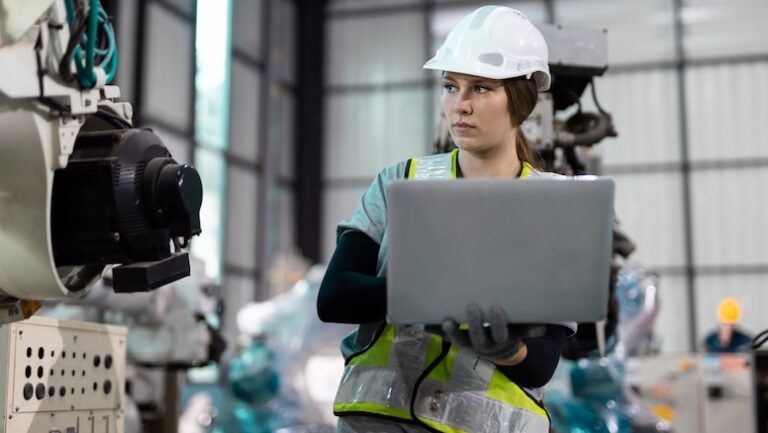
If there is a pain point anywhere in today’s construction environment, there’s a good chance that a robot can help resolve it. However, these robots typically serve a single purpose, executing only the orders programmed into them.
The future of robotics is coming closer, toward machines with the cognitive and mobility powers of their sci-fi forebears. They might not be ready yet, but before long, robots fully integrated with construction management software will perform autonomously.
With a look at the robotics of today and tomorrow, this article explores the keys to adopting robotics that capture key elements of risk mitigation and operational efficiencies.
Table of contents
Defining Construction Robots
In a fluid environment, it’s important to understand how construction robotics is defined.
Construction robotics refers to the use of automated machines and systems to improve performance or create new possibilities related to tasks and workflows. Robotics encompasses a range of technologies and applications, ranging from simple, task-specific robots to advanced, autonomous systems.
At this point in the evolution of technology, robotics currently in use on construction sites are mostly semi-automated, meaning they can extend human capabilities but still require human supervision and input. These robots usually perform single tasks in ways that are more efficient and quick than humans or in ways that avoid putting humans in dangerous situations.

Kris Lengieza
Vice President, Global Technology Evangelist
Procore Technologies
Robots Ready for the Jobsite Today
Although a majority of construction robots today are not fully autonomous, task-specific, purpose-built robots are already at work on many projects.
Automated Welding Machines
These machines are programmed to weld pipeline, and can work efficiently and accurately, producing more welds per hour than humans. This way, the work of highly skilled — and highly paid — welders can then be reserved for correcting any errors.
You can feed a welding robot with information, and it will execute the weld better than a manual welder can. If you weld miles and miles and miles of pipeline, I have less errors per unit rate mile delivered, and so what we gain there is efficiency. I can also invest in this robot one time. He doesn't get tired. He works overtime at the same rate that he works normal time.
Makenna Ryan
Civil & Infrastructure Solutions Engineer
Procore Technologies
3D Printers
More than just small-scale plastic printers, oversized 3D printers are sitting on sites and extruding layer after layer of specialized concrete that forms into structures.
Although still limited largely to residential construction, bridges, and components, 3D printing in construction offers the advantages of customization, sustainability, and efficiency. Remaining hurdles include lack of skilled operators, substandard quality, and high costs of buying, maintaining, and transporting the printers.
Digital Layouts
The longstanding art of manual layout can be time-consuming and error-prone. Digital layout printing deploys Roomba-style robots to print digital site maps or CAD/BIM files directly onto concrete slabs, for new levels of accuracy and efficiency.
Reality Capture
One of the most common robotics currently found on the jobsite lies in reality capture. Robotics mounted with cameras — often 4-legged robot "dogs" or drones — can be used to collect data on the jobsite through images, 3D scans or environmental readings.
Integrated with BIM and construction management software, the images and details can spot clashes and anomalies more efficiently than humans on walk-throughs. With the information the machines gather, field engineers and jobsite supervisors can resolve problems quickly and find more time in the day for other project tasks.
Tunnel Boring Machines
Although not common sights on most projects, if only for their multimillion-dollar price tags, tunnel boring machines (TBM) are giant robots that excavate and remove earth. As they advance, they stabilize the tunnel by building scaffolding behind them.
While highly complex, TBMs address challenges of tunneling subway lines or infrastructure under developed areas, while bringing efficiencies to mining operations and pipeline laying.
Automated Heavy Equipment
Automation of heavy equipment is also helping to deliver higher productivity and ease labor shortages. Major manufacturers are producing self-driving bulldozers and dump trucks, plus excavators that can be programmed to dig trenches or foundations without human operators.
Most of the robots in use on construction sites are purpose-built. Able to perform only a single function, they are easier to integrate into the scene than futuristic humanoid robots, because walking, talking droids haven’t advanced to human levels of functionality. They can’t successfully maneuver uneven surfaces, make decisions, or deviate from their programming – yet.
It’s hard (for robots) to navigate an environment built for humans. We have all the senses. We have incredible dexterity. We have the fluid in our ears that helps us keep balance and do all of these things. Robots have to do all of that intentionally with a sensor and then some kind of onboard processing that allows them to digest all that information very, very rapidly and then turn that into an actuator and actually move themselves to say, for instance, keep balance.
Makenna Ryan
Civil & Infrastructure Solutions Engineer
Procore Technologies
Stay updated on what’s happening in construction.
Subscribe to Blueprint, Procore’s free construction newsletter, to get content from industry experts delivered straight to your inbox.

Calculating the Returns: Bringing Robots to the Jobsite
Robots are ready for construction jobsites, but are jobsites ready for them? The potential for generating significant improvements in efficiency and capabilities is at hand.
However, random purchases don’t advance strategic goals. Contractors looking for return on their robot investments should follow these tactical steps:
Identify pain points.
Where can robots add operational efficiencies, mitigate risk, or compensate for labor shortages?
Consult the experts.
In-house development of robotics plans can be tempting, but partnering with experts offers a holistic view and better assurance of ROI through targeted use of available applications.
Establish a vision.
Focus on the power of robots to keep the company on track toward its strategic vision. Where and how can they contribute to improving timelines, budgets, and quality? That is what robots do best, but success depends on giving them purpose and direction.
Data integration is a good place to start, because most 3D models can be adapted to output the datasets that robots need to accomplish their tasks — for instance, linking layouts to a digital printer for etching onto floors.
Currently, data integration requires multiple steps to translate construction management software into terms that robots can understand. It’s a cumbersome process, but “machine-readable” languages are on the way, preparing to streamline robot instructions by turning data and drawings into the 1s and 0s that computers can digest and comprehend.
That dataset that is stored inside of your construction management software either dictates the environment that the robot's going to work in or the specific tasks you're going to give that robot. We don't make that connection today, but it is the same dataset that we will be using in the future.
Makenna Ryan
Civil & Infrastructure Solutions Engineer
Procore Technologies
The robotics revolution is coming, teaming up with AI to transform construction. Contractors who think strategically and coordinate robots with the daily operations of machines and people gain a competitive edge in the quest to make their jobsites safer, more efficient, and more productive.
Was this article helpful?
Scroll less, learn more about construction.
Subscribe to The Blueprint, Procore’s construction newsletter, to get content from industry experts delivered straight to your inbox.
By clicking this button, you agree to our Privacy Notice and Terms of Service.
Categories:
Written by
Makenna Ryan
Civil & Infrastructure Solutions Engineer | Procore Technologies
12 articles
Makenna Ryan is a Solutions Engineer at Procore. Prior to joining Procore, he spent seven years at McDermott International Inc. as a construction Manager and Senior Equipment Engineer. He also spent three years as a Project Engineer at Subsea7. Makenna received his B.S. in Mechanical Engineering and Technology from Texas Tech University. He is based in the Houston area.
View profileDiane McCormick
Writer | Procore Technologies
57 articles
Diane McCormick is a freelance journalist covering construction, packaging, manufacturing, natural gas distribution, and waste oil recycling. A proud resident of Harrisburg, PA, Diane is well-versed in several types of digital and print media. Recognized as one of the premier voices in her region, she was recognized as the Keystone Media Freelance Journalist of the Year in 2022 and again in 2023.
View profileExplore more helpful resources

Does your asset management workflow actually work?
Every fixed asset installed on a project generates data long before handover. Is your team capturing it as it happens, or scrambling to reconstruct it after the fact? That question...
From spec book chaos to single source of truth
Picture this: An expansion is going in directly beside a high-volume line that cannot stop producing. Structural steel lands in March, mechanical completion is promised for August, and your only...
The hidden risk of relying on your EPC partner for project visibility
Many owners have thought some version of “We don’t need a capital project management platform — our EPC partner manages all of this for us.“ It’s a reasonable position. Your...

Why manufacturing owners are still managing capital projects like it’s 2010
There is a machine on your plant floor right now that knows it’s going to break. A sensor is reading a vibration signature on a bearing about three weeks before...
Free Tools
Calculators
Use our calculators to estimate the cost of construction materials for your next project.
Templates
Find a template to help you with your construction project tasks.
Material Price Tracker
Get the latest U.S. retail prices and view historical trends for common building materials.
Glossary
Explore key terms and phrases used in the industry.