
How GCs Can Minimize Waste With a Strong Inventory Management System


Last Updated Jan 16, 2026
James Kerr
Enterprise Solution Specialist, Resource Management
James Kerr is an Enterprise Solution Specialist for Procore Technologies.
Kacie Goff
Contributing Writer
99 articles
Kacie Goff is a construction writer who grew up in a construction family — her dad owned a concrete company. Over the last decade, she’s blended that experience with her writing expertise to create content for the Construction Progress Coalition, Newsweek, CNET, and others. She founded and runs her own agency, Jot Content, from her home in Ventura, California.
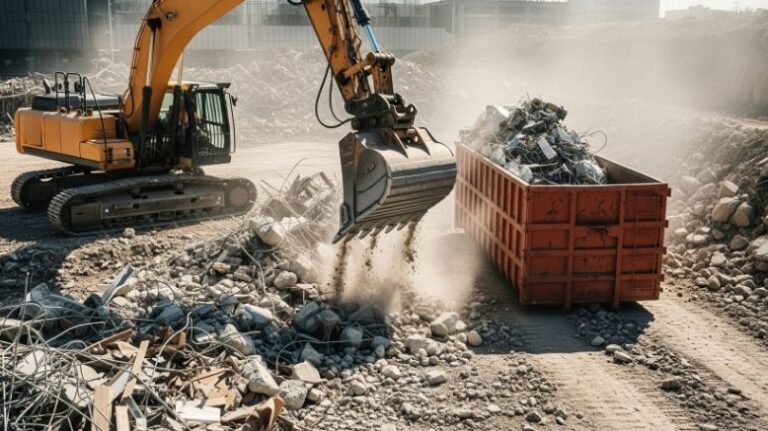
Construction is a very fluid and fast-paced industry. Any given jobsite might have thousands of moving pieces, plus new items showing up on the loading dock day after day. In the midst of what can be chaos, it’s unsurprising that shipments get improperly recorded, items go missing and materials get damaged. Material waste is a common problem.
That costs general contractors (GCs) in a few ways: On top of the cost of the wasted material itself, schedule and labor costs add up when installation can’t proceed as planned. If the issue gets big enough, the GC’s poor material management can end up on the owner’s radar in an unpleasant way.
Fortunately, emerging inventory management technology helps general contracting firms avoid the direct, schedule and reputational cost of material waste.
I’ve certainly worked on jobs where we had a very high percentage of material budget lost due to wastage, or wrong materials, or damage.
James Kerr
Enterprise Solution Specialist, Resource Management
Procore Technologies
Table of contents
The Pressing Problem: Material Waste
A study published in the Journal of Applied Engineering Science highlighted the issue of material waste, pointing out that it comes from a variety of sources but contributes to the same complications: “cost increases, timeline extensions and environmental harm.”
Like most problems, material waste is best addressed at the source. For GCs, this issue often arise for one or more of the following reasons.
Quantity Issues
Improper planning can lead to over- or under-ordering. Ordering too much creates waste in an obvious way, but not ordering enough can be even more damaging to GCs. When materials aren’t on site for the planned install, the company often ends up wasting labor hours.
Unforeseen Conditions
From design changes to owner requests, project requirements can shift over time. The previously ordered material may no longer fit the need, leading to wastage.
Tracking Issues
If the GC requires team members to manually track materials (e.g., enter information into a spreadsheet), it opens up room for delays. If someone needs to go see the material, then come back to the trailer to enter that data, they might simply misremember what they saw. On top of this, team members might skip manual material tracking because they’re overly busy. If it’s onerous to record that material has moved up to the second floor, they might decide the effort isn’t needed, assuming people will find it when they need it.
Receiving Issues
The fast pace of construction projects makes it easy for issues like incorrect quantities or the wrong materials to get missed upon load-in.
Loss or Damage
Improper storage can cause damage to materials, either from elemental exposure or as a result of the people and equipment on the jobsite coming into contact with the material. Beyond that, material can simply go missing. If the team is looking for one box of screws that could be anywhere in a high-rise tower, they might decide it’s easier to re-order than continue the hunt.
On top of material wastage, all of these problems contribute to time and effort wasted. It all adds up for GCs.
Material has its own cost, but material also ties in with labor costs and schedule costs. You may be missing a couple of things, but that means that the worker has to stop that activity, go ask for another activity or go find something else to do, and then come back to it.“And in the construction world, every time we start and stop an activity, there's some amount of time spent setting up and breaking down. So it compounds beyond the initial cost of the material into related costs across schedule, time, delays and labor.
James Kerr
Enterprise Solution Specialist, Resource Management
Procore Technologies
The Fix: Inventory Management Systems
As the technology that supports construction evolves to better meet the industry’s needs, software providers have taken note of the big problem that is material waste. An increasing number offer inventory management systems to help.
As the name suggests, these technologies support construction teams in tracking inventory at each step along the way, facilitating stronger material management. A good system should start tracking upon the initial identification of the material need, then continue through to install. To be most effective, the inventory management system should capture data on:
- Lead times
- Purchasing
- Submittals
- Storage location (i.e., onsite [including precise location on the jobsite] or offsite [at which warehouse, laydown yard, etc.])
- Receiving, including percentage received
- Damage
- Incorrect items or quantities
With visibility into all of this information for every material the job requires, GCs have an easier time avoiding incorrect quantities, loss and more. Better still, when issues do arise (e.g., wrong amount received), they get caught early. Procurement can step in immediately to rectify the problem, minimizing delays.
At a high level, inventory management is aimed at tracking material from the moment we identify the need all the way through the moment we install it — keeping that updated the whole way.
James Kerr
Enterprise Solution Specialist, Resource Management
Procore Technologies
Key Features of a Strong Inventory Management System
If the GC firm decides to invest in an inventory management system, they want it to deliver measurable advantages across the company’s projects. The following functionality helps them unlock better ROI.
Field Access
The inventory management system absolutely needs to function in the field, ideally from any device. When people on the jobsite can access and update the inventory log, it helps everyone get real-time updates about the status of the materials needed on the project.
Beyond this, because field access connects the folks on the jobsite, it helps them feel ownership of the materials. Bridging the gap between procurement and installers reminds everyone that they’re on the same team with the same goal: an on-time, on-budget project delivery. This way, even when they’re hurrying, the increased ownership from people in the field helps to encourage good stewardship of the on-site materials.
Connection to Procurement Data
Good planning is key to avoiding material waste, but so is connecting everyone interacting with those materials to the plan. The right system allows team members to scan shipping labels or bills of lading and automatically compare that against the purchase order (PO), marking items off as received. Better still, it can pull up the submittal and confirm alignment.
Issue Flagging
To minimize the schedule and labor issues that come with material problems, good inventory management systems allow for real-time alerts about issues. If something comes off the truck damaged or in an incorrect quantity, for example, the person at the loading dock can immediately notify the appropriate stakeholders.
This prevents the issue from going undiscovered for days or even weeks, giving the team more time to resolve the problem.
Real-Time Location Tracking
As with real estate, avoiding material waste is all about location, location, location. The right inventory management system allows stakeholders to know how much of a PO is onsite, and precisely where each item is located.
By locating materials, inventory management systems support just-in-time (JIT) delivery. When teams can see what’s already on site, what’s in offsite storage and what’s still outstanding from the shipper, it’s much easier to properly time when materials should arrive on the job.
Advanced Tech Integration
To make it easier to track materials, inventory management systems usually tie to technology like radiofrequency identification (RFID) tags, quick-response (QR) codes or internet of things (IoT) sensors. These make it easier to pinpoint that material’s location.
Integration with this tech can also help team members pull up information about the material. Scanning the QR code might highlight its place in the schedule, for example.
QR codes are generally lower-lift and easy to attach to items with a simple sticker. More sophisticated (and expensive) tech like IoT sensors are often reserved for high-value materials.
Stay updated on what’s happening in construction.
Subscribe to Blueprint, Procore’s free construction newsletter, to get content from industry experts delivered straight to your inbox.

Using Inventory Management System Data to Refine Procurement
Once the GC has an inventory management system in place, the procurement team can use the data it generates to inform better purchasing decisions and material management practices. They might analyze the data to determine:
- The shipping companies most frequently deliver damaged materials
- What supplies miss their lead dates most often
- Manufacturers who send the highest percentage of unusable materials (this is often particularly useful for drywall and lumber)
- Materials that have the highest spoilage/wastage rates
- When materials should be stored offsite or in a material lockup
- Which materials are most frequently associated with adverse schedule impacts
With this information, the GC can identify which manufacturers, vendors and shippers deliver the highest quality and most reliability.
They can also fine-tune processes. They might determine how far in advance POs for certain long-lead materials need to be cut, for example. Or they might learn they need to order 20% more of an item to account for how it gets banged up in transport and on the jobsite — or establish a process to store that material offsite and use JIT delivery.
Over time, inventory management data should help the GC’s team learn how much material to order when, and from whom. More efficiency here directly reduces material waste. That, in turn, helps the GC to be more sustainable.
An [inventory management system] is going to up-level purchasing and tracking and receiving and all the things we've talked about, but it also gives GCs data to use with their other tools to make their construction and operations teams smarter.
James Kerr
Enterprise Solution Specialist, Resource Management
Procore Technologies
Inventory Management: Part of the Big Picture
Inventory management data can feed elsewhere in the GC’s tech stack. For example, when it connects to the firms’ financial systems, it can help the finance function make sure they’re only paying the vendor for what’s been received. If it integrates with the company’s scheduling software, it helps the project managers make sure teams have what’s required to do the work on the day it’s planned.
On the whole, inventory management systems help GCs avoid material waste and the schedule and labor costs that come with it, all while supporting the entire company’s processes.
Was this article helpful?
Scroll less, learn more about construction.
Subscribe to The Blueprint, Procore’s construction newsletter, to get content from industry experts delivered straight to your inbox.
By clicking this button, you agree to our Privacy Notice and Terms of Service.
Categories:
Written by
James Kerr
Enterprise Solution Specialist, Resource Management | Procore Technologies
James Kerr is an Enterprise Solution Specialist for Procore Technologies.
View profileKacie Goff
Contributing Writer | Procore Technologies
99 articles
Kacie Goff is a construction writer who grew up in a construction family — her dad owned a concrete company. Over the last decade, she’s blended that experience with her writing expertise to create content for the Construction Progress Coalition, Newsweek, CNET, and others. She founded and runs her own agency, Jot Content, from her home in Ventura, California.
View profileExplore more helpful resources

Does your asset management workflow actually work?
Every fixed asset installed on a project generates data long before handover. Is your team capturing it as it happens, or scrambling to reconstruct it after the fact? That question...

From spec book chaos to single source of truth
Picture this: An expansion is going in directly beside a high-volume line that cannot stop producing. Structural steel lands in March, mechanical completion is promised for August, and your only...
The hidden risk of relying on your EPC partner for project visibility
Many owners have thought some version of “We don’t need a capital project management platform — our EPC partner manages all of this for us.“ It’s a reasonable position. Your...

Why manufacturing owners are still managing capital projects like it’s 2010
There is a machine on your plant floor right now that knows it’s going to break. A sensor is reading a vibration signature on a bearing about three weeks before...
Free Tools
Calculators
Use our calculators to estimate the cost of construction materials for your next project.
Templates
Find a template to help you with your construction project tasks.
Material Price Tracker
Get the latest U.S. retail prices and view historical trends for common building materials.
Glossary
Explore key terms and phrases used in the industry.