
How Construction Technology is Transforming Safety, Efficiency, and Sustainability



Last Updated Dec 11, 2025
Kris Lengieza
Vice President, Global Technology Evangelist
30 articles
Kris Lengieza is the Global Technology Evangelist at Procore Technologies. Kris brings a wealth of experience and passion to the intersection of construction and technology. Previously serving as the VP of Global Partnerships & Alliances, Kris oversaw a diverse ecosystem spanning channel, ISV, public, and association partnerships. His recognition as one of the Top 40 Construction Professionals Under 40 by ENR and BD&C underscores his impact in the industry. Kris’ journey began with 15 years working in the construction field, where he embraced technology as an early adopter and strived to seamlessly integrate data across all construction solutions. As a futurist and construction tech evangelist, Kris now collaborates extensively with industry innovators, tech organizations, and construction companies. Together, they explore transformative technologies that promise to revolutionize our work processes. Kris has played a pivotal role in Procore’s product strategy, delivering industry and technology insights to improve how Procore’s solutions serve the industry.
Adam Fairbairn
Enterprise Solution Specialist, BIM
Adam is a BIM solution specialist and Lead Solutions Engineer at Procore Technologies. He works ollaboratively with company owners, construction managers, general contractors, architects, engineers and specialty contractors to discover their needs and identify solutions to meet those needs.
Kristen Frisa
Contributing Writer
126 articles
Kristen Frisa is a contributing writer for Procore. She also contributes to a variety of industry publications as a freelance writer focused on finance and construction technology. Kristen holds a Bachelor of Arts in Philosophy and History from Western University, with a post-graduate certificate in journalism from Sheridan College. She lives in Ontario, Canada.
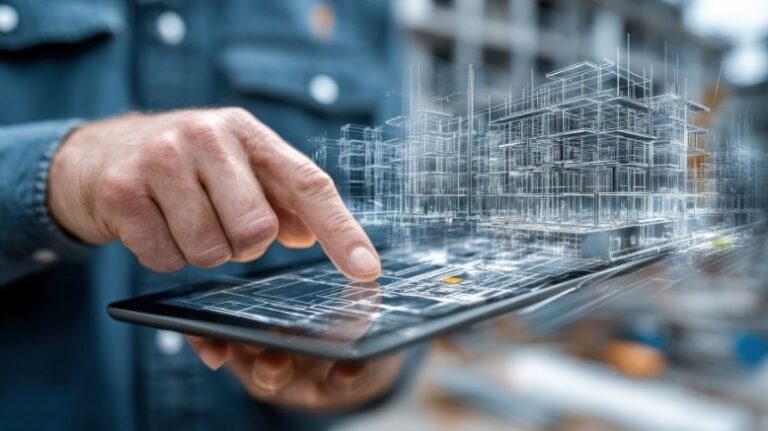
The construction industry is taking part in a remarkable transformation as the sophistication and availability of construction technology have exploded in recent years.
The term "construction technology" has become a bit of a buzzword as the industry works to evolve to become safer, more efficient, and less wasteful.
This article will explore some of the most common types of construction technology and how they can improve construction operations for better project outcomes.
Table of contents
What is construction technology?
Generally, construction technology is hardware, software, or innovations that advance construction’s safety, efficiency, and sustainability.
Construction technology can refer to any of a slew of digital tools used on construction projects, from project management and accounting software, to 3D printing and modeling, and even autonomous or remote-operated equipment.
Integrating these technologies allows construction professionals to achieve higher productivity and better quality outcomes on their projects.
Key Types of Construction Technology
By itself, the term “construction technology” is very broad, but there are some general categories that con tech can be grouped into to start to give the idea some shape.
Here are some of the biggest players in construction technology right now.
Digital Design and Modeling (BIM)
Building Information Modeling (BIM) is a digital representation of the physical and functional characteristics of a facility. It allows design teams to see a 3D visualization of the architecture and structure of a building before any work on site happens.
By using BIM, project designers can detect problems between different elements of a building — for example, ductwork is going to get in the way of a doorway — so that teams can move things around before shovels hit dirt. By avoiding these problems early on, it can save teams time, money and resources, along with a lot of frustration.
Giving access to BIM on the jobsite can help significantly reduce rework in construction projects. Access to BIM can help teams see that installations proceed according to the coordinated plan. When contractors and field teams can view and share the latest 2D or 3D documents in real time, they can verify that each task is completed correctly, reducing the risk of potentially expensive errors.

Dave McCool
Director of Product
Procore Technologies
BIM makes all data and documents accessible to team members, so that architects, designers and owners can work together to create the best model possible. In this way, it serves as a shared knowledge resource, providing a reliable basis for decision-making throughout a project.
Automation and Robotics
Technologies such as robotic bricklaying, 3D printing and autonomous machinery help to increase precision and speed in repetitive and heavy work while helping to alleviate labor shortages and improve safety.
For instance, autonomous trucks, loaders and even drones can deliver materials and supplies to other areas of a construction site. Robots and drones can also be used to upload timely site photos and videos to project managers, without them being personally on site.
Specific-use-case robots are becoming increasingly effective. They are an extension of performing a task and still require human supervision. There are also fully autonomous robots that do a job or a set of jobs on their own. That's what people are hoping for with humanoid robots or maybe even robotic equipment.
Kris Lengieza
Vice President, Global Technology Evangelist
Procore Technologies
Smart Monitoring and IoT
The Internet of Things (IoT) is transforming construction sites into smart environments by connecting devices so they can communicate and share data in real-time.
IoT-enabled sensors and devices can monitor equipment performance, track materials, and ensure compliance with safety standards.
On the jobsite, IoT makes it possible to collect data on safety parameters like temperature and air quality, along with the movement of people, equipment and materials. Some IoT devices are relatively simple, like GPS sensors that only report location data. Others, like internet-connected drones — also called internet of drones (IoD) — can collect a broad spectrum of data about site conditions, project progress and more.

Paul Hedgepath
Director of Virtual Construction
MJ Harris Construction
As an example, a piece of equipment can be fitted with sensors that connect to the IoT to detect and monitor equipment health and track its whereabouts. If a sensor indicates a problem, the team can work to replace the equipment on site and perform maintenance before a malfunction can create a delay in project progress.
This connectivity facilitates proactive maintenance, resource optimization and improved project management.
Project Management Platforms and Administrative Software
Project management platforms offer centralized systems where all project-related information can be accessed and managed efficiently for more effective planning, monitoring and execution. Through a project management platform, team members can work together and communicate clearly, sharing documents, photos, updates and messages.
These platforms provide tools for effective scheduling, resource allocation, and task management, while offering real-time data and analytics driven by AI and machine learning, to read vast data sets and identify any coming risks to support better decision-making.
Meanwhile, administrative software can streamline and automate workflows like payroll, invoicing and procurement, and integrate with other systems for less manual data entry and fewer errors. Financial software can provide real-time budget and cost control numbers for better budgeting, while workforce programs help track employees’ skill sets and training and place them where they will be most helpful.
Virtual Reality (VR) and Simulations
Virtual reality (VR) tech can be used for immersive safety training, allowing workers to practice handling hazardous situations in a risk-free environment.
VR simulations can also be very helpful during the design process, as it gives architects and engineers the chance to experience the spaces they create before construction begins. As they virtually “walk through” their buildings, they can make changes in real-time, giving them the chance to fix any errors and make improvements early on.
Free AI in Construction Course with Hugh Seaton
Start learning today with industry expert Hugh Seaton and discover how AI can boost efficiency, reduce risk, and transform your projects.

Benefits of Construction Technology
When used effectively, construction technology can help construction firms tighten up their practices to save time, operate more safely and produce better project outcomes. Here are some of the key benefits of effective tech that can help them get there.
Enhanced Safety
Construction technology can have a big impact on the safety of workers. Wearable technology like smart helmets and vests can monitor workers’ health metrics and environmental conditions, providing real-time alerts about potential hazards like heat stress or toxic gas exposure.
Further, automation and robotics further enhance safety by allowing workers to operate machinery at a distance when a jobsite requires work to happen in hazardous environments, like in demolition or at heights, which can help prevent injuries and fatalities.
Here’s a great example: There’s a robot that is made to put anchors in for elevator installation in high rises, which is a very dangerous job that a human normally does. They tie off, they take down the handrail and they literally hang over the side of the building to do it, and they may be 20 or 30 stories up in the air.
When the robot does this job, the quality of the work may even improve, because people can only contort a certain way, and they may rush to finish so they don’t have to hang over a building any more. The robot doesn't have any of those feelings. And so it just focuses on the job at hand, which is putting the anchor in.
Kris Lengieza
Vice President, Global Technology Evangelist
Procore Technologies
Improved Cost Control
Construction technology can allow contractors to manage budgets more effectively by better controlling and managing costs throughout a project.
For example, BIM allows for detailed project visualization and planning, which can reduce errors and conflicts during construction, minimizing costly rework and material waste.
Using BIM with an established, coordinated process to take these designs and identify issues and then track and manage those challenges collaboratively and efficiently can really reduce the budget needed. Anything you can do to get a better understanding of project progress is going to help you be more proactive in managing overruns.
Adam Fairbairn
Enterprise Solution Specialist, BIM
Procore Technologies
Project management software offers real-time data analytics and forecasting capabilities, helping contractors monitor expenses and optimize resource allocation.
Better Quality of Work
Contractors can use construction technology to improve the quality of work on their building projects. Drones provide high-resolution imagery for site inspections and progress tracking to help contractors check that construction adheres to design specifications. Early identification of potential issues through drone surveillance helps maintain high standards of workmanship.
Meanwhile, quality management software tracks quality metrics and standards so contractors can ensure their teams consistently apply best practices in their daily work, and allowing them to act early to fix any missteps.
Improved Sustainability
Sustainability is a growing concern in the construction industry, and technology offers effective solutions. Improved construction management activities reduce rework and the associated material wastes that go with it. Effective designs can also contribute to waste reduction.
Necessary waste can be handled better with waste reduction technologies, which optimize material use and recycling processes.
Choosing The Right Construction Technology for Your Project
There are so many construction technology options on the market. Selecting the right construction technology for an individual business or project requires careful consideration of the factors involved.
Here are some key steps and considerations to guide decision-making.
Identify project challenges.
Contractors can begin selection by analyzing the common causes of project delays and inefficiencies within their projects. Understanding where the build is most inefficient or which processes are prone to bottlenecks can help pinpoint areas where technology could make a significant impact. For instance, if scheduling is a frequent issue, project management software might be a suitable investment.
Evaluate financial concerns and budget constraints.
Financial considerations are key to technology selection. Determine the budget available for technology investments and weigh it against the potential return on investment (ROI). Consider both upfront costs and long-term savings, such as reduced labor costs or improved energy efficiency.
Seek software integrations.
Consider the need for software integrations that enhance existing processes and tools. Look for technologies that can seamlessly integrate with current systems to avoid disruptions. For instance, if using BIM, ensure that the new technology can integrate with modeling software for enhanced collaboration and data sharing.
Pilot and evaluate.
Before full-scale implementation, consider piloting the technology on a smaller project or a specific phase of a larger project. This allows contractors to evaluate its effectiveness, identify any issues, and make adjustments before a broader rollout.
How Technology is Changing the Construction Industry
Technology is constantly advancing the world of construction. Builds are becoming faster, stronger, and more advanced. Construction technology is revolutionizing productivity by transforming traditional building practices.
For example, embracing offsite construction, where components are manufactured in controlled environments similar to factories, has reduced waste by allowing precise material usage and minimizing weather-related delays. Whether offsite or in the field, construction has benefited from streamlined workflows that enhance worker productivity and tightened project timelines.
Safety and training in construction have greatly improved through modern technologies. While VR has allowed workers to practice in safe environments, safety and compliance capabilities in construction management platforms allow workers to report issues from the field, and managers to follow up to correct any problems.
Technology has also given contractors the tools they need to deal with ongoing labor concerns. With advancements in robotics and machine learning, companies can achieve more with fewer human resources. Autonomous heavy machinery, equipped with sensors, GPS, and geo-fencing, can perform tasks like excavation and grading continuously without the need for an operator. This doesn't just help reduce labor costs — it helps boost consistent work quality.
The Future of Construction Technology
Contractors can expect the future of construction to be increasingly driven by advanced technologies, leading to more efficient, sustainable, and safer projects. Innovations like AI, robotics, and 3D printing will streamline operations, reduce costs, and minimize human error.
This technological shift will give contractors the tools they need to deliver higher-quality results faster, while also addressing labor shortages through automation. Overall, embracing these advancements will provide a competitive edge, allowing businesses to adapt to evolving industry demands and enhance profitability.
Was this article helpful?
Scroll less, learn more about construction.
Subscribe to The Blueprint, Procore’s construction newsletter, to get content from industry experts delivered straight to your inbox.
By clicking this button, you agree to our Privacy Notice and Terms of Service.
Categories:
Written by
Kris Lengieza
Vice President, Global Technology Evangelist | Procore Technologies
30 articles
Kris Lengieza is the Global Technology Evangelist at Procore Technologies. Kris brings a wealth of experience and passion to the intersection of construction and technology. Previously serving as the VP of Global Partnerships & Alliances, Kris oversaw a diverse ecosystem spanning channel, ISV, public, and association partnerships. His recognition as one of the Top 40 Construction Professionals Under 40 by ENR and BD&C underscores his impact in the industry. Kris’ journey began with 15 years working in the construction field, where he embraced technology as an early adopter and strived to seamlessly integrate data across all construction solutions. As a futurist and construction tech evangelist, Kris now collaborates extensively with industry innovators, tech organizations, and construction companies. Together, they explore transformative technologies that promise to revolutionize our work processes. Kris has played a pivotal role in Procore’s product strategy, delivering industry and technology insights to improve how Procore’s solutions serve the industry.
View profileAdam Fairbairn
Enterprise Solution Specialist, BIM | Procore Technologies
Adam is a BIM solution specialist and Lead Solutions Engineer at Procore Technologies. He works ollaboratively with company owners, construction managers, general contractors, architects, engineers and specialty contractors to discover their needs and identify solutions to meet those needs.
View profileKristen Frisa
Contributing Writer | Procore
126 articles
Kristen Frisa is a contributing writer for Procore. She also contributes to a variety of industry publications as a freelance writer focused on finance and construction technology. Kristen holds a Bachelor of Arts in Philosophy and History from Western University, with a post-graduate certificate in journalism from Sheridan College. She lives in Ontario, Canada.
View profileExplore more helpful resources

Does your asset management workflow actually work?
Every fixed asset installed on a project generates data long before handover. Is your team capturing it as it happens, or scrambling to reconstruct it after the fact? That question...
From spec book chaos to single source of truth
Picture this: An expansion is going in directly beside a high-volume line that cannot stop producing. Structural steel lands in March, mechanical completion is promised for August, and your only...
The hidden risk of relying on your EPC partner for project visibility
Many owners have thought some version of “We don’t need a capital project management platform — our EPC partner manages all of this for us.“ It’s a reasonable position. Your...

Why manufacturing owners are still managing capital projects like it’s 2010
There is a machine on your plant floor right now that knows it’s going to break. A sensor is reading a vibration signature on a bearing about three weeks before...
Free Tools
Calculators
Use our calculators to estimate the cost of construction materials for your next project.
Templates
Find a template to help you with your construction project tasks.
Material Price Tracker
Get the latest U.S. retail prices and view historical trends for common building materials.
Glossary
Explore key terms and phrases used in the industry.