
The Case for Greater Ambulatory Care Investment

Last Updated Mar 2, 2026
Doug Carney
Senior Vice President, Facilities, Real Estate, and Capital Program
Doug Carney is an architect and senior executive with over three decades of leadership in high-stakes institutional real estate and capital program management. Combining deep academic rigor with large-scale operational expertise, Doug serves as a Clinical Professor of Construction Management & Real Estate Development at Drexel University, a position he has held since 2004. As the Senior Vice President for Facilities, Real Estate, and Capital Program at the Children’s Hospital of Philadelphia (CHoP), Doug oversees one of the most complex healthcare infrastructures in the country. His career is defined by a unique ability to bridge the gap between visionary design and fiscal reality. His leadership in healthcare and education infrastructure is backed by a track record of award-winning projects, most notably the Buerger Center for Advanced Pediatric Care, which was recognized as the Engineering News Record’s Best US Healthcare Building (2016) and a Philadelphia Water Storm Water Pioneer (2017).
Jonathan Greene
Writer
17 articles
Jon Greene is a freelance educator, writer, and award winning theater maker. As an educational writer he has created content, lessons, and led seminars for Young Audiences of Louisiana, Hynes Charter System in New Orleans, Centre Stage School of the Arts in Singapore, 'Friends of The Museum' Docent Workshop in Singapore, The Prague Public High School System, Moleac Pharmaceuticals, and with the Grand Portage Ojibwa Tribe. His work and writing for theater has been featured in Howlround and American Theater Magazine and he is the recipient of 2 regional theater awards in his home of New Orleans. He is a BFA Graduate of Boston University and a previous Kennedy Center Fellow.
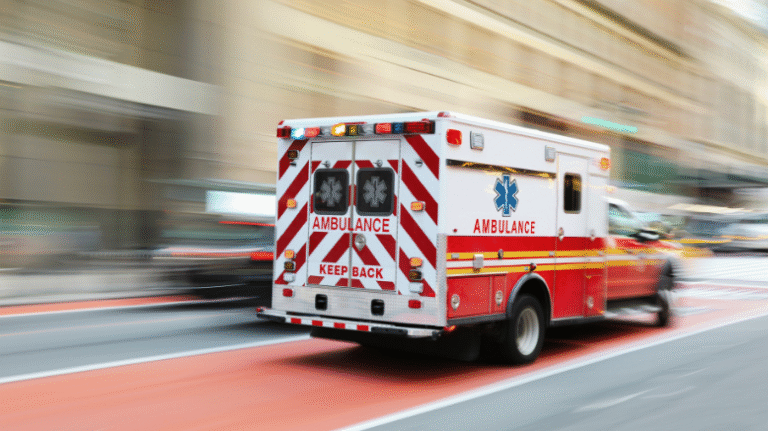
Healthcare owners and developers are grappling with significant challenges and costly requirements to achieve and maintain operational efficiency in the modern era.
Rethinking how and where healthcare is delivered can reduce the struggle to balance daily operations and optimize the patient and staff experience. It can also help in the management of significant energy costs faced by facilities in major urban centers.
As the Senior Vice President for Facilities, Real Estate, and Capital Program at the Children’s Hospital of Philadelphia (CHoP), Doug Carney oversees one of the most complex healthcare infrastructures in the country. Here, Doug discusses the way infrastructure investment for healthcare projects creates successful hospitals — and safer patients.
A more robust ambulatory capability is the only way you can economically improve healthcare outcomes for the underserved.
Preventive care is better for the patient and certainly better economically.
Doug Carney
Senior Vice President, Facilities, Real Estate, and Capital Program
Children’s Hospital of Philadelphia
Patient Safety Through Strategic Infrastructure Investment
Hospitals need to maintain the reliability and redundancy of their critical systems. The associated capital cost with those needs forces organizations to consider how much investment in future capacity, current redundancy, and disaster reliability they can actually support economically.
Five to 10 years ago, no one put air conditioning or air handling onto emergency generation. But now everyone’s doing it — so the need for space, generation, and fuel is dramatically increasing. Further driving the issue is evolving market tension regarding the cost of sustainability.
Doug Carney
Senior Vice President, Facilities, Real Estate, and Capital Program
Children’s Hospital of Philadelphia
Situations like these put a strain on the bottom line of an organization as well as the care they provide and the safety afforded to patients.
They also reduce flexibility and maneuverability when the facility faces an actual emergency.
From a healthcare perspective, the idea of putting all your eggs in one basket and that basket that is already maxed out, is unwise and has to be resolved.
Doug Carney
Senior Vice President, Facilities, Real Estate, and Capital Program
Children’s Hospital of Philadelphia
Seeking out and approving models that drive down costs, while at the same time putting care as close to patients as possible is the right paradigm for investment.
Creating a Viable Model for Success Through a Continuum of Care
Early cases of a successful healthcare model were focused on safety through redundancy — the concept that if one system, or in the case of Children’s Hospital of Philadelphia, the whole facility — failed, there was a back up system or a new and prepared place to take patients.
Modern academic medical centers, however, are among the most technically complex buildings to construct, resulting in extended build times and increased costs.
Those realities are exacerbated when the facility is situated in an urban center. The hard truth of the matter is clear: facilities have outscaled the investments required to support them.
There was one urban healthcare system constructing a similar size building to something we were looking at, and it was substantially less expensive than what we were working on. But it was in a rural environment. And the president of the hospital asked ‘why can’t we build it at the same cost they can?’ and I said ‘We can — but we’d have to build it there.’
Doug Carney
Senior Vice President, Facilities, Real Estate, and Capital Program
Children’s Hospital of Philadelphia
Transitioning fully to a continuum of care model presents a viable solution. This model begins with a doctor’s office, progresses to a specialty care center, then an ambulatory surgery center, followed by a community hospital for lower acuity and less comorbidity, and finally, an academic medical center.
Increased complexity and capabilities can transform patient care.
The continuum model accelerates the construction of ambulatory surgical centers that are both complex and capable of handling difficult cases and co-morbidities, all while being designed for same-day discharges.
A great example is moving hip replacement surgery into an ambulatory network where you have the surgery in the ASC, Ambulatory Surgery Center, but then you go home.
Another example is Mount Sinai’s Union Square location, where you can receive almost all the same types of services that you can at the academic medical center, suitable for outpatient care.
Doug Carney
Senior Vice President, Facilities, Real Estate, and Capital Program
Children’s Hospital of Philadelphia
This shift in patient care delivery marks a critical adaptation to modern healthcare needs. It not only improves accessibility and reduces strain on traditional hospital infrastructure but also aligns with the economic imperatives to deliver cost effective care. At the same time, it supports the construction industry through a systematic expansion of necessary buildouts and projects.
Ambulatory care and an expanded geographic footprint present significant opportunities for long-term sustainability. Considering the investment required, it’s important to weigh the risks and rewards as part of the process.
Was this article helpful?
Scroll less, learn more about construction.
Subscribe to The Blueprint, Procore’s construction newsletter, to get content from industry experts delivered straight to your inbox.
By clicking this button, you agree to our Privacy Notice and Terms of Service.
Categories:
Written by
Doug Carney
Senior Vice President, Facilities, Real Estate, and Capital Program | Children’s Hospital of Philadelphia
Doug Carney is an architect and senior executive with over three decades of leadership in high-stakes institutional real estate and capital program management. Combining deep academic rigor with large-scale operational expertise, Doug serves as a Clinical Professor of Construction Management & Real Estate Development at Drexel University, a position he has held since 2004. As the Senior Vice President for Facilities, Real Estate, and Capital Program at the Children’s Hospital of Philadelphia (CHoP), Doug oversees one of the most complex healthcare infrastructures in the country. His career is defined by a unique ability to bridge the gap between visionary design and fiscal reality. His leadership in healthcare and education infrastructure is backed by a track record of award-winning projects, most notably the Buerger Center for Advanced Pediatric Care, which was recognized as the Engineering News Record’s Best US Healthcare Building (2016) and a Philadelphia Water Storm Water Pioneer (2017).
View profileJonathan Greene
Writer
17 articles
Jon Greene is a freelance educator, writer, and award winning theater maker. As an educational writer he has created content, lessons, and led seminars for Young Audiences of Louisiana, Hynes Charter System in New Orleans, Centre Stage School of the Arts in Singapore, 'Friends of The Museum' Docent Workshop in Singapore, The Prague Public High School System, Moleac Pharmaceuticals, and with the Grand Portage Ojibwa Tribe. His work and writing for theater has been featured in Howlround and American Theater Magazine and he is the recipient of 2 regional theater awards in his home of New Orleans. He is a BFA Graduate of Boston University and a previous Kennedy Center Fellow.
View profileExplore more helpful resources

Does your asset management workflow actually work?
Every fixed asset installed on a project generates data long before handover. Is your team capturing it as it happens, or scrambling to reconstruct it after the fact? That question...

From spec book chaos to single source of truth
Picture this: An expansion is going in directly beside a high-volume line that cannot stop producing. Structural steel lands in March, mechanical completion is promised for August, and your only...
The hidden risk of relying on your EPC partner for project visibility
Many owners have thought some version of “We don’t need a capital project management platform — our EPC partner manages all of this for us.“ It’s a reasonable position. Your...

Why manufacturing owners are still managing capital projects like it’s 2010
There is a machine on your plant floor right now that knows it’s going to break. A sensor is reading a vibration signature on a bearing about three weeks before...
Free Tools
Calculators
Use our calculators to estimate the cost of construction materials for your next project.
Templates
Find a template to help you with your construction project tasks.
Material Price Tracker
Get the latest U.S. retail prices and view historical trends for common building materials.
Glossary
Explore key terms and phrases used in the industry.