
Automation in Construction: Transforming the Future of Building

Last Updated Sep 1, 2026
Julia Tell
Contributing Writer
79 articles
Julia Tell is a freelance writer covering education, construction, healthcare, and digital transformation. She holds a Ph.D. in Media & Communications and has written for publications including Business Insider, GoodRx, and EdSurge, as well as nonprofits, international businesses, and educational institutions.
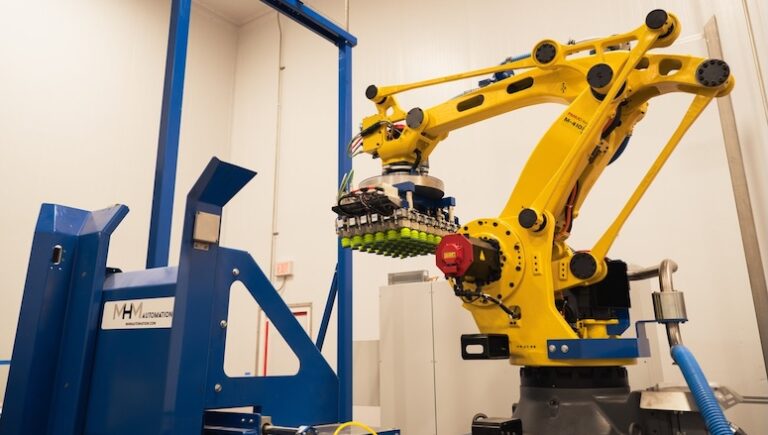
Technological advancements empower the construction industry to tackle complex projects and drive the global demand for sustainable, feature-rich structures technology makes possible. From design to closeout, construction automation is enabling contractors to deliver homes, commercial properties, and infrastructure the world needs with greater efficiency.
In this article, we explore the transformative impact of construction automation, highlighting the benefits and practical applications across various stages. We’ll also cover types of automation, specific areas improved by these technologies, and consider the future possibilities automation holds for construction professionals.
Table of contents
What is construction automation?
Construction automation integrates advanced technologies like software platforms, AI, drones, robots and 3D printing to enhance efficiency, safety and productivity. By streamlining workflows, reducing labor costs and minimizing errors, automation optimizes construction processes.
Technologies in this field perform tasks traditionally handled by humans, particularly those that are repetitive, hazardous or require precision. For instance, robotic equipment automates tasks like bricklaying and welding, freeing workers to focus on more complex activities. Internet-connected sensors and cameras provide real-time site data, aiding informed decision-making. Drones offer aerial insights for surveying, while 3D printers create customized components efficiently, reducing time and material usage.
Though construction has been slower to adopt digital transformation than other industries, the proven benefits of automation in management and field operations are accelerating its uptake. To combat headwinds impacting the industry, including labor shortages and rising material costs, automation is poised to enhance project success and profitability through improved risk management, productivity gains and smarter, data-driven decisions that reduce delays and trim costs.
Construction software further enhances productivity by automating document flows, communications, notifications, purchasing and management tasks, improving accuracy and efficiency. Collectively, these technologies drive innovation and set new standards in the industry.
Key benefits of Construction Automation
Construction automation offers significant advantages across various aspects of the industry. From sustainability to safety, these technologies are shaping the future of construction.
Mitigating Labor Shortages
Automation reduces reliance on retiring skilled workers and attracts younger talent excited by advanced technology. Some technologies can perform work to reduce the amount of physical labor required on projects.
Increased Safety
By automating tasks in dangerous conditions with drones and robots, companies can minimize risks such as falls and collisions. Safety monitoring systems that incorporate sensors and AI analytics can detect safety risks early, allowing teams to mitigate them effectively.
Improved Efficiency
AI-driven automation in design allows architects to focus on creativity by handling routine tasks. Project management processes, from pre-construction to closeout, can be streamlined through automation. More efficient processes lead to faster project completion, which can also result in reduced costs.
Quality and Precision
Robots and 3D printing can execute complex designs with greater precision than humans. Automation enables data-driven decisions during construction, enhancing accuracy and consistency in construction projects.
More Sustainable Building
Advanced technologies allow builders to execute complex designs that integrate energy-efficient systems into the structure. Automated devices, like drones, support the building of renewable energy facilities, promoting eco-friendly practices. Digital project management also helps reduce material waste.
Types of Construction Automation
Automation in construction can be categorized into several key areas, each with specific use cases and differentiators.
Offsite Construction Automation
This approach changes construction into a process resembling modern automated manufacturing. It includes practices like prefabrication, volumetric and panelized modular construction and precast methods. These techniques streamline production by assembling components in controlled environments before transporting them to the construction site.
Onsite Construction Automation
Modern onsite construction automation integrates advanced systems directly at the construction site, enhancing efficiency while preserving architectural distinctiveness.
Unlike early implementations that often led to uniform structures, today's technologies allow for customization and flexibility, so unique design elements are maintained — even as automated processes streamline construction activities.
Robots
Robots, such as industrial robotic arms and mobile platforms, are increasingly being deployed to advance construction automation. While the future may hold construction-specific robots, current practices involve adapting manufacturing-based robots for construction tasks, improving precision and productivity.
Automated Construction Equipment
This extends automation beyond individual building components, treating the entire jobsite like a factory in the field. Automated equipment optimizes site operations, enhancing the overall construction process by integrating autonomous and semi-autonomous vehicles, 3D printers, site sensors, drones, and other machinery and technologies.
Integrated Tech Stacks
Integrated construction tech stacks combine software and hardware solutions with AI and machine learning to streamline communication and data management throughout the project lifecycle.
These systems enhance collaboration, ensure data consistency and improve real-time decision-making by analyzing data patterns and predicting project outcomes. AI-driven insights facilitate smarter planning and execution, maximizing efficiency and effectiveness.
How is automation used throughout the construction industry?
Automation is redefining the construction industry with practical applications across multiple stages. In design and planning, tools like Building Information Modeling (BIM) streamline project visualization and coordination, seamlessly integrating photos, videos, plans, and documentation.
Digital platforms automate data processes throughout the project lifecycle, improving communication and reducing administrative burdens. Software maintains a comprehensive repository of complex project information, allowing all stakeholders to quickly access up-to-date information, which in turn improves project management and collaboration.
During the construction phase, 3D printing can be employed to create complex components quickly and accurately, significantly reducing material waste. Robotics handles repetitive tasks such as bricklaying and welding, enhancing precision and safety on-site.
Additionally, drones can conduct site surveys and inspections, providing real-time data to improve decision-making and overall efficiency. These technologies collectively shorten project timelines and lower costs, making construction more sustainable and economically viable.
Stay updated on what’s happening in construction.
Subscribe to Blueprint, Procore’s free construction newsletter, to get content from industry experts delivered straight to your inbox.

6 Processes Improved by Construction Automation
As companies adopt more AI-powered construction technologies, more departments will become automated, requiring careful navigation of changing processes and more resources directed toward technology integration. Here are a few of the processes that benefit from automation.
Client Relationship Management
Automation in CRM systems enhances client relationships by streamlining communication, tracking interactions, and providing personalized updates. This leads to improved customer satisfaction and more efficient project management.
Estimation and Bidding
Automated construction estimating solutions allow contractors to send bidding invitations to subcontractors, save and compare bids and accurately determine total project costs, deadlines, milestones and necessary resources.
Supplier and Subcontractor Management
Estimators can use this software to manage accounts for suppliers and subcontractors, upload quotations, and leave feedback. This facilitates better decision-making for future hires by leveraging past experiences and recorded insights.
Architecture and Design
Automation tools reduce design errors and store drafts and ready 2D and 3D models in one accessible location, facilitating on-site building for both external and internal stakeholders.
Safety Monitoring
Automation in safety monitoring uses sensors, linked cameras and real-time data to track site conditions, alerting workers and managers to potential hazards and improving overall safety on construction sites.
Data Analysis and Forecasting
Advanced analytics and forecasting tools process vast amounts of data to predict project outcomes, optimize resource allocation and enhance decision-making, ensuring more accurate and efficient project execution.
The Future of Construction Automation
Automation is transforming the construction industry, revamping processes and delivering tangible benefits. Automation integration into project management software can provide a comprehensive overview of projects, helping both residential and commercial players avoid delays and cost overruns through enhanced communication, document management, and better cost control.
Construction automation can help professionals unlock the full potential of their projects, leading to greater efficiency and success. As technology advances, integrating automation can allow construction companies to operate smarter and faster to remain competitive and drive long-term innovation.
Was this article helpful?
Scroll less, learn more about construction.
Subscribe to The Blueprint, Procore’s construction newsletter, to get content from industry experts delivered straight to your inbox.
By clicking this button, you agree to our Privacy Notice and Terms of Service.
Categories:
Written by
Julia Tell
Contributing Writer | Procore Technologies
79 articles
Julia Tell is a freelance writer covering education, construction, healthcare, and digital transformation. She holds a Ph.D. in Media & Communications and has written for publications including Business Insider, GoodRx, and EdSurge, as well as nonprofits, international businesses, and educational institutions.
View profileExplore more helpful resources

Does your asset management workflow actually work?
Every fixed asset installed on a project generates data long before handover. Is your team capturing it as it happens, or scrambling to reconstruct it after the fact? That question...

From spec book chaos to single source of truth
Picture this: An expansion is going in directly beside a high-volume line that cannot stop producing. Structural steel lands in March, mechanical completion is promised for August, and your only...
The hidden risk of relying on your EPC partner for project visibility
Many owners have thought some version of “We don’t need a capital project management platform — our EPC partner manages all of this for us.“ It’s a reasonable position. Your...

Why manufacturing owners are still managing capital projects like it’s 2010
There is a machine on your plant floor right now that knows it’s going to break. A sensor is reading a vibration signature on a bearing about three weeks before...
Free Tools
Calculators
Use our calculators to estimate the cost of construction materials for your next project.
Templates
Find a template to help you with your construction project tasks.
Material Price Tracker
Get the latest U.S. retail prices and view historical trends for common building materials.
Glossary
Explore key terms and phrases used in the industry.