
Hugh Seaton Answers Construction’s Top AI Questions


Last Updated Dec 10, 2025
Hugh Seaton
CEO
Hugh is CEO of The Link.ai, an AI consulting and software company for the construction industry. Prior to The Link.ai, Hugh served as a general manager at the Construction Specifications Institute (CSI). His career has spanned 30 years in technology, at Sony, AOL, Philips Electronics and Google, among others. Hugh is author of The Construction Technology Handbook, host of the Constructed Futures Podcast, and the AI in Construction Youtube channel, and Procore’s Data in Construction e-learning module. Hugh lives in Austin, Texas with his dog, Bob.
Diane McCormick
Writer
57 articles
Diane McCormick is a freelance journalist covering construction, packaging, manufacturing, natural gas distribution, and waste oil recycling. A proud resident of Harrisburg, PA, Diane is well-versed in several types of digital and print media. Recognized as one of the premier voices in her region, she was recognized as the Keystone Media Freelance Journalist of the Year in 2022 and again in 2023.
In construction, artificial intelligence is stepping up as a tool for tackling both narrow issues and big ideas.
Still, construction pros have questions. Construction-industry AI expert Hugh Seaton answered their top six questions during his exclusive Procore AMA webinar on AI in Construction — addressing AI’s potential, limits, security, and role as a partner guiding construction through an increasingly complex and demanding world.
What is AI?
IBM defines artificial intelligence as “technology that enables computers and machines to simulate human learning, comprehension, problem solving, decision making, creativity, and autonomy.”
Generative AI can “create original text, images, video, and other content.” Large learning models (LLMs) are trained in deep learning from immense amounts of data to generate nuanced, reasoned text.
Despite these lofty definitions, AI does not equate to human thinking. AI can summarize and connect documents, but humans provide intuition and judgment. In construction, humans learn the subtleties and intricacies of their projects that AI cannot grasp.
How can prompts help prevent 'AI slop' and 'hallucinations'?
“AI slop” constitutes (often overly verbose) responses that don’t generate true insights. Add hallucinations — often-incorrect information AI has added that was not sourced by the user — and generalizations, and AI taken at its word can misdirect users in unproductive and even costly directions.
“AI slop is something you hear a little bit about, and there are ways that you can control that to a greater degree than you might think."
Purposeful, specific prompts in natural language prevent AI from muddying the response with answers to every clue it can detect.
Users who craft sharp prompts — perhaps requesting an executive summary and bullet points — will receive targeted solutions delivered in manageable bites.
"The main way that you're going to interact with generative AI tools is usually going to be with just natural language, with just with a prompt," says Hugh. "So how do we do that well? Once we've got this under our belt, now we can then say, 'How do I apply that to construction?'"
Free AI in Construction Course with Hugh Seaton
Start learning today with industry expert Hugh Seaton and discover how AI can boost efficiency, reduce risk, and transform your projects.

What are the limits of generative AI — and how can they be managed?
Generative AI is fallible. It misses key points, overlooks details, fumbles conclusions, and generates responses that might be technically correct but not useful.
“Context” refers to specificity – in this case, AI that is steeped in the complexities of construction. Clear prompts keep AI inside the boundaries of context and focused on relevance.
“Understanding that AI can do a lot of cool things, it can help with a lot of stuff, especially lower-level sort of summaries and connecting documents," Hugh says.
"How do we think about what AI is uniquely good, at and what humans are uniquely good at? And then combine them together? The truth is there isn't a framework right now. That's for us as an industry to figure out and, actually, you and your team [of AI users] to figure out specifically.”
How do I apply AI to improve construction workflows and efficiencies?
First, remember that software simply instructs computers to perform certain tasks. AI is an extension, connecting software with the organization’s processes and people. Working as a bridge, AI helps execute jobs better, faster, and more efficiently.
Before AI is tapped for bridging, it’s important to determine how AI connects to the work being done and the role it can play.
“Drafting RFIs comes up over and over again, you know, reading a contract to just understand what's in it even if you're still reading it later," Hugh says.
"Thinking of AI as a thinking partner is really valuable," emphasizes Hugh. "There's thing you can prompt with like 'Ask me questions until you know how to write this RFI,' or 'I've got an agenda for a meeting tomorrow, ask me questions that might come up during that meeting."
What roles do AI and humans play together?
There may be times when AI replaces people, but most jobs are not linear or clearly defined. More powerfully, it is replacing the least valuable tasks that people are doing.
“People really pay you because of your decision-making ability, your judgment, your intuition, and the fact that you can talk to other people and get things done," Hugh emphasizes. "AI will completely change the relationship with tasks like dealing with data and documents.”
When viewed as input rather than output, AI provides rich material that sharpens human judgment and the ability to make consequential decisions.
Is AI secure?
Every company should have an AI security policy that protects their data. The principles of AI security align with the keys to cybersecurity, including selective access and proper training enterprise-wide.
However, reputable cloud platform software does keep data secure (unlike open platforms best suited for personal use, such as ChatGPT).
As platforms streamline connections among a rising number of tools, providers are becoming more sophisticated about protecting data from leaking or being piped around.
“There's this belief that I run into that AI automatically learns from you as you use it, and that is not the way AI is built," Hugh explains.
"AI models are trained in a specific process where they curate the data, and they run it through training. Then they publish the model, and the model doesn't learn after that. It can do some things like have a little bit of memory, but that's not the same as learning.”
Getting Ahead of the Curve
The key to yielding the benefits of AI is to just begin, taking small steps to incorporate it into operations.
Procore’s free AI in Construction course program— taught by Hugh — introduces the basics.
As the course builds capabilities in writing prompts and blending AI’s consistency with human judgment, it helps construction pros establish baseline practices that materialize into springboards for growth and prosperity.
Was this article helpful?
Scroll less, learn more about construction.
Subscribe to The Blueprint, Procore’s construction newsletter, to get content from industry experts delivered straight to your inbox.
By clicking this button, you agree to our Privacy Notice and Terms of Service.
Categories:
Written by
Hugh Seaton
CEO | The Link.ai
Hugh is CEO of The Link.ai, an AI consulting and software company for the construction industry. Prior to The Link.ai, Hugh served as a general manager at the Construction Specifications Institute (CSI). His career has spanned 30 years in technology, at Sony, AOL, Philips Electronics and Google, among others. Hugh is author of The Construction Technology Handbook, host of the Constructed Futures Podcast, and the AI in Construction Youtube channel, and Procore’s Data in Construction e-learning module. Hugh lives in Austin, Texas with his dog, Bob.
View profileDiane McCormick
Writer | Procore Technologies
57 articles
Diane McCormick is a freelance journalist covering construction, packaging, manufacturing, natural gas distribution, and waste oil recycling. A proud resident of Harrisburg, PA, Diane is well-versed in several types of digital and print media. Recognized as one of the premier voices in her region, she was recognized as the Keystone Media Freelance Journalist of the Year in 2022 and again in 2023.
View profileExplore more helpful resources

Does your asset management workflow actually work?
Every fixed asset installed on a project generates data long before handover. Is your team capturing it as it happens, or scrambling to reconstruct it after the fact? That question...

From spec book chaos to single source of truth
Picture this: An expansion is going in directly beside a high-volume line that cannot stop producing. Structural steel lands in March, mechanical completion is promised for August, and your only...
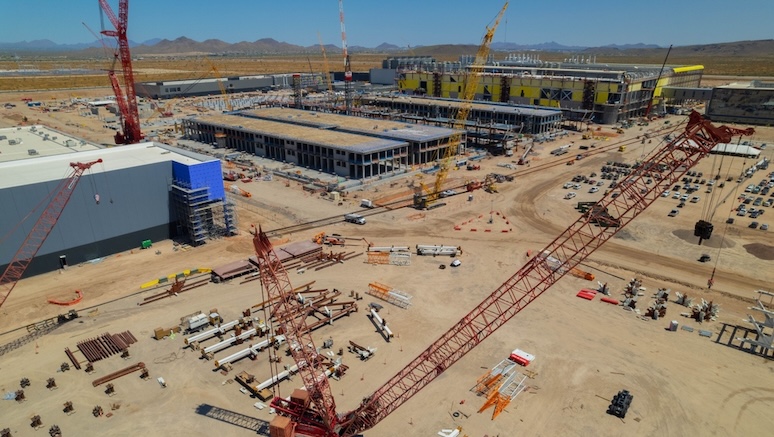
The hidden risk of relying on your EPC partner for project visibility
Many owners have thought some version of “We don’t need a capital project management platform — our EPC partner manages all of this for us.“ It’s a reasonable position. Your...

Why manufacturing owners are still managing capital projects like it’s 2010
There is a machine on your plant floor right now that knows it’s going to break. A sensor is reading a vibration signature on a bearing about three weeks before...
Free Tools
Calculators
Use our calculators to estimate the cost of construction materials for your next project.
Templates
Find a template to help you with your construction project tasks.
Material Price Tracker
Get the latest U.S. retail prices and view historical trends for common building materials.
Glossary
Explore key terms and phrases used in the industry.