
Construction Reporting: Key Report Types & Best Practices


Last Updated Jul 24, 2026
Bianca Holtier Coury
Education Audience Marketing
20 articles
Bianca Holtier Coury spent 15+ years in various roles managing construction projects, such as Preconstruction Team Lead, Purchasing Agent, and Project Manager. She has a wealth of experience in all project phases, including managing project schedules and budgets, bid management, and coordinating vendors and subcontractors. Bianca is an Associate Member of AIA and a LEED Green Associate. She currently serves as Director of Partnerships for the Construction Progress Coalition. Bianca holds a BA in Urban Design and Architecture Studies from NYU. She lives in Cleveland, OH.
Bob Hanes
Founder
16 articles
Bob Hanes is a professional writer and entrepreneur. He previously worked as a military sales and applications engineer for an aerospace firm, and cofounded a biotech company that creates drug screening solutions for the pharmaceutical industry. Bob has an MBA from the University of Buffalo in Logistics, Materials, and Supply Chain Management, and a BE in Mechanical Engineering. He is an avid Buffalo Bills fan.
In the world of construction, reporting is not just a routine task but a vital cog in any project. From the preconstruction phase to the closeout and handover stages, reports play an integral role in ensuring a project stays on track.
Construction reporting is a multifaceted process that encompasses various types of reports, each serving a specific purpose and contributing to the overall success of the project. It's a tool that provides visibility to all parties involved, from owners and stakeholders to contractors and safety officers.
In this article, we’ll dive into the various types of construction reports, their significance at different stages of a project, and the ways to streamline and enhance the reporting process.
Table of contents
Key Types of Construction Reports
Key types of construction reports include daily reports such as visitor logs or toolbox talks, scheduled reports like safety inspections, progress tracking reports, periodic reports like meeting minutes, and comprehensive financial overviews. These reports serve various purposes, from documenting daily activities to ensuring project safety and measuring completion percentages or project financial health.
Below, we’ll explore the different types of construction reports, their frequency, and what they typically include:
Safety Reports
Safety reports are essential for maintaining site safety and could relate to daily observations or specific incidents. In the event of an accident, an incident report is created to document the details. These reports may include information about safety equipment usage, adherence to safety protocols, and any observed hazards.
Daily Reports
Daily reports provide a snapshot of the day's activities, including visitors, deliveries made, and general observations. These reports are crucial for tracking daily progress and may include details about weather conditions, workforce attendance, and any challenges encountered.
Free Download
Construction Daily Report Template
Download this simple, customizable daily log template to record common jobsite data.
- Free starter template
- Designed specifically for construction
- Trusted by construction professionals

Materials Reports
Materials reports may include information about green material requirements, additional stipulations by the owner, and any delays in material delivery. These reports can vary depending on the type of project, such as healthcare, and may be standalone material reports.
Since healthcare facilities are designed with patient care at top of mind, there are certain project requirements that must be adhered to. For example, construction specifications for an ambulatory center may be different than specs for a nursing home or diagnostics lab.
The Agency for Health Care Administration (AHCA) in Florida has certain requirements for healthcare facilities in the state. It’s important for construction firms to work with GCs who are familiar with the specified guidelines, and mindful of infection control and hazmat cleanup and protocols. Documenting information from these projects in materials, and other, reports can help site supervisors stay in compliance and proactively rectify any issues that arise throughout the building phase of the project.
Inspection Reports
Inspection reports cover various aspects such as electrical, fire, and safety inspections conducted throughout the project. These include inspections of the workforce, ensuring proper use of PPE, and adherence to regulations. The frequency of these reports depends on whether they are planned or unplanned and may require immediate action if discrepancies are found.
If a worker’s harness is damaged or fraying, for example, it’s critical to document this in an inspection report, decommission the damaged equipment, and replace it right away.
Work-in-progress (WIP) Reports
WIP reports provide insights into how the project is tracking toward completion. They bring in multiple stakeholders, including the owner and accounting team, to help understand the project's current status. These reports are often submitted based on trades and specific parts of the project, offering a detailed view of ongoing work.
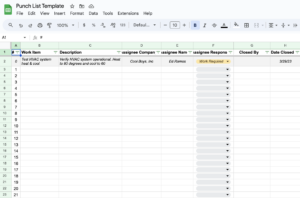
Punch Lists
Punch lists are summaries of pending tasks or items that need to be addressed before the project's completion. These lists may include change orders, financial impacts, and scheduling considerations. While typically done at the end of the project, punch lists can be created at any time to ensure that all issues are addressed promptly.
Free Download
Construction Punch List Template
Download a free fully customizable punch list template to stay organized and track responsibilities of punch work during closeout.
- Free customizable template
- Ready-to-use
- Designed specifically for construction
Cost Management Reports
Cost management reports provide a comprehensive view of the project's financials, tied into performance against the budget. These reports may be generated monthly or as needed, depending on the project, and include details about fees incurred, budget variances, and overall financial health.
Handover/closeout Reports
During the handover or closeout phases, specific reports compile all project information, including as-built drawings and final inspections. These reports are key to the closing-out process and may be organized by trade or other criteria, depending on the project's size and complexity.
Together, these reports form the backbone of construction project management, offering insights, accountability, and a clear path toward successful completion. By understanding the purpose and requirements of each report, construction professionals can ensure that they are effectively utilizing these tools to build better and more efficiently.
Responsibilities for Reporting
Different stakeholders are responsible for reporting different types of information at different stages of the project. Pre-commencement, for instance, reporting responsibilities might fall mainly on procurement and planning personnel. During the construction phase, production reporting would be the responsibility of site superintendents or foremen, while safety reporting would be the responsibility of the site safety officer. Subtrades and specialty service providers might also be responsible for specific reports. Each party plays a specific role in ensuring accurate, timely, and relevant information, and this is why defining which reports are required, and when, and by whom, is a critical part of project planning.
Here's a breakdown of the key roles:
Owners
As key stakeholders, owners may have significant input into the reporting process. They may offer suggestions or specific requirements that they want to see tracked in reports. Their involvement could be at the beginning, middle, or any critical stage of the project, showcasing their interest in the project's success.
Onsite Leadership
Onsite leadership plays a pivotal role in managing the reports. The project executive often takes the lead, especially if there are issues that appear during the project, while the site superintendent ensures that everything is tracked and observed. Foremen, on the other hand, are typically responsible for reporting things they see in the field, acting as the eyes and ears of the project.
- Site Supervisors: Oversee daily operations and ensure that daily reports are accurately maintained.
- Project Managers: Coordinate various reports and ensure alignment with project goals.
- Foremen: Report field observations and ensure that safety and quality standards are met.
- Project Executives: Take overall responsibility for reporting, especially in handling critical issues.
Safety Personnel
Safety Officers and Site Safety Managers are guardians of site safety. They plan and implement onsite safety measures, and help ensure safety protocols are followed. Additionally, safety personnel may keep track of safety reports and confirm that they’re correctly maintained and updated. Their vigilance helps in maintaining a safe working environment and complying with legal requirements.
Contractors and Consultants
On the business operations side, contractors and consultants may have unique reporting responsibilities. Trade partners may have their own set of reports for their business, while the General Contractor acts as the main aggregator of the reports. Specific consultants, such as quantity surveyors, may be responsible for specialized reports like cost management.
- Contractors: Provide detailed reports on their specific trades, including material usage, labor, and progress.
- Consultants: Offer expert insights and may handle specialized reports, such as cost analysis and compliance checks.
The reporting process in construction is a collaboration, where each party plays a distinct part. Understanding these roles and responsibilities is essential for ensuring that the reporting process is smooth, efficient, and serves the project's objectives. By clearly defining these roles, construction professionals can foster better communication, accountability, and ultimately, a more successful project outcome.
Construction Reporting Best Practices
Construction reporting should be comprehensive, accurate, and happen in as close to real time as possible. This helps to ensure that the information being reported can be analyzed and used to adjust planning or production as necessary to achieve the best possible results. To achieve this, construction reporting best practices focus on streamlining and standardizing processes to improve decision-making and collaboration. Key practices include using standardized templates, digitalization, and robust data aggregation.
Standardized Templates
Standardizing templates for various reports can significantly alleviate discrepancies and make the reporting process more efficient and streamlined. By having a uniform format, all parties involved can easily understand and interpret the information.
Digitalization
The digitalization of construction reporting brings about a new level of accessibility and collaboration. By making reports available online, all stakeholders can easily access them in real-time, enhancing visibility for all parties involved. Digitalization breaks down the silos that often exist in traditional reporting methods, fostering more collaboration and ensuring that everyone is on the same page.
Data Aggregation
Data aggregation is the process of collecting and summarizing data in a way that provides valuable insights. In construction reporting, this means capturing data across various forms and reports to highlight issues or best practices. An informed data process can identify trends, improve cost management, and pinpoint areas where changes need to be made. Aggregating data allows for a more holistic view of the project, enabling more strategic decision-making.
Accuracy
Accuracy in reporting is paramount for clarity and efficiency. Automated tools and digital platforms can enhance accuracy by reducing human error and providing a means to cross-check information against what the client or owner is seeing from their perspective. Accurate information leads to a better handle on project details and can be vital from an auditing perspective, ensuring compliance and transparency.
Data Protection
Construction reports often contain sensitive information and data, making the protection of that data a critical consideration. Implementing robust security measures ensures that the information is accessible only to authorized individuals. Data protection safeguards the integrity of the reports and builds trust among stakeholders, knowing that their information is handled with the utmost care and confidentiality.
By embracing these practices, construction professionals can enhance communication, reduce errors, and build a more resilient and successful project management framework.
Courses about construction.
For construction.
Unlock your career potential with our free educational courses on Health & Safety, Data in Construction, and more.

Archiving Construction Reports
Archiving construction reports involves systematically storing project documentation for long-term access and analysis. Project data remains crucial long after site handover occurs, and a comprehensive plan to catalog, archive, and store data like reports long-term is a key part of any construction reporting plan.
Continuous Improvement
Archived reports serve as a treasure trove of information that can be analyzed for continuous improvement. By studying past projects, construction professionals can identify what went well and what didn't, allowing them to refine their processes. This information can be a valuable guide for future projects, helping teams to anticipate potential issues and implement proven strategies.
From an educational perspective, archived reports offer a rich resource for training and development. New team members or those looking to specialize in particular areas can study these reports to gain insights into real-world scenarios, challenges, and solutions.
Warranty and Legal Considerations
Archived reports may contain critical information related to warranties for equipment installed or specific construction methods used. In the event of a recall or a legislative change that affects a project, these reports can provide essential reference data. Additionally, archived reports may be required for legal compliance or in the event of litigation.
Future Business Impact
Archived reports can also impact future business opportunities. A well-documented history of successful projects, adherence to safety standards, and efficient cost management can enhance a company's reputation and in a competitive market.
As construction projects continue to grow in complexity and scale, it’s necessary to embrace the multifaceted nature of construction reporting. By understanding and implementing best practices in reporting, construction professionals can work more efficiently, communicate better, and build faster.
Was this article helpful?
Scroll less, learn more about construction.
Subscribe to The Blueprint, Procore’s construction newsletter, to get content from industry experts delivered straight to your inbox.
By clicking this button, you agree to our Privacy Notice and Terms of Service.
Categories:
Written by
Bianca Holtier Coury
Education Audience Marketing | Autodesk
20 articles
Bianca Holtier Coury spent 15+ years in various roles managing construction projects, such as Preconstruction Team Lead, Purchasing Agent, and Project Manager. She has a wealth of experience in all project phases, including managing project schedules and budgets, bid management, and coordinating vendors and subcontractors. Bianca is an Associate Member of AIA and a LEED Green Associate. She currently serves as Director of Partnerships for the Construction Progress Coalition. Bianca holds a BA in Urban Design and Architecture Studies from NYU. She lives in Cleveland, OH.
View profileBob Hanes
Founder | Resonant Lab
16 articles
Bob Hanes is a professional writer and entrepreneur. He previously worked as a military sales and applications engineer for an aerospace firm, and cofounded a biotech company that creates drug screening solutions for the pharmaceutical industry. Bob has an MBA from the University of Buffalo in Logistics, Materials, and Supply Chain Management, and a BE in Mechanical Engineering. He is an avid Buffalo Bills fan.
View profileExplore more helpful resources

Why don’t we protect the whole person?
Behind every safety incident is a person — and behind that person is a story we rarely ask about. Were they already exhausted before they arrived on site? Did they...

What Drives Better Safety Outcomes—Carrot, Stick, or “Zero Harm”?
On paper, construction has never looked safer. In reality, mental health claims are rising, workers are disengaged and the compliance playbook is broken. Garry Mansfield, co-founder of Scratchie, argues the...

How Close Are We to Bridging the Design-Build Divide?
For decades, construction decisions have often been made based on gut instinct. But what if the real barrier to transformation isn’t technology—it’s the divide between design and construction? In episode...

Gain Without Pain: Leveraging Technology for Strategic Safety Programs
In safety, there is always room for improvement, and technology creates the ability to scale safety programs that drive risk mitigation, operational efficiencies and competitive advantage. In fact, builders who...
Free Tools
Calculators
Use our calculators to estimate the cost of construction materials for your next project.
Templates
Find a template to help you with your construction project tasks.
Material Price Tracker
Get the latest U.S. retail prices and view historical trends for common building materials.
Glossary
Explore key terms and phrases used in the industry.