
The Data Center Boom’s Hidden Economy: Abandoning the Box and Focusing on the Infrastructure


Last Updated Jan 14, 2026
Scott Bornman
Principal, Operational Excellence
17 articles
Scott Bornman is a managing strategic product consultant at Procore Technologies. Scott began his long construction career after a successful 8+ years in the U.S. Army, where he selected to be U.S. Army Recruiter following Desert Shield/Desert Storm. Scott has had many roles in the construction field since then, working his way from a project superintendent, to an owner's rep, to a senior project manager and even Vice President of Construction at Bognet Construction and Director of Construction at Plaza Construction before joining the team at Procore.
Marlissa Collier
42 articles
Marlissa Collier is a journalist whose work focuses on the intersections of business, technology, policy and culture. Her work has been featured in digital and print formats with publications such as the Dallas Weekly, XO Necole, NBCU Comcast, the Dallas Nomad, CNBC, Word in Black and Dallas Free Press. Marlissa holds an undergraduate degree in Construction Engineering from California State University, Long Beach and an MBA from Southern Methodist University’s Cox School of Business.
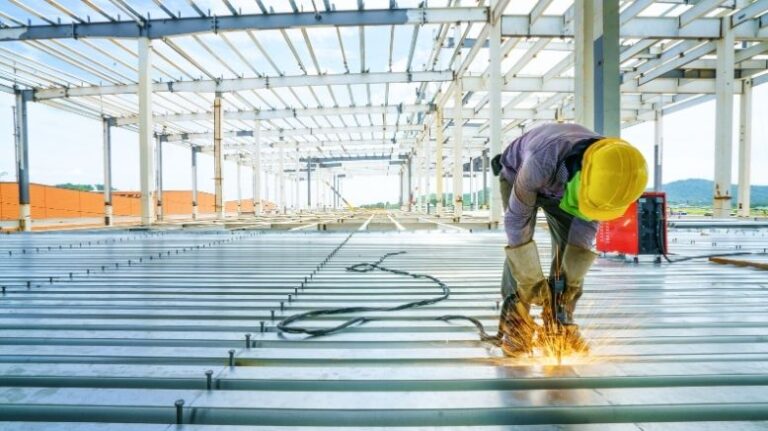
The surge of investment into artificial-intelligence workloads is launching one of the largest construction waves we’ve seen in decades. Across the U.S., mega-campuses are being planned and built: the physical “boxes” to house GPUs, server racks, power delivery, and cooling.
But as builders rush to deliver data centers, many industry experts are warning of a looming mismatch between capacity and demand — and an even greater opportunity: the infrastructure around the box.
We’ve got $2 trillion in AI in America. And when you give that much money to developers, the pressure to deliver something fast, anything tangible, can lead to overbuilding.
Scott Bornman
Principal, Operational Excellence
Procore Technologies
The Risk of Building Too Much, Too Fast
With vast capital commitments, some developers are prioritizing speed over strategic pacing. In Texas alone, Vantage’s Frontier project is earmarked at $25 billion and will deliver 1.4 gigawatts of compute capacity. But with that level of investment comes risk.
If I’m flush with cash right now, I may put up too many things and I may not deliver what you want. You may not get your 10% return because I’ve outpaced my need for capacity.
Scott Bornman
Principal, Operational Excellence
Procore Technologies
Flush with capital, many developers are prioritizing rapid delivery over strategic pacing. The risk is that, in their rush to build, they may saturate capacity before demand can catch up. Instead of focusing on sustainable growth, operators may flood the market, reducing margins and leaving under-utilized assets.
That concern isn’t hypothetical. In major markets such as Northern Virginia, Phoenix, and Central Texas, speculative projects are breaking ground faster than power and water infrastructure can keep up. At the same time, AI efficiency gains are changing the economics of data processing itself.
As AI advances, we’re seeing the same problems solved faster, with fewer resources. That means the physical footprint needed for computation keeps shrinking and data centers built for yesterday’s workloads may struggle to stay relevant tomorrow.
Scott Bornman
Principal, Operational Excellence
Procore Technologies
This presents a double-whammy of possibilities: excess capacity and rapid obsolescence.
Beyond the Box: Where the Real Opportunity Lies
If the data center “box” is at risk of oversaturation, the real opportunity lies in everything around it.
If I were a constructor today, I wouldn’t be chasing the data center problem. I’d be building the infrastructure around it. Site development, utilities, mechanical systems — that’s where the sustainable value will be.
Scott Bornman
Principal, Operational Excellence
Procore Technologies
That shift in focus is more than philosophical. Power distribution, cooling networks, fiber interconnectivity, and logistics infrastructure will outlast any given generation of server racks.
For example, the Vantage Frontier Texas campus mentioned earlier not only plans ultra-high density (250 kW+ racks) but also liquid cooling and closed-loop systems, an acknowledgment that the supporting systems are as critical as the data-center shell.
The developers who specialize in these systems, those who can deliver resilient energy grids, closed-loop water systems, and scalable site planning, are positioning themselves for long-term stability, even after the data center rush subsides.
Precision, efficiency, and technical mastery — not just speed — are becoming the competitive edge.
Solving the 'Weak Link': Supply Chain Bottlenecks
Even the best projects face a common bottleneck: the supply chain. Data centers are no different: Transformers, switchgear, and advanced cooling materials are facing backlogs measured in years, not months.
The supply chain aspect of data centers is, I think, our weak link. That’s where I would focus because that’s the one that makes you look like a savior. That’s the one that makes the whole industry be able to move forward.
Scott Bornman
Principal, Operational Excellence
Procore Technologies
This weakness is also an opportunity for constructors who can innovate around it. Firms that can source, stage, and preassemble critical systems, especially through modular or off-site approaches, are becoming indispensable.
Examples abound: in Texas and elsewhere, transformers have waiting lists of up to three years. Constructors who can navigate those constraints, through advanced scheduling, modular solutions, or off-site assembly can capture value outside the standard competitive bidding war. For instance, breweries’ liquid-cooling practices (ethylene-glycol loops) are now being adapted for data-center cooling, representing a true crossover innovation.
These innovations are already reshaping project strategies in regions with water constraints, such as Texas and Arizona, where some of the world’s largest campuses are being developed.
Designing for Adaptability and Stewardship
As fast as the industry is expanding, sustainability and flexibility are beginning to define the long-term winners. Sustainability is no longer a bonus. It’s becoming a requirement. Projects like Meta’s $1.5 billion El Paso AI-optimized data center in Texas highlight this trend: matching 100% renewable energy, closed-loop water reuse, and site infrastructure designed for flexibility.
We need to think about our role today and tomorrow, as stewards of this planet, as builders of sustainable systems. This boom won’t last forever. But what we build during it will define what comes next.
Scott Bornman
Principal, Operational Excellence
Procore Technologies
One approach gaining traction is partitionable data center design, or structures that can evolve alongside client needs without wholesale rebuilds.
Adaptability isn’t just good for the environment — it’s good business. As AI hardware evolves and workloads become more efficient, flexible infrastructure will prevent the kind of blight already visible in obsolete industrial parks across the country.
I want to build a partitionable data center that even as this client’s needs change, I can react to it in such a way that I don’t need to rebuild my building, or mothball part of my building and build something else.
Scott Bornman
Principal, Operational Excellence
Procore Technologies
The Builders’ Inflection Point
The data center boom is, at its core, an infrastructure story. Billions in AI investment have made the industry hyper-visible, but the lasting impact will come from how well builders respond to the deeper challenge: connecting, powering, and sustaining the systems that keep this new economy running.
Constructors have a choice: chase the data center box, or own the infrastructure beneath it. The former may fill order books for the next two years. The latter could define the next two decades.
Was this article helpful?
Scroll less, learn more about construction.
Subscribe to The Blueprint, Procore’s construction newsletter, to get content from industry experts delivered straight to your inbox.
By clicking this button, you agree to our Privacy Notice and Terms of Service.
Categories:
Written by
Scott Bornman
Principal, Operational Excellence | Procore Technologies
17 articles
Scott Bornman is a managing strategic product consultant at Procore Technologies. Scott began his long construction career after a successful 8+ years in the U.S. Army, where he selected to be U.S. Army Recruiter following Desert Shield/Desert Storm. Scott has had many roles in the construction field since then, working his way from a project superintendent, to an owner's rep, to a senior project manager and even Vice President of Construction at Bognet Construction and Director of Construction at Plaza Construction before joining the team at Procore.
View profileMarlissa Collier
42 articles
Marlissa Collier is a journalist whose work focuses on the intersections of business, technology, policy and culture. Her work has been featured in digital and print formats with publications such as the Dallas Weekly, XO Necole, NBCU Comcast, the Dallas Nomad, CNBC, Word in Black and Dallas Free Press. Marlissa holds an undergraduate degree in Construction Engineering from California State University, Long Beach and an MBA from Southern Methodist University’s Cox School of Business.
View profileExplore more helpful resources
What I Learned the Hard Way: Fred Mills on changing the narrative of construction
Fred Mills, founder of The B1M, set out to change how the world sees construction. What began as an ambitious idea on a Post-it note grew into one of the...

Does your asset management workflow actually work?
Every fixed asset installed on a project generates data long before handover. Is your team capturing it as it happens, or scrambling to reconstruct it after the fact? That question...
From spec book chaos to single source of truth
Picture this: An expansion is going in directly beside a high-volume line that cannot stop producing. Structural steel lands in March, mechanical completion is promised for August, and your only...
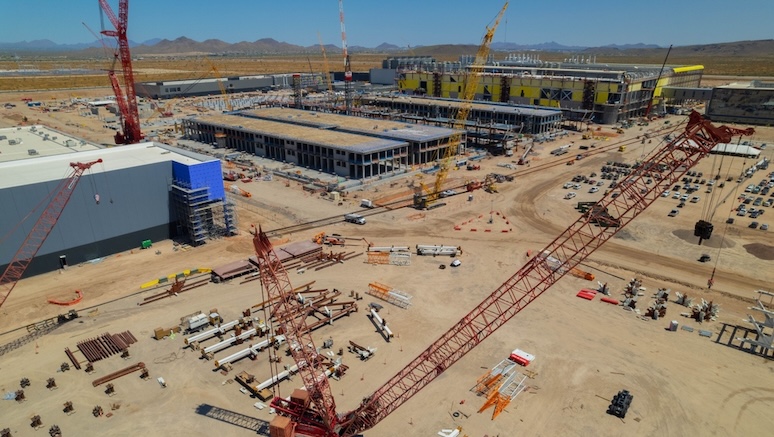
The hidden risk of relying on your EPC partner for project visibility
Many owners have thought some version of “We don’t need a capital project management platform — our EPC partner manages all of this for us.“ It’s a reasonable position. Your...
Free Tools
Calculators
Use our calculators to estimate the cost of construction materials for your next project.
Templates
Find a template to help you with your construction project tasks.
Material Price Tracker
Get the latest U.S. retail prices and view historical trends for common building materials.
Glossary
Explore key terms and phrases used in the industry.