
The role of an owner’s project manager — and their collaboration with construction managers

Last Updated Jun 11, 2026
Julia Tell
Contributing Writer
79 articles
Julia Tell is a freelance writer covering education, construction, healthcare, and digital transformation. She holds a Ph.D. in Media & Communications and has written for publications including Business Insider, GoodRx, and EdSurge, as well as nonprofits, international businesses, and educational institutions.
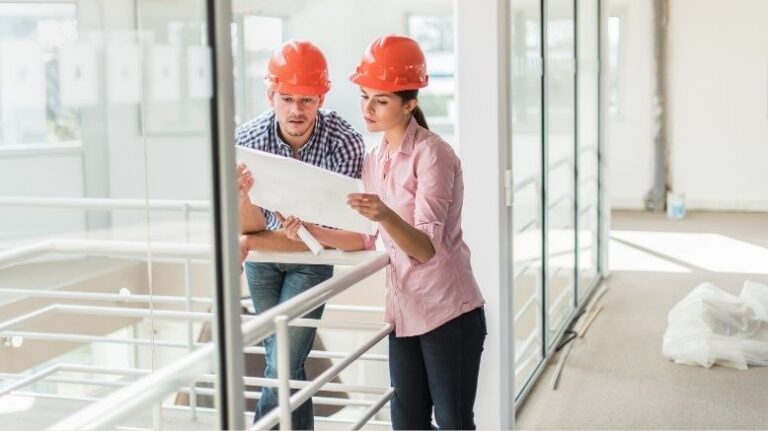
Many people help make a construction project happen, and roles often overlap, but the owner's project manager (OPM) is a layer of management that explicitly looks out for the project owner’s interests.
An owner's project manager is the owner’s trusted advisor, providing high-level oversight and management expertise. Their involvement can be particularly beneficial in complex projects, helping to streamline processes and manage the many conflicts and changes inherent in modern construction.
In this article, we'll discuss the distinct roles and responsibilities of OPMs in construction, plus the similarities and differences between OPMs and construction managers (CMs), focusing on their goals, scope of work, budget management, and how they collaborate to create successful projects.
Table of contents
What is an owner's project manager?
An owner's project manager (OPM) is a professional responsible for representing the interests of the project owner throughout the lifecycle of a construction or renovation project.
The OPM — also sometimes called the owner’s representative or simply the owner’s rep — acts as the owner’s advocate and liaison. The OPM oversees the project from inception to completion, coordinating effective communication and collaboration between architects, engineers, contractors, and other project stakeholders.
The role of an OPM is to help manage risk and make sure the project is a success. The OPM provides expert guidance on project planning, procurement and execution, while also monitoring progress and resolving issues as they arise.
The OPM differs from other project managers, who usually work for the general contractor and manage day-to-day logistics and the overall progress of the project. OPMs serve more of an oversight role, though they have the knowledge and experience to make decisions and manage operations as needed to execute the owner’s requirements.
What does an owner's project manager do?
An owner's project manager’s role requires versatility to manage the successful delivery of construction projects. Their responsibilities can be categorized into several key areas.
Budget and schedule oversight
OPMs are tasked with managing the overall project budget and timeline. From initial planning to project closeout, they work diligently to prevent cost overruns and delays, keeping the project within financial and temporal constraints.
Design oversight
OPMs collaborate with design teams to ensure the project design aligns with the owner's vision and requirements. They monitor design progress and facilitate necessary adjustments to meet project goals.
Quality assurance
Meeting the owner's specifications and contractual obligations is a key responsibility. OPMs conduct regular inspections throughout the project to prevent defects and maintain work quality in accordance with the agreed standards.
Risk mitigation
Identifying and addressing potential issues before they escalate is a core function of the OPM. They work proactively to mitigate risks, such as unforeseen construction challenges or scope creep, to maintain project integrity.
Communication and coordination
Serving as the central point of contact, OPMs coordinate with all project stakeholders, supporting effective communication and keeping the owner informed of progress and any emerging concerns.
Contract management
OPMs are responsible for managing contracts and change orders, making sure all parties adhere to the agreed terms. They oversee contract execution and maintain compliance, safeguarding the owner's interests throughout the project lifecycle.
Closeout management
At the end of the project, OPMs manage the closeout process by completing all documentation and finalizing the project to the owner's satisfaction. This includes verifying that all contractual obligations have been met.
Building occupancy
OPMs coordinate with relevant parties to ensure a smooth transition to building occupancy. This includes managing the installation and setup of Furniture, Fixtures and Equipment (FF&E), making sure that all elements are in place and functioning correctly. They address any final issues and facilitate the handover process, confirming that the building is ready for use.
Stay updated on what’s happening in construction.
Subscribe to Blueprint, Procore’s free construction newsletter, to get content from industry experts delivered straight to your inbox.

Owner's project manager vs. construction manager
In a construction project, both the owner's project manager and the construction manager play central roles.
Differences between an owner's project manager and a construction manager
The OPM is the guardian of the owner's vision, orchestrating every aspect to keep the project on track within time and budget constraints. They oversee the entire project lifecycle, from planning to closeout, acting as the owner's advocate throughout.
In contrast, the CM is like a master builder, dedicated to transforming plans into reality with precision, concentrating on the construction phase and managing day-to-day building processes to align with the project specifications.
The OPM manages the entire project budget, overseeing costs from planning and design to construction and maintaining financial alignment with the owner's goals. The CM focuses specifically on construction-related expenses, such as labor and materials, working to keep these costs within the allocated budget for the building phase.
While their roles are similar, the OPM serves as the owner's representative, ensuring the project aligns with the owner's vision and objectives. Meanwhile, the CM is responsible for the hands-on management of the construction phase, focusing on logistics and the execution of construction tasks to achieve the project's design goals.
| Role | Owner's project manager (OPM) | Construction manager (CM) |
|---|---|---|
| Primary Goal | To protect the owner's interests and guarantee project success | To build the building according to the plans and specifications |
| Scope of Work | Manages the entire project lifecycle from pre-construction through closeout | Primarily oversees just the construction phase |
| Budget | Manages the total project budget, including planning, design, and construction costs | Manages primarily construction-related costs, such as labor, materials, and subcontractors |
| Role | Acts as the owner's agent and advocate | Hired by the owner to manage the construction process |
Similarities between an owner's project manager and a construction manager
While their overall roles and responsibilities differ, the owner's project managers and construction managers are both typically under contract to the owner and share a few key responsibilities and skills for the successful execution of construction projects.
Here are the core similarities between the two roles:
Communication
Both roles involve continuous communication with various parties, including the owner, design team, and construction teams. They facilitate the flow of information to keep everyone aligned and informed.
Cost management
Both OPMs and CMs are responsible for managing and tracking the project budget and costs — and mitigating potential budget overruns.
Resource management
Managing and scheduling project resources, such as labor, materials and equipment, is a key responsibility for both roles to ensure efficient project execution.
Safety management
Both positions focus on identifying and mitigating project risks, with a strong emphasis on maintaining on-site safety.
Quality control
OPMs and CMs are both accountable for achieving the project's specifications and quality standards, ensuring a high-quality final product.
Leadership and delegation
Strong leadership skills are essential for both OPMs and CMs to motivate and guide their teams. They also delegate tasks effectively so the project progresses smoothly.
While both roles share these similarities, the OPM typically represents the owner's overall interests, whereas the CM focuses more on the day-to-day construction execution.
Harmonizing roles for project success
Collaboration between an owner's project manager and a construction manager can boost the success of a construction project.
Each brings unique expertise to the table: the OPM focuses on strategic oversight and alignment with the owner's vision, while the CM focuses on technical execution of the build.
Together, they seamlessly integrate planning and management to maximize the potential for achieving both the owner's and the project's goals.
Was this article helpful?
Scroll less, learn more about construction.
Subscribe to The Blueprint, Procore’s construction newsletter, to get content from industry experts delivered straight to your inbox.
By clicking this button, you agree to our Privacy Notice and Terms of Service.
Categories:
Written by
Julia Tell
Contributing Writer | Procore Technologies
79 articles
Julia Tell is a freelance writer covering education, construction, healthcare, and digital transformation. She holds a Ph.D. in Media & Communications and has written for publications including Business Insider, GoodRx, and EdSurge, as well as nonprofits, international businesses, and educational institutions.
View profileExplore more helpful resources

Does your asset management workflow actually work?
Every fixed asset installed on a project generates data long before handover. Is your team capturing it as it happens, or scrambling to reconstruct it after the fact? That question...

From spec book chaos to single source of truth
Picture this: An expansion is going in directly beside a high-volume line that cannot stop producing. Structural steel lands in March, mechanical completion is promised for August, and your only...
The hidden risk of relying on your EPC partner for project visibility
Many owners have thought some version of “We don’t need a capital project management platform — our EPC partner manages all of this for us.“ It’s a reasonable position. Your...

Why manufacturing owners are still managing capital projects like it’s 2010
There is a machine on your plant floor right now that knows it’s going to break. A sensor is reading a vibration signature on a bearing about three weeks before...
Free Tools
Calculators
Use our calculators to estimate the cost of construction materials for your next project.
Templates
Find a template to help you with your construction project tasks.
Material Price Tracker
Get the latest U.S. retail prices and view historical trends for common building materials.
Glossary
Explore key terms and phrases used in the industry.