
Construction Material Takeoffs: The Hidden Lever of Profit, Precision and Project Certainty

Last Updated Oct 14, 2026
Josh Krissansen
122 articles
Josh Krissansen is a freelance writer with two years of experience contributing to Procore's educational library. He specialises in transforming complex construction concepts into clear, actionable insights for professionals in the industry.
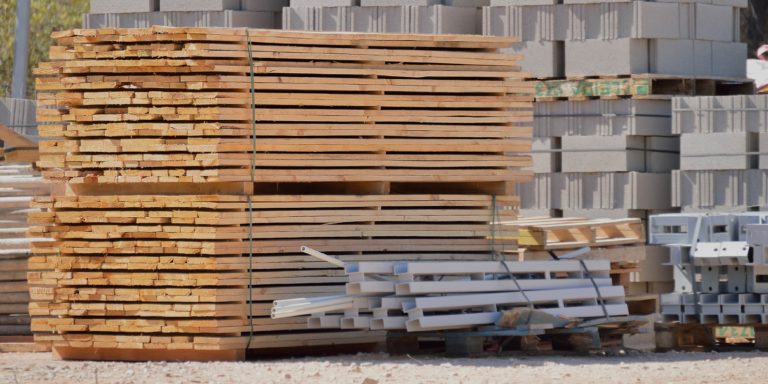
Accurate material takeoffs protect profit by controlling the most significant variables in project delivery: material cost and consumption.
Incorrect quantities mean compromised budgets, forecasts and tender pricing. From there, a chain of interrelated downstream issues follows:
- Budgets slip
- Tenders become exposed
- Forecasts lose credibility
- Avoidable commercial risk becomes a reality
- Margins are reduced, with effects lasting far longer than a single quarter
However, when executed accurately, a reliable takeoff does the opposite: it establishes project certainty by aligning procurement, logistics, storage, and installation from the outset.
This article explores how accurate material takeoffs support cost certainty, protect margin, and strengthen commercial performance. It also explains how verified quantities enable contractors to tender faster, price with confidence, and compete without sacrificing profit.
Table of contents
What is a Construction Material Takeoff?
A construction material takeoff is the process of identifying and quantifying every material required to deliver the physical scope of a project. It converts drawings and specifications into measurable data that underpin estimating, procurement, and cost control.
The takeoff marks the point where design intent becomes financial planning. It defines the scope in units such as square metres, cubic metres, linear metres, or item counts, forming the baseline for cost forecasting and resource allocation.
Takeoffs are not the same as estimates. The takeoff measures the quantities, while the estimate applies unit rates, labour, and overheads to convert those quantities into cost.
The accuracy of the material takeoff influences every downstream process, including material orders, trade scheduling, budgets, and cash flow. A precise takeoff creates a stable financial foundation for project delivery.
Who Performs Construction Material Takeoffs?
In Australia, takeoffs are typically completed by estimators and quantity surveyors. Estimators focus on tender pricing, while quantity surveyors validate quantities, manage variations, and monitor commercial performance.
On larger projects, takeoffs may also be used to validate a Bill of Quantities prepared by the client or consultant, with discrepancies reconciled through clarifications or RFIs.
Why Accurate Takeoffs Are Essential for Project Success
Accurate takeoffs strengthen commercial performance by providing a dependable baseline for cost, schedule, and procurement decisions.
Improved Cost Control
Accurate quantities support reliable budgeting and procurement, preventing overspending, margin loss, and cost overruns.
Reduced Waste
Precise takeoffs limit over-ordering and disposal, improving resource efficiency and supporting sustainability targets.
Project Efficiency
Clear quantities ensure materials arrive in the correct sequence and volume, reducing delays, idle labour, and excess storage.
Better Risk Management
Early validation reduces exposure to price volatility, rework, and disputes by identifying risks before procurement begins.
Competitive Bidding
Reliable quantities support tighter, more confident tenders, improving competitiveness without increasing financial risk.
Cash Flow Certainty
Accurate quantities enable dependable forecasts and stable drawdowns, supporting stronger financial control through delivery.
How to Perform a Precise Material Takeoff
A precise material takeoff follows a structured workflow that ensures every quantity is traceable, verifiable, and aligned with the current design. The process consists of approximately five steps.
Review Plans and Specifications
Begin by confirming the latest drawings, models, and specifications to ensure that quantities are based on up-to-date information. Verify the design intent, material requirements, and installation standards to ensure the takeoff accurately reflects the actual scope of work.
Where practical, visit the site to identify access limitations, ground conditions, or staging constraints that may influence quantities or handling requirements. On large commercial projects, cross-check the Bill of Quantities and issue RFIs to resolve discrepancies before measurement begins.List All Required Materials
Next, create a complete material list by trade or system using a recognised classification such as NATSPEC. Include both primary materials and secondary items such as fixings, trims, and hardware, so the takeoff accounts for everything needed to deliver the designed scope.
This prevents omissions that can distort procurement volumes and budget forecasts.Measure and Quantify
Measure quantities by appropriate units:
Count: Doors, fittings, hardware
Area: Wall linings, flooring, roofing
Volume: Concrete, excavation, aggregates
Length: Cables, conduits, framing member
Apply a documented waste allowance of 5% to 10% to account for cutting, offcuts, and installation loss. This ensures quantities reflect real on-site consumption rather than theoretical minimums.Apply Unit Costs
Assign unit rates using verified supplier quotes or cost databases such as Rawlinsons, so the final pricing reflects real market conditions. Factor in bulk order opportunities, delivery considerations, and escalation risk when selecting the rate that will be applied throughout the project.
Once costs are applied, convert quantities into total values and use the output to forecast labour and equipment based on proven productivity benchmarks.Compile and Review the Takeoff Report
Present all quantities, units, and rates in a clear report that can be easily reviewed and reconciled. Confirm version control, check for any missing scope, and align the final output with the Bill of Quantities before issue.
Digital tools and BIM workflows can streamline revisions and centralise project data, reducing the risk of version conflicts and manual errors.
Teams can link quantities to the model, enabling them to track changes in real time, collaborate more efficiently with consultants and subcontractors, and maintain a transparent audit trail for every adjustment made throughout delivery. This creates greater accountability and supports faster, more informed commercial decisions.
Manual vs Digital Takeoffs
The shift from manual to digital takeoffs reflects the industry’s move toward data-driven cost management. Both methods aim to quantify materials, but digital workflows now dominate large commercial projects in Australia due to their accuracy, speed, and integration benefits.
Manual Takeoffs
Manual takeoffs rely on printed drawings, rulers, and spreadsheets. They remain viable for small or low-complexity projects but become inefficient and risky at scale. The process is time-consuming to update, prone to human error, and difficult to audit when design changes occur.
Because information is often stored in isolated spreadsheets or local files, version control becomes challenging, and collaboration among project stakeholders is limited.
Digital Takeoffs
Digital takeoffs are completed on-screen using specialised software that automatically measures, counts, and calculates. When supported by BIM and 5D modelling, quantities are linked directly to design elements, enabling faster revisions and high-precision forecasting.
Research shows digital BIM-based takeoffs can deliver more precise quantities than CAD and spreadsheet methods, with concrete variance as low as 2.32%.
Digital workflows offer clear advantages:
- Accuracy: Automated measurement reduces manual error and produces more reliable quantities.
- Efficiency: Revisions are processed instantly, shortening preconstruction timelines and improving responsiveness.
- Integration: Digital takeoffs seamlessly connect with cost databases and project platforms to create a single, accurate source of truth for quantities, costs, and timelines.
- Risk reduction: Centralised records and consistent data structures improve auditability and reduce disputes.
- Competitiveness: Faster, more accurate takeoffs strengthen tender responsiveness without sacrificing precision.
How to Improve Accuracy and Efficiency in Material Takeoffs
Improving performance requires disciplined workflows, reliable data, and digital tools that eliminate avoidable variance and create repeatable accuracy across every project.
Standardise Your Workflow
Controlled outcomes require standardised processes that eliminate variation in how quantities are measured, classified, and documented. Without standardisation, each estimator creates their own interpretation, increasing inconsistency, dispute risk, and commercial exposure.
Establish clear rules for naming conventions, measurement methods, document control, and data handling. Support these rules with structured templates, shared libraries, and recognised classification systems such as NATSPEC to ensure takeoffs are executed the same way every time.
Inconsistencies in modelling detail and object grouping are recognised as a major cause of quantity variance. Standardising workflows protects cost certainty by ensuring every output is consistent, traceable, and defensible when challenged by clients, auditors, or subcontractors.
Adopt Digital Takeoff Tools
Digital platforms deliver consistency and accountability that manual methods cannot achieve. Automated measurement, linked design data, and live document updates eliminate human error and version confusion that can undermine manual spreadsheets.
Takeoff software integrated with cost databases, BIM models, and scheduling tools creates a single source of truth for quantities, rates, and timelines, strengthening coordination between estimating, design, and procurement.
It also shortens revision cycles, increasing responsiveness in tendering and reducing financial risk when design changes occur late in the preconstruction phase.
Digital workflows are not just faster. They increase commercial confidence by eliminating interpretation gaps and maintaining a continuous link between scope, quantities, and cost.
Validate with Past Data
Historical performance is one of the most effective accuracy controls available to contractors. Benchmarking new takeoffs against completed projects exposes unrealistic assumptions, identifies recurring mistakes, and sharpens commercial judgment.
Use actual consumption, waste rates, and productivity outcomes to validate assumptions before pricing. Over time, this creates a feedback loop that enhances cost realism, reduces contingency padding, and strengthens organisational knowledge, thereby compounding value across the business.
Validation is not an academic exercise. It is a commercial safeguard that strengthens forecasting, reduces cost shocks, and supports more competitive bids without increasing risk.
Keep Pricing and Waste Factors Current
Cost accuracy depends on live data.
Outdated supplier pricing, escalation assumptions, or labour rates can distort budgets long before site works begin. In a volatile market, static figures create financial exposure that cannot be corrected once a tender is submitted or a contract is signed.
Maintain current rates, track escalation movements, and refine waste allowances using actual site performance rather than generic percentages. Ensure the procurement and estimating teams use a unified pricing source to avoid discrepancies between project intent and purchasing decisions.
This alignment protects margin, stabilises cash flow forecasts, and removes internal conflict between estimating and delivery teams.
Review and Reconcile Results
Accuracy improves through structured feedback and constant refinement. Comparing actual material usage and cost outcomes against the original takeoff reveals the true drivers of variance, whether caused by design changes, site conditions, bad assumptions, or execution issues.
Feeding these lessons back into templates, workflows, standards, and pricing models builds institutional accuracy over time. It reduces variance, improves cost predictability, and ensures that each project benefits from experience gained in previous projects.
Teams that apply this continuous improvement cycle consistently see fewer repeat errors and achieve more reliable cost outcomes over time.
Accurate construction material takeoffs are essential for cost certainty and commercial control
Accurate material takeoffs protect margin, reduce financial risk, and create a dependable foundation for procurement, scheduling, and delivery.
When you standardise workflows, leverage digital tools, and maintain live data, you can improve accuracy, strengthen forecasting, and deliver projects with greater confidence and profitability.
Categories:
Written by
Josh Krissansen
122 articles
Josh Krissansen is a freelance writer with two years of experience contributing to Procore's educational library. He specialises in transforming complex construction concepts into clear, actionable insights for professionals in the industry.
View profileExplore more helpful resources

Scaling with SIERA: Building for now and what comes next
SIERA Founder and Director Brent Thompson has always known that the right people, systems and hands-on approach are fundamental to scaling his business successfully. In Part 1, Brent and Head...
Getting Your Construction Data Ready for AI – What Every Business Needs to Consider Before Launching AI
This is the first of two articles. This part sets out the considerations: what clean and trusted data actually means, how to measure it, how the two systems most businesses...

The Contractor’s Guide to Concrete Inspections
Concrete: It’s the key building block of nearly every structure’s foundation — and it’s the world’s most widely used building material. For most head contractors, understanding how to assess concrete...

Computer-Aided Design (CAD): What It Is — and Why It’s Important
When most people envision a construction worker, they see a person at a construction site wearing a hard hat and a high-vis vest. Perhaps this person is putting up plasterboard,...