Proof vs Popular Perception: Busting the Myths That Are Holding Prefab Back



Last Updated Apr 27, 2026
Shauna Hurley
22 articles
Shauna is never short of questions when it comes to construction, tech and science. A professional writer, researcher and podcast producer, she loves sitting down with industry insiders for in-depth interviews that uncover the latest developments, debates and emerging trends. Having worked with organisations like Microsoft and the European Bank of Reconstruction, Shauna joined Procore to explore the complex issues facing construction and share fresh, research-rich insights that help professionals navigate a rapidly evolving industry.
Waco Tao
Executive Chair
Waco Tao is the Founder and CEO of PowerHouse Homes. He also serves as the Executive Chair of the Prefab Council Australia, a role he has held since August 2025. With over three decades of experience in the property development sector, Waco began his career in May 1993 by establishing Models Inc (formerly d-art PRODUCTIONS). In this role, he provided handcrafted architectural 3D models, signage, and illustrations for commercial and residential projects globally. From January 2005 to January 2010, he served as the CEO of SCM Global Pty Ltd, where he managed integrated supply chain solutions between China and Australia. In March 2009, Waco launched PowerHouse Homes, a Melbourne-based company specializing in the research, development, manufacturing, and construction of prefabricated buildings. Under his leadership, the company has focused on "sustainaffordable" housing, utilizing steel structures and automotive-style prefabrication methodology to deliver eco-friendly, low-carbon homes. His work at PowerHouse Homes centers on creating high-efficiency, high-energy-star-rated housing solutions for low, medium, and high-density applications. Waco holds a Master’s Degree in Supply Chain and Business Administration from Monash University. He lives in Melbourne.
Andy Rampton
Field COO (International)
11 articles
As the APAC Industry Transformation Lead for Procore, Andy Rampton utilises his 30+ years' global experience in engineering, construction and property development to influence industry change and help create a pathway towards the long-awaited digital transformation of construction. Having sat in the industry and experienced the evolution of technology as a user, procurer and strategist, Andy saw first-hand the challenges that companies have in defining and sustaining meaningful technology- and data-enabled change in the face of overwhelming technology choices. He joined Procore with the intent to both promote the benefits of technology and data and also to improve the relationship between tech provider and customer such that the transition to the future of construction becomes a lot easier to navigate.
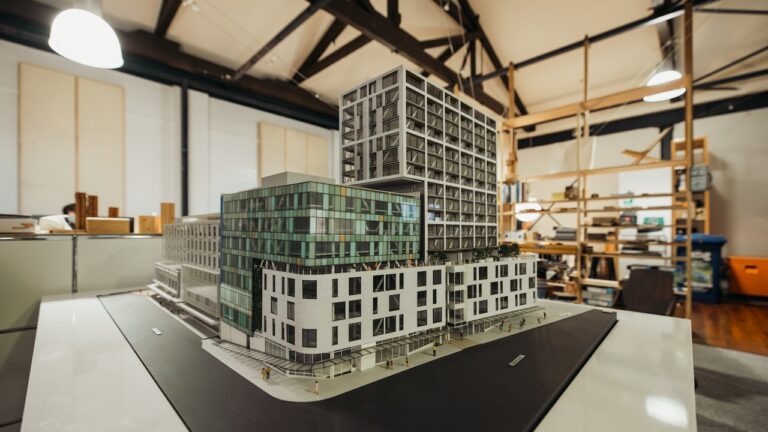
A prefabricated house took centre stage at Louis Vuitton's Paris Fashion Week in January 2026, highlighting the elevated position prefab holds in European design and popular culture.
Here in Australia, prefab sits a long way from those haute couture heights. Memories of boiling hot or freezing cold portable school classrooms or budget caravan park cabins stubbornly remain our most common collective reference points.
Prefab’s local image problem isn’t simply a superficial issue. It has real consequences, particularly as Australia’s housing crisis deepens. It’s something Waco Tao, Executive Chairman of Prefab Council Australia and CEO of PowerHouse Homes, confronts on a daily basis.
“Put simply, this widespread 'cheap and low-quality' misconception is our industry's most persistent and costly myth,” he says. “It’s a structural barrier that continues to stand between prefab and the scale Australia desperately needs. Outdated ideas continue to shape the way financiers assess risk, developers make specification decisions, and buyers make design and purchasing decisions."
For decades, 'prefab' meant demountable classrooms and cheap temporary structures.
Today's factory-built homes are a different proposition entirely — in technology, design quality, energy performance and the speed at which they can be delivered at scale.
Waco Tao
Executive Chair
Prefab Council Australia
What makes this barrier particularly frustrating is just how long it has stood.
In 1974, a federal government taskforce published a weighty report urging national standards to boost prefab housing and modern building methods to address a growing shortage of affordable homes. Last year’s report on Housing Construction Productivity made strikingly similar arguments.
Fifty years on, the policy debate mightn’t have changed much but the prefab product certainly has – beyond recognition. Here, Waco sets the record straight on the myths that have held the industry back, and why busting them in the midst of a national housing crisis matters more than ever.
Editor's Note: This is the second article in a 3-part series on prefabrication in Australia. Catch up on the rest of the series:
- Part 1: From Projects to Pipelines: How Prefab Could Reshape Residential Construction explores how and why prefab offers a fundamentally different way of delivering homes at scale to reach ambitious National Housing Accord targets.
- Part 3: Laying the Foundations: Reforms To Unlock Residential Prefab at Scale uncovers the real changes to finance, procurement and regulatory settings that must be made if prefab really can help solve Australia's housing crisis in the here and now.
Table of contents
Myth 1: Prefab means low quality
Looking at prefab elsewhere around the globe, advocates are not short on evidence. In a recent deep dive on prefab in Australia, the ABC contrasted the Swedish experience with our own, noting that around 84 per cent of Swedish detached homes now incorporate prefabricated elements.
What Sweden has demonstrated, at scale, is that factory-built housing and quality are not in conflict. The Swedes also highlight something often missed in Australia’s prefab debate: factory-built housing is routinely used in far more demanding climates.
The same principles that allow Scandinavian homes to meet strict cold-weather energy standards — tighter tolerances, controlled manufacturing and higher insulation performance — are increasingly relevant in Australia as climate change drives higher temperatures and more extreme heat events.
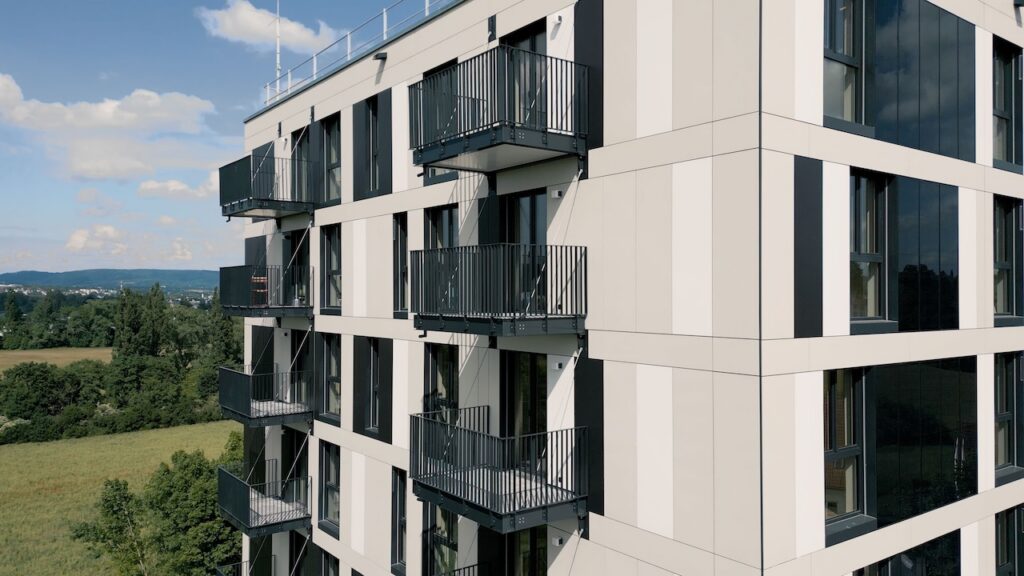

Prefab apartments by Gropyus in Germany are an example of the repeatable factory-built housing systems advocates argue Australia needs to adopt.
Our national manufacturing model is earlier in its evolution, but the principles are the same. I ask Waco to explain the mismatch between perceptions and reality in our region.
“Prefab factories don’t just build homes,” Waco says. “They manufacture certified, traceable, high performance products. That's the distinction we need all Australians to understand and we can demonstrate that through the projects we have under way and the homes we’re already delivering.”
"The evidence is clear. In a factory environment, walls are built on jigs with tolerances measured in tenths of millimetres, not centimetres. Every cut is optimised, every joint is precise. The result is a building envelope that performs exactly as designed, with no gaps, no thermal bridges and no 'she'll be right' workarounds."
For residential builders operating on thin margins, that precision is not an aesthetic advantage. It’s a commercial one.
Rework and defect remediation are among the most persistent cost pressures in the sector. Embedding quality control upstream in a factory environment reduces those costs systematically, not project by project.
In a factory, every stage is inspected. Materials are stored properly. Moisture isn't trapped in walls during construction. The result is a comfortable and energy efficient home that’s built to last.
Waco Tao
Executive Chair
Prefab Council Australia
Myth 2: Prefab can't deliver on affordability or sustainability
The quality case is convincing, but critics of prefab question whether it can deliver affordably and at the scale Australia needs. Meanwhile, national housing market data suggests the stakes could not be higher.
In 2018-19, one in five new homes was valued between $500,000 and $600,000. Today that share is less than one per cent. Homes over a million dollars now represent more than a quarter of all new builds, up from six per cent just six years ago.
KPMG's Bridging the Housing Gap report is clear: a market concentrated at the high end is exposed to rate cycles, sentiment shifts and policy change. Meanwhile the economics that once supported large-scale volume housing have become increasingly difficult to sustain.
Factory-based delivery may be one of the few credible paths to restoring that capacity — but only if it can also meet tightening sustainability standards that now come with any forward-looking housing agenda.
The superior thermal performance that’s consistently achieved in factory conditions means lower energy bills for occupants, real ongoing affordability and lower emissions for the grid.
Factory-built homes consistently achieve higher energy ratings because insulation is installed in controlled conditions, not on a windy, rainy site.
The triple bottom line isn't a slogan. It's a measurable reality.
Waco Tao
Executive Chair
Prefab Council Australia
I ask Waco whether the twin pressures of affordability and sustainability are pulling in the same direction or against each other, and what role prefab plays in resolving that tension.
"They're two faces of the same coin, and prefab brings them together," Waco says. "In a factory, sustainability is designed in at every stage, not bolted on at the end. We optimise every cut and recycle every scrap; the waste reduction is measured in tonnes per home.”
“Precision manufacturing means using exactly the materials required and no more, which directly reduces costs and embodied carbon. One delivery truck replacing dozens of site runs over months represents significant logistical carbon savings alone.”
Myth 3: You can't verify what you can't see
A third problematic myth is that prefab quality is opaque. Critics believe buyers, developers and financiers simply have to take plans and project on something akin to blind faith. Waco is keen to tackle that perception too.
Advanced digital technology is the enabler of all of this. BIM allows us to design once and manufacture precisely, with no interpretation errors between drawing and build.
Digital twins let us simulate performance before a single component is made. Data traceability means every home carries its compliance history, verifiable for its entire lifecycle.
Waco Tao
Executive Chair
Prefab Council Australia
In more advanced factories, software that transmits manufacturing script from the BIM models directly to robots will also eliminate hours of time and the associated labour costs.
"For developers navigating complex approvals, that documentation provides certainty and assurance. For financiers assessing risk, it provides an evidence base that site-built construction simply cannot match. For buyers, particularly those the volume market has largely abandoned, it provides something that matters even more: confidence."
Looking Ahead: Shifting perceptions of prefab
It's clear the gap between old-school perception and high-quality reality remains wide and costly. And according to Waco, it remains a serious constraint on prefab's role in solving Australia's housing crisis.He argues that the quality, customisable design, sustainability credentials and digital tools are all there.
What's missing is a perception shift fifty years in the making — one that goes beyond culture and cuts directly to where investment flows, what developers specify and what buyers believe is possible. Right now, movement on all three fronts is needed if Australia is to meet housing targets that without real innovation, look increasingly out of reach.
In the next and final instalment of our series -- Laying the Foundations: Reforms To Unlock Residential Prefab at Scale -- Waco and I are joined by Adam Jordan from Bryden Wood to take a closer look at the regulatory and financial changes needed for prefab to scale in all corners of the country.
this is part of the series
The Prefab Revolution
Categories:
Written by
Shauna Hurley
22 articles
Shauna is never short of questions when it comes to construction, tech and science. A professional writer, researcher and podcast producer, she loves sitting down with industry insiders for in-depth interviews that uncover the latest developments, debates and emerging trends. Having worked with organisations like Microsoft and the European Bank of Reconstruction, Shauna joined Procore to explore the complex issues facing construction and share fresh, research-rich insights that help professionals navigate a rapidly evolving industry.
View profileWaco Tao
Executive Chair | Prefab Council Australia
Waco Tao is the Founder and CEO of PowerHouse Homes. He also serves as the Executive Chair of the Prefab Council Australia, a role he has held since August 2025. With over three decades of experience in the property development sector, Waco began his career in May 1993 by establishing Models Inc (formerly d-art PRODUCTIONS). In this role, he provided handcrafted architectural 3D models, signage, and illustrations for commercial and residential projects globally. From January 2005 to January 2010, he served as the CEO of SCM Global Pty Ltd, where he managed integrated supply chain solutions between China and Australia. In March 2009, Waco launched PowerHouse Homes, a Melbourne-based company specializing in the research, development, manufacturing, and construction of prefabricated buildings. Under his leadership, the company has focused on "sustainaffordable" housing, utilizing steel structures and automotive-style prefabrication methodology to deliver eco-friendly, low-carbon homes. His work at PowerHouse Homes centers on creating high-efficiency, high-energy-star-rated housing solutions for low, medium, and high-density applications. Waco holds a Master’s Degree in Supply Chain and Business Administration from Monash University. He lives in Melbourne.
View profileAndy Rampton
Field COO (International) | Procore
11 articles
As the APAC Industry Transformation Lead for Procore, Andy Rampton utilises his 30+ years' global experience in engineering, construction and property development to influence industry change and help create a pathway towards the long-awaited digital transformation of construction. Having sat in the industry and experienced the evolution of technology as a user, procurer and strategist, Andy saw first-hand the challenges that companies have in defining and sustaining meaningful technology- and data-enabled change in the face of overwhelming technology choices. He joined Procore with the intent to both promote the benefits of technology and data and also to improve the relationship between tech provider and customer such that the transition to the future of construction becomes a lot easier to navigate.
View profileExplore more helpful resources
Scaling with SIERA: Building for now and what comes next
SIERA Founder and Director Brent Thompson has always known that the right people, systems and hands-on approach are fundamental to scaling his business successfully. In Part 1, Brent and Head...
Getting Your Construction Data Ready for AI – What Every Business Needs to Consider Before Launching AI
This is the first of two articles. This part sets out the considerations: what clean and trusted data actually means, how to measure it, how the two systems most businesses...

The Contractor’s Guide to Concrete Inspections
Concrete: It’s the key building block of nearly every structure’s foundation — and it’s the world’s most widely used building material. For most head contractors, understanding how to assess concrete...

Computer-Aided Design (CAD): What It Is — and Why It’s Important
When most people envision a construction worker, they see a person at a construction site wearing a hard hat and a high-vis vest. Perhaps this person is putting up plasterboard,...