From Projects to Pipelines: How Prefab Could Reshape Residential Construction



Last Updated Apr 15, 2026
Shauna Hurley
22 articles
Shauna is never short of questions when it comes to construction, tech and science. A professional writer, researcher and podcast producer, she loves sitting down with industry insiders for in-depth interviews that uncover the latest developments, debates and emerging trends. Having worked with organisations like Microsoft and the European Bank of Reconstruction, Shauna joined Procore to explore the complex issues facing construction and share fresh, research-rich insights that help professionals navigate a rapidly evolving industry.
Waco Tao
Executive Chair
Waco Tao is the Founder and CEO of PowerHouse Homes. He also serves as the Executive Chair of the Prefab Council Australia, a role he has held since August 2025. With over three decades of experience in the property development sector, Waco began his career in May 1993 by establishing Models Inc (formerly d-art PRODUCTIONS). In this role, he provided handcrafted architectural 3D models, signage, and illustrations for commercial and residential projects globally. From January 2005 to January 2010, he served as the CEO of SCM Global Pty Ltd, where he managed integrated supply chain solutions between China and Australia. In March 2009, Waco launched PowerHouse Homes, a Melbourne-based company specializing in the research, development, manufacturing, and construction of prefabricated buildings. Under his leadership, the company has focused on "sustainaffordable" housing, utilizing steel structures and automotive-style prefabrication methodology to deliver eco-friendly, low-carbon homes. His work at PowerHouse Homes centers on creating high-efficiency, high-energy-star-rated housing solutions for low, medium, and high-density applications. Waco holds a Master’s Degree in Supply Chain and Business Administration from Monash University. He lives in Melbourne.
Andy Rampton
Field COO (International)
11 articles
As the APAC Industry Transformation Lead for Procore, Andy Rampton utilises his 30+ years' global experience in engineering, construction and property development to influence industry change and help create a pathway towards the long-awaited digital transformation of construction. Having sat in the industry and experienced the evolution of technology as a user, procurer and strategist, Andy saw first-hand the challenges that companies have in defining and sustaining meaningful technology- and data-enabled change in the face of overwhelming technology choices. He joined Procore with the intent to both promote the benefits of technology and data and also to improve the relationship between tech provider and customer such that the transition to the future of construction becomes a lot easier to navigate.
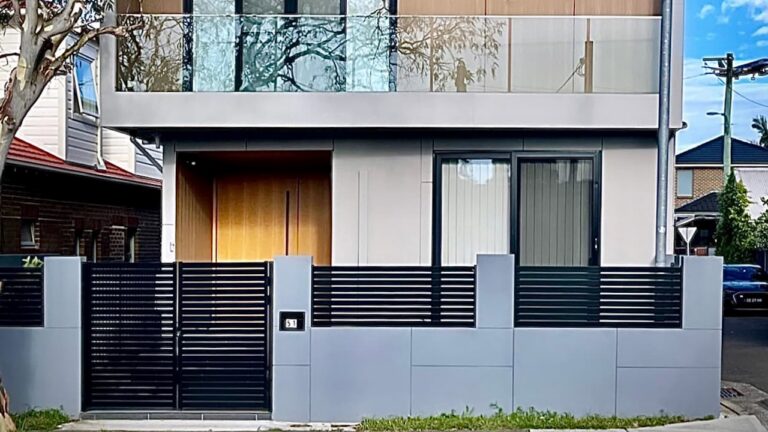
Australian governments have committed to delivering 1.2 million new homes over five years under the National Housing Accord1. Yet forecasts already suggest a shortfall of over 260,0002 by 2030, adding to the current deficit of more than 640,0003 social and affordable homes.
The targets and scale of the challenge are clear; how exactly we meet them is anything but.
Skills shortages, escalating delivery costs, supply chain volatility and fragmented regulatory frameworks are placing sustained pressure on residential builders. At the same time, productivity has moved in the wrong direction.
Roughly half as many homes are completed per hour worked today as there were in the mid-1990s4. Even accounting for improvements in quality and house size, labour productivity in housing construction has declined by 12% in the last three decades, compared to a 49% increase across other industries.4
Against that backdrop, the question is not simply how many homes we need to deliver, but how do we build better, faster and more sustainably? Increasingly, industry leaders and governments are looking to prefabrication and modern methods of construction for answers.
In the first of this three part series, I sit down with Waco Tao, Executive Chairman of Prefab Council Australia and CEO of PowerHouse Homes, to understand why.
Editor's Note: This is the first article in a 3-part series on prefabrication in Australia. Catch up on the rest of the series:
- Part 2: Proof vs Popular Perception: Busting the Myths That Are Holding Prefab Back explores prefab's ‘image problem’ and why its persistent reputation for cheap, low quality structures continues to impact investment, uptake and public interest.
- Part 3: Laying the Foundations: Reforms To Unlock Residential Prefab at Scale uncovers the real changes to finance, procurement and regulatory settings that must be made if prefab really can help solve Australia's housing crisis in the here and now.
Table of contents
From Single Projects to Scalable Systems: Transforming Housing Delivery the Prefab Way
When it comes to residential housing, the productivity paradox seems an obvious place to start.4 I begin by asking Waco why an industry under intense demand pressure has continued to lose ground.
Rather than simplistically singling out site labour or management, he points to deep and long standing structural issues in the national housing market.
“The productivity decline in Australian construction isn't just a statistic, it's a lived reality I've witnessed across decades,” Waco says.
“While every other major sector has transformed through industrialisation, we've remained stubbornly anchored to a site-based craft model that would be recognisable to a builder from a century ago.”
As Waco sees it, the central problem is that housing delivery is still organised around individual projects rather than repeatable systems. And factory-based construction, including prefab and modular, is the answer.
“Shifting to prefab and modular products breaks this cycle fundamentally because it moves construction from a chaotic, weather-dependent craft to a precise, factory-based science.”
“In a factory environment using modern manufacturing methods, productivity compounds. Workflows are optimised, quality is embedded, rework is minimised and trades work sequentially rather than competitively.”
My estimate is that industrialised methods can realistically deliver a 30 to 40 per cent reduction in construction timelines and a significant uplift in quality consistency. When you multiply that across thousands of homes, the contribution is transformative. And that’s before you factor in the productivity uplift from automation, AI and robotics.
Think about the way the automotive industry was transformed. Henry Ford didn't just build cars. He reimagined the entire system of manufacturing, supply and distribution. That's what we need for housing.
Waco Tao
Executive Chair
Prefab Council Australia
Feast-or-Famine vs Factory Production: What Construction Can Learn from the Car Industry
Applying lessons from other industries to the complex challenges of residential construction is not easily done. To my mind, the most significant questions are always financial.
Housing demand has historically been cyclical and uneven, so I asked Waco what would convince financiers, developers and contractors that factory-based housing supply represents a sustainable long-term investment — particularly when building new manufacturing facilities demand serious upfront capital.
“You're right,” Waco says. “Housing demand has traditionally been ‘lumpy.’ Developers build when the market's hot, pause when it cools. That volatility is the enemy of factory investment. You can't run a manufacturing facility on feast-or-famine orders.”
His answer: Each of the key stakeholders needs to reframe what they're actually investing in.
For financiers, the conversation needs to shift from project-based lending to asset-based financing — treating manufacturing capacity as the national infrastructure it truly is, with green bonds and infrastructure funds playing a role.
For developers, the value proposition is more immediate: prefab de-risks projects by delivering certainty of schedule, cost and quality, translating directly to bottom-line protection.
And for contractors, site teams become assemblers of precision components rather than weather-beaten problem-solvers. This a different skillset, but a valuable one.
Waco Tao
Executive Chair
Prefab Council Australia
As Waco and many across our industry now see it, prefab and modular are not simply about relocating work into a factory. They’re central to restructuring the residential delivery model around automation, predictability and repeatability.
The Need for Speed: Can prefab scale fast enough to make a difference?
Waco argues that restructuring demands a shift in thinking that extends well beyond the factory floor.
“The key to a successful prefab model is this,” he says. “Operating should be like a factory, not just like being in a factory. By that I mean the discipline, precision and systems thinking of manufacturing extends backward into design and supply chains, and forward into site assembly and client experience.”
“When the entire enterprise thinks and operates like a factory — not just the production line — that's when scale, quality and consistency truly unlock.”
That shift requires earlier design resolution, aligned procurement and data that flows across the project lifecycle. Technology offers more than simply efficiency tools. It becomes the bridge between traditional construction capability and as yet unrealised, scalable and industrialised housing delivery at scale.
Waco Tao
Executive Chair
Prefab Council Australia
The critical consideration here is speed. With targets locked in and shortfalls already forecast, can prefab and modern methods of construction scale quickly enough to make a real difference?
“On the question of time, I’m a pragmatic optimist,” Waco says. “I believe we will see prefab move to the mainstream over the next five to ten years. We can already see it on the ground now. The sustainable market is already emerging, and I’m drawing on both meanings of sustainability here because they are now converging.”
“On one hand, I'm talking about sustainable housing supply: a structural, long-term demand signal driven by the national housing deficit, government commitments under the Housing Accord, and institutional capital flowing into build-to-rent and affordable housing. That's the 'market' in the commercial sense: bankable, recurring demand.”
“On the other hand, carbon and environmental sustainability are increasingly inseparable from that conversation. Regulatory pressure, investor ESG mandates, and end-user demand for lower running costs mean that high-performance, low-carbon homes are not just an ethical choice but an economic one. The two meanings are no longer separate conversations. They are two sides of the same coin."
“Government pipelines, institutional investment and the sheer scale of the housing deficit mean it is taking centre stage. The question is whether we have the courage to build the manufacturing capacity and the factory mindset to enable that.”
Justifying the Means: The Business Case
At the same time, Waco is careful not to oversimplify the complexities of either the housing crisis or the construction industry's structural and workforce challenges. I wrap up by asking whether the scale of future housing supply is actually sufficient to justify the investment needed in manufacturing. Waco is quick to respond.
"Yes, the scale is absolutely sufficient,” he says. “But we need to look at the data differently. The National Housing Accord targets 1.2 million new homes over five years: 240,000 homes annually.5 Even if prefab captures a conservative 15–20% of that market, we're talking about 36,000–48,000 factory-built homes each year.”
To put that in perspective: a high-volume factory producing 1,000-1,500 homes annually would need 24-48 such facilities to meet that share alone. That's not a niche; it's an entirely new manufacturing sector.
Waco Tao
Executive Chair
Prefab Council Australia
“Add to that government as an 'anchor customer' – social housing, defence, public infrastructure – providing pipeline certainty while private markets mature. The 'lumpy demand' problem becomes solvable through diversified revenue streams and platform-based manufacturing that can produce housing, schools and healthcare facilities from the same flexible production line.”
“The pipeline is structural, the demand is bankable and the investment case is sound. The real question is whether we have the collective will to build the manufacturing capacity and the factory mindset to meet it."
"Ultimately, prefab is the necessary engine, but not the complete vehicle. A change in product alone won't solve the crisis, but without it we simply cannot achieve the scale, speed or consistency so urgently required."
Before that engine can take us anywhere, it’s clear that two significant barriers need to be overcome. We take a look at those next, in Proof vs Popular Perception: Busting the Myths That Are Holding Prefab Back.
Sources
1. https://treasury.gov.au/policy-topics/housing/accord
2. https://nhsac.gov.au/news/release-state-housing-system-report-2025
3. https://nhsac.gov.au/sites/nhsac.gov.au/files/2025-05/ar-state-housing-system-2025.pdf
4. https://www.pc.gov.au/inquiries-and-research/housing-construction/
5. https://treasury.gov.au/policy-topics/housing/accord
6. https://www.housingdata.gov.au/
7. https://www.everybodyshome.com.au/wp-content/uploads/2024/04/20240416-Everybodys-Home-Missing-Middle-report.pdf
8. https://assets.pc.gov.au/research/completed/housing-construction/housing-construction.pdf
9. https://www.abs.gov.au/articles/insights-output-building-construction-prices
10. https://assets.kpmg.com/content/dam/kpmgsites/au/pdf/2025/strategies-for-enabling-affordable-housing-development-in-australia.pdf.coredownload.inline.pdf
11. https://www.smh.com.au/politics/federal/middle-income-australians-shut-out-of-new-home-market-20260220-p5o42g.html
12. https://kpmg.com/au/en/insights/economics-geopolitics/strategies-enabling-affordable-housing-in-australia.html
13. https://www.abs.gov.au/statistics/economy/finance/lending-indicators/latest-release
this is part of the series
The Prefab Revolution
Categories:
Written by
Shauna Hurley
22 articles
Shauna is never short of questions when it comes to construction, tech and science. A professional writer, researcher and podcast producer, she loves sitting down with industry insiders for in-depth interviews that uncover the latest developments, debates and emerging trends. Having worked with organisations like Microsoft and the European Bank of Reconstruction, Shauna joined Procore to explore the complex issues facing construction and share fresh, research-rich insights that help professionals navigate a rapidly evolving industry.
View profileWaco Tao
Executive Chair | Prefab Council Australia
Waco Tao is the Founder and CEO of PowerHouse Homes. He also serves as the Executive Chair of the Prefab Council Australia, a role he has held since August 2025. With over three decades of experience in the property development sector, Waco began his career in May 1993 by establishing Models Inc (formerly d-art PRODUCTIONS). In this role, he provided handcrafted architectural 3D models, signage, and illustrations for commercial and residential projects globally. From January 2005 to January 2010, he served as the CEO of SCM Global Pty Ltd, where he managed integrated supply chain solutions between China and Australia. In March 2009, Waco launched PowerHouse Homes, a Melbourne-based company specializing in the research, development, manufacturing, and construction of prefabricated buildings. Under his leadership, the company has focused on "sustainaffordable" housing, utilizing steel structures and automotive-style prefabrication methodology to deliver eco-friendly, low-carbon homes. His work at PowerHouse Homes centers on creating high-efficiency, high-energy-star-rated housing solutions for low, medium, and high-density applications. Waco holds a Master’s Degree in Supply Chain and Business Administration from Monash University. He lives in Melbourne.
View profileAndy Rampton
Field COO (International) | Procore
11 articles
As the APAC Industry Transformation Lead for Procore, Andy Rampton utilises his 30+ years' global experience in engineering, construction and property development to influence industry change and help create a pathway towards the long-awaited digital transformation of construction. Having sat in the industry and experienced the evolution of technology as a user, procurer and strategist, Andy saw first-hand the challenges that companies have in defining and sustaining meaningful technology- and data-enabled change in the face of overwhelming technology choices. He joined Procore with the intent to both promote the benefits of technology and data and also to improve the relationship between tech provider and customer such that the transition to the future of construction becomes a lot easier to navigate.
View profileExplore more helpful resources
Scaling with SIERA: Building for now and what comes next
SIERA Founder and Director Brent Thompson has always known that the right people, systems and hands-on approach are fundamental to scaling his business successfully. In Part 1, Brent and Head...
Getting Your Construction Data Ready for AI – What Every Business Needs to Consider Before Launching AI
This is the first of two articles. This part sets out the considerations: what clean and trusted data actually means, how to measure it, how the two systems most businesses...

The Contractor’s Guide to Concrete Inspections
Concrete: It’s the key building block of nearly every structure’s foundation — and it’s the world’s most widely used building material. For most head contractors, understanding how to assess concrete...

Computer-Aided Design (CAD): What It Is — and Why It’s Important
When most people envision a construction worker, they see a person at a construction site wearing a hard hat and a high-vis vest. Perhaps this person is putting up plasterboard,...