
From spec book chaos to single source of truth

Last Updated Aug 28, 2026
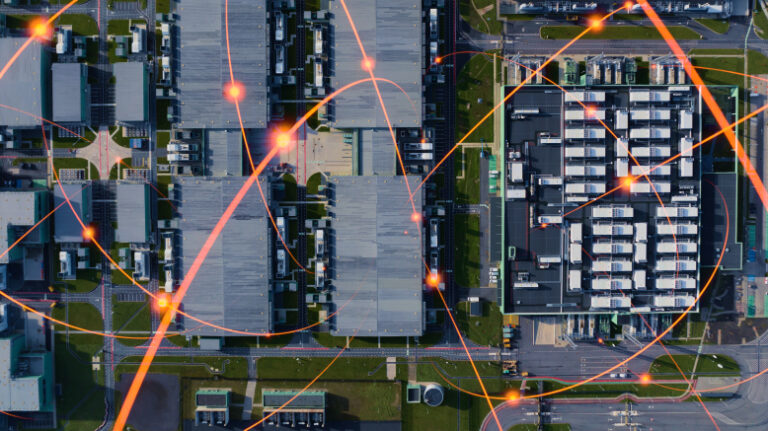
Picture this: An expansion is going in directly beside a high-volume line that cannot stop producing.
Structural steel lands in March, mechanical completion is promised for August, and your only window to tie into existing process utilities is a planned 14-day shutdown that’s been locked on the master production calendar for 11 months.
Miss that outage window, and you don't simply slip a construction milestone. You wait for the next scheduled turnaround an entire quarter away while unrecovered production revenue burns.
Now multiply that across six regional plants. Three engineering, procurement, and construction management (EPCM) firms. A dozen global original equipment manufacturer (OEM) vendors arriving with custom equipment skids on schedules of their own—each bringing its own spec book, naming conventions, and version of the truth.
Each partner is doing it their way, which is precisely the problem.
10 "right" ways to track a project add up to one program that leadership cannot read across facilities. On a program like that, the owner is always the last to know. A critical utility tie-in slips, and you hear about it in a monthly meeting instead of an alert the moment the date moves—in one hub where every project in your portfolio reports the same way.
Table of contents
Why manufacturing programs fragment harder than most capital work
Project data lives in silos: point solutions, disconnected enterprise resource planning (ERP) systems, contractor-owned project management (PM) tools and the shadow spreadsheets built around them.
You would never run product manufacturing this way. No plant quietly revises a controlled computer-aided design drawing or bill of materials without telling other sites.
There is a master drawing, an engineering change order process, and a traceable record of every deviation. Unremarkable on the product side.
Yet on the capital delivery side, every plant keeps its own spec book, and nobody calls it a deviation.
Why you need more visibility and control
You're building inside a running asset. The construction schedule is subordinate to the production schedule. Everywhere else a late signal costs money. Here it costs the window, and the next one is a quarter out.
Your partner list carries OEMs. Vendor drawings, long-lead equipment and acceptance results gate the build, and almost none of it lives where the construction record does. The equipment package that decides your date is sitting in an inbox.
You build the same thing more than once. A line design gets replicated across sites. Every plant that re-solves it locally is a variance you'll pay for again at the next one, and a lesson that never reaches the team who needed it.
Your turnover is regulated. Commissioning and qualification records, equipment documentation, warranties—that isn't closeout paperwork. It's the gate to Start of Production. A document hunt at the end puts a revenue date at risk.
And you fragment before your partners do. Corporate engineering sets the standard. Plant engineering runs the job. Site operations owns the shutdown. Three groups, three systems, one program.
The cost isn't tidy recordkeeping. When the same field event is a change order in one system, a variation in another, and a line item in a third, leadership spends hundreds of hours translating formats just to compare two plants—while systemic portfolio risks stay hidden.
The answer is not buying more tools
Scheduling is a mess, so you buy a scheduling tool.
Document control is a mess, so you buy document control.
You already have an ERP, but now you need a construction platform.
Yet every point solution is another silo to reconcile—more integrations, more logins, more places for the truth to split. Each one is another layer nobody owns.
Having more tools doesn’t mean more control. Because control doesn't come from software you own. It comes from data that's connected.
What a single source of truth actually looks like
A single source of truth is not a bigger spreadsheet or a prettier dashboard. It is one enforceable execution standard that every EPCM, trade contractor, OEM vendor, system integrator, and plant engineering team works inside—so an RFI, a change order, or a schedule slip means the same thing everywhere.
- Capital artifacts captured identically: RFIs, submittals, change orders, commitments against actuals, schedule variance — structured the same everywhere.
- A live thread to your financial system of record: Commitments, actuals and change orders reconciling against corporate finance without re-entry, so execution and the capital report don't drift between month-ends.
- Portfolio-level reporting: One view across every active project, so cost growth and schedule risk surface as a pattern, not one plant's bad month.
- A connected handover and commissioning thread: Equipment records, warranties, specifications and qualification documentation captured as created, so the SOP gate isn't waiting on a document hunt.
- Underneath it all: role-based, auditable access—OEMs and EPCs inside your environment, with trust, security, and compliance built in.
5 questions worth asking any software vendor
- Can corporate engineering configure a workflow once and push it to every plant?
- When my EPC and OEM work in this, whose environment are they in — and what happens to that data when the contract ends?
- Show me the same change order at two plants. What has to happen before I can compare them?
- What reconciles to our financial system of record automatically, and what still needs re-keying?
- Are commissioning and qualification records captured as created, or assembled at closeout?
Spec-book chaos isn't a filing problem
Consistency across multi-plant capital programs is a deliberate choice, not a byproduct. When you own the risk, the cost, and the facility long-term, you should own the data environment that governs it, too.
See what immediate actions you can take to gain portfolio-level visibility.
Was this article helpful?
Scroll less, learn more about construction.
Subscribe to The Blueprint, Procore’s construction newsletter, to get content from industry experts delivered straight to your inbox.
By clicking this button, you agree to our Privacy Notice and Terms of Service.
Categories:
Written by
Explore more helpful resources

Does your asset management workflow actually work?
Every fixed asset installed on a project generates data long before handover. Is your team capturing it as it happens, or scrambling to reconstruct it after the fact? That question...
The hidden risk of relying on your EPC partner for project visibility
Many owners have thought some version of “We don’t need a capital project management platform — our EPC partner manages all of this for us.“ It’s a reasonable position. Your...

Why manufacturing owners are still managing capital projects like it’s 2010
There is a machine on your plant floor right now that knows it’s going to break. A sensor is reading a vibration signature on a bearing about three weeks before...
Why does construction safety vary depending on where you live?
Construction safety rates vary sharply across borders despite workers using the same tools and handling identical risks. This episode traces how regulatory systems, accountability frameworks, and mental health enforcement shape...
Free Tools
Calculators
Use our calculators to estimate the cost of construction materials for your next project.
Templates
Find a template to help you with your construction project tasks.
Material Price Tracker
Get the latest U.S. retail prices and view historical trends for common building materials.
Glossary
Explore key terms and phrases used in the industry.