
The hidden risk of relying on your EPC partner for project visibility

Last Updated Aug 27, 2026
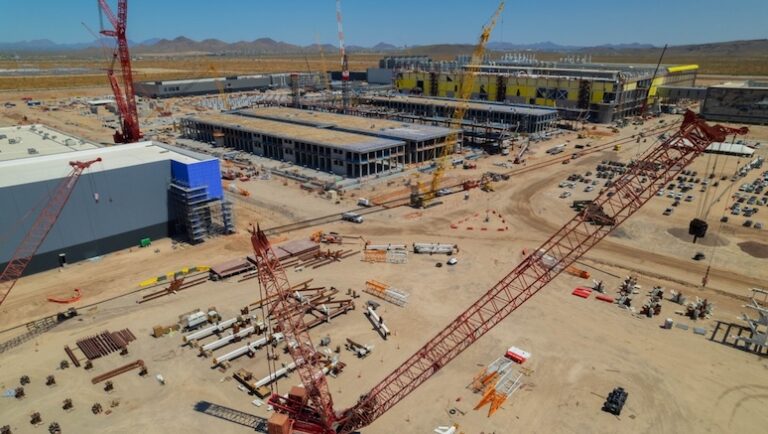
Many owners have thought some version of "We don't need a capital project management platform — our EPC partner manages all of this for us."
It's a reasonable position. Your engineering, procurement, and construction (EPC) partner has the engineers, the scheduling tools, and the boots on the ground. Handing them project visibility feels like one fewer system for a lean capital team to run, and it puts reporting closest to the work.
This can function smoothly—right up until something slips. That's the moment you discover the visibility you outsourced was never actually yours.
You own the risk and the cost. You should own the data, too.
Table of contents
Delivery ownership is not risk ownership
Contracts transfer scope; they do not transfer exposure. That risk exposure lands on your balance sheet, in your board materials, in your compliance obligations to regulators like the Occupational Safety and Health Administration (OSHA), the Environmental Protection Agency (EPA) and the Food and Drug Administration (FDA), and on the production launch schedule every downstream customer commitment is built around.
An EPC absorbs a delay as a schedule variance. You absorb it as lost production revenue, supply chain bottlenecks, and a funding-compliance question for incentive programs like the Inflation Reduction Act.
This can create a structural problem: the party accountable for the capital outcome usually has the least direct line of sight into how it's going.
It is also why the same question keeps surfacing in capital reviews: Why is it so hard to get a straight answer on project status across all our plants?
This isn't an argument about contractor capability. Your EPC isn't withholding data; most contractors report diligently on the cadence their contract specifies.
But a monthly reporting update and an active monitoring capability are fundamentally different tools. Only one tells you about a delay while you still have time to fix it.
You wouldn't run the factory floor this way
You already enforce this exact principle everywhere else in your operations.
When raw materials arrive, your suppliers send Certificates of Analysis (CoA). You still run receiving inspections. Not because you doubt your suppliers—you qualified them, audited them, and have worked with them for years. You inspect because you own the defect that reaches the customer. Their certificate is a record of their process. Your inspection is a record of your risk.
Nobody in operations reads receiving inspection as distrust. It’s simply what ownership looks like when the consequences land on you.
The 2-week blind spot
Picture how it plays out. A long-lead equipment delay or a utility tie-in slip happens in the field. It's logged in the EPC's system that week. It reaches your leadership 14 days later inside a routine roll-up.
Two weeks isn't just a calendar delay. It is the entire window in which an alternative equipment vendor could be engaged, a utility drop could be re-sequenced, or contingency could be reallocated.
By the time the slip appears on your monthly report, the cheap options have expired, and you are choosing between expensive acceleration fees or missing your shutdown, turnaround, and outage window.
When the start of production moves, it's not a minor variance—it's unrecoverable daily production revenue.
According to a McKinsey review, the average large industrial capital project runs roughly 50% over schedule and 80% over budget. A monthly reporting cycle gives you just 12 chances a year to catch a problem, each time working from data that is already stale when it lands.
Borrowing visibility from your EPCM doesn't eliminate risk—it guarantees the signal arrives late.
The project record outlives the EPC contract
The exposure doesn't end at turnover, either. You will need this data long after crews dissolve. A root-cause analysis on an automated packaging skid that fails in Year 5. An OSHA, EPA, or FDA audit requiring complete verification of how a cleanroom or process line was commissioned. A future plant retrofit team that needs exact, verified as-builts behind the wall.
When project data lives exclusively in a contractor's environment, your access to it ends when the contract ends. Turnover packages assembled at the end of a project by demobilizing contractors are notoriously incomplete.
In fairness, most contracts specify a turnover package. But a snapshot assembled at the end by people already demobilizing is not a live record maintained by the party who has to live with it.
You own the risk. You should own the data.
The answer isn't to manage the EPC harder. Tighter reporting requirements on a fragmented model produce more reports, not earlier signals.
It's to hold an independent line of sight that doesn't depend on any one contractor's tools: a single owner-held view across every plant and every partner, showing the same status your EPC sees, when they see it, in a system you control.
- Gain clarity and control: Unify budgets, schedules, and change events across every facility in a single environment, replacing contractor reporting silos with real-time portfolio dashboards.
- Address risk in real time: Set automated threshold alerts for long-lead equipment delays, submittal bottlenecks, and budget variances so you can intervene while mitigation is still inexpensive.
- Deliver with confidence: Capture equipment tagging, factory and site acceptance testing (FAT/SAT) records, and operations and maintenance documentation throughout execution for audit-ready turnover directly into your computerized maintenance management system (CMMS).
Your EPC can own the build. It cannot own your risk.
Outsourcing your visibility isn't a convenience. It's an exposure — and it stays with you whether the line of sight does or not.
Leading owner-manufacturers are building portfolio governance on four principles: See what they are.
Was this article helpful?
Scroll less, learn more about construction.
Subscribe to The Blueprint, Procore’s construction newsletter, to get content from industry experts delivered straight to your inbox.
By clicking this button, you agree to our Privacy Notice and Terms of Service.
Categories:
Written by
Explore more helpful resources
What I Learned the Hard Way: Fred Mills on changing the narrative of construction
Fred Mills, founder of The B1M, set out to change how the world sees construction. What began as an ambitious idea on a Post-it note grew into one of the...

Does your asset management workflow actually work?
Every fixed asset installed on a project generates data long before handover. Is your team capturing it as it happens, or scrambling to reconstruct it after the fact? That question...
From spec book chaos to single source of truth
Picture this: An expansion is going in directly beside a high-volume line that cannot stop producing. Structural steel lands in March, mechanical completion is promised for August, and your only...

Why manufacturing owners are still managing capital projects like it’s 2010
There is a machine on your plant floor right now that knows it’s going to break. A sensor is reading a vibration signature on a bearing about three weeks before...
Free Tools
Calculators
Use our calculators to estimate the cost of construction materials for your next project.
Templates
Find a template to help you with your construction project tasks.
Material Price Tracker
Get the latest U.S. retail prices and view historical trends for common building materials.
Glossary
Explore key terms and phrases used in the industry.