Out of Distribution: Why AI fails at engineering


Last Updated May 20, 2026
Shauna Hurley
22 articles
Shauna is never short of questions when it comes to construction, tech and science. A professional writer, researcher and podcast producer, she loves sitting down with industry insiders for in-depth interviews that uncover the latest developments, debates and emerging trends. Having worked with organisations like Microsoft and the European Bank of Reconstruction, Shauna joined Procore to explore the complex issues facing construction and share fresh, research-rich insights that help professionals navigate a rapidly evolving industry.
Theodore Galanos
Generative AI Leader
Theodore Galanos is Generative AI leader at Aurecon and Chief Science Officer at Infrared City, working at the intersection of AI, design and engineering. His work focuses on the “missing middle” of AI — the workflows, systems and orchestration layers that turn model capability into reliable, real-world outcomes, helping organisations apply AI with greater structure, accountability and impact. He regularly shares his latest research and thinking on his industry blog The Harness.
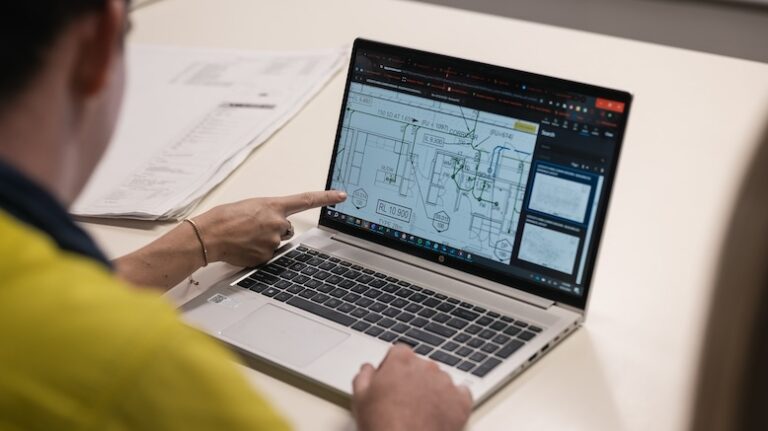
If AI is advancing so quickly, why can’t it simply learn from drawings, documents and project data and start doing the work of construction teams? Why do we still need workflows and human expertise for engineering work?
Theodore Galanos, Generative AI Lead at Aurecon, explains it this way:
When it comes to AI and engineering specifically, what we’ve really been expecting to happen hasn’t happened yet.
With AI there’s something called distribution and you’re either in or out. Engineering is not yet in distribution. By that I mean models that don’t just scan and summarise, but actually understand and interact with the core aspects of engineering work.
The models are not ‘in distribution’ because they don’t have a meaningful and multimodal understanding of engineering and construction yet. That limitation becomes obvious as soon as you move from general questions to real project work.
Theodore Galanos
Generative AI Leader
Aurecon
“For example, even if you use the strongest model and ask it something about engineering, and you’re like me, ‘pretending’ to be an engineer, you might look at what comes back and think, ‘Wow, that’s amazing,’" Theodore says. "So as a user who doesn’t know the domain, you’re likely to think it’s correct. But if you’re an actual expert engineer, you see that’s not actually the case.”
For all the talk about AI transforming construction right now, it’s hard to see where and how it’s actually transforming how projects are delivered on the ground. In this five-part series, Theodore Galanos, Generative AI Leader at Aurecon, shares a series of practical snapshots of what’s changing, what’s not and what it means for the way we work now.
“Expert engineers will look at what models come back with at the moment and find a number of things they would never write or do," he says. "So in this way models ‘kind of’ know engineering, but don’t actually know engineering. And that’s very dangerous.”
“Coding is the only task in the world right now that’s in distribution,” Theodore says. “There was an interesting discussion with OpenAI co-founder Ilya Sutskever that highlighted this problem. The singular focus on coding has been a real blind spot in AI.”
From the beginning, the idea was that if we had a model that was superhuman at coding and maths, it would just generalise beyond the world of coding and into other areas and transform whole industries like engineering, architecture and law.
It was a solid idea, but it turns out that’s not happening yet.
When it comes to engineering, for instance, a calculation is not just a calculation. It belongs to a drawing set, a schedule, a climate zone, a standard, a collection of assumptions, and a downstream chain of decisions that may depend on it being right for this case and not some nearby case.
In that environment, generic competence is not enough. It requires understanding, in both a visual and multimodal way, of why things are not in the right place.
These kinds of tasks are very simple for humans, but very hard for current models.
Theodore Galanos
Generative AI Leader
Aurecon
“That’s why you need to embed human expertise directly," Theodore says. "Tell the model what not to do, define the boundaries of what it doesn’t know, and make explicit the order of operations, checks, guidelines and logic an expert already follows.”
“It’s tempting to treat engineering as one more expert domain that large models will gradually absorb as they become smarter and better trained," he continues. "There is some truth in that. Engineering work is full of technical language, quantitative reasoning, standards, and procedural knowledge, all of which are at least partially representable in text, math, and code. But that description misses the thing that makes the domain difficult in practice.”
We need task-specific data. Think of a Word document. Fifty people collaborate. Comments everywhere. What do we keep? The final version. All that history of collaboration is gone.
From a model’s point of view, that missing history is everything — understanding both what to do and what not to do, what changed, what failed, and why something was rejected.
Theodore Galanos
Generative AI Leader
Aurecon
Until that kind of context is captured and structured, AI will continue to fall short of true understanding. And that brings the focus back to how AI is actually used in practice.
“I think this concept of ‘humans in the loop’ that we’re hearing more and more often really reveals our backwards thinking about human–AI collaboration,” Theodore says. “It implies humans are passive validators, like quality checkers on an AI assembly line.”
“What we actually want is humans driving the loop. If you design the workflow properly, you embed that expertise directly," Theodore says. "This approach also helps ensure expertise and skills don’t atrophy over time. Instead, people can sharpen their thinking and problem solving through this process.”
Rather than expecting AI to replace engineering expertise, the more practical approach today is to encode that expertise into structured workflows and use AI to apply it consistently.
If engineering and AEC are going to benefit meaningfully from AI systems, it needs people who understand the domains, the artifacts, the review practices, and the economics of real workflows to help define what good looks like.
Before this becomes a field of grand claims about what AI can do, it should become a field of good experiments, good environments, and good judgment about where these systems can actually be trusted to deliver.”
Theodore Galanos
Generative AI Leader
Aurecon
Next up: In part 4, we look at how AI is already changing the way construction teams handle RFIs on major projects.
this is part of the series
Practical AI with Theodore Galanos
Categories:
Written by
Shauna Hurley
22 articles
Shauna is never short of questions when it comes to construction, tech and science. A professional writer, researcher and podcast producer, she loves sitting down with industry insiders for in-depth interviews that uncover the latest developments, debates and emerging trends. Having worked with organisations like Microsoft and the European Bank of Reconstruction, Shauna joined Procore to explore the complex issues facing construction and share fresh, research-rich insights that help professionals navigate a rapidly evolving industry.
View profileTheodore Galanos
Generative AI Leader | Aurecon
Theodore Galanos is Generative AI leader at Aurecon and Chief Science Officer at Infrared City, working at the intersection of AI, design and engineering. His work focuses on the “missing middle” of AI — the workflows, systems and orchestration layers that turn model capability into reliable, real-world outcomes, helping organisations apply AI with greater structure, accountability and impact. He regularly shares his latest research and thinking on his industry blog The Harness.
View profileExplore more helpful resources
Scaling with SIERA: Building for now and what comes next
SIERA Founder and Director Brent Thompson has always known that the right people, systems and hands-on approach are fundamental to scaling his business successfully. In Part 1, Brent and Head...
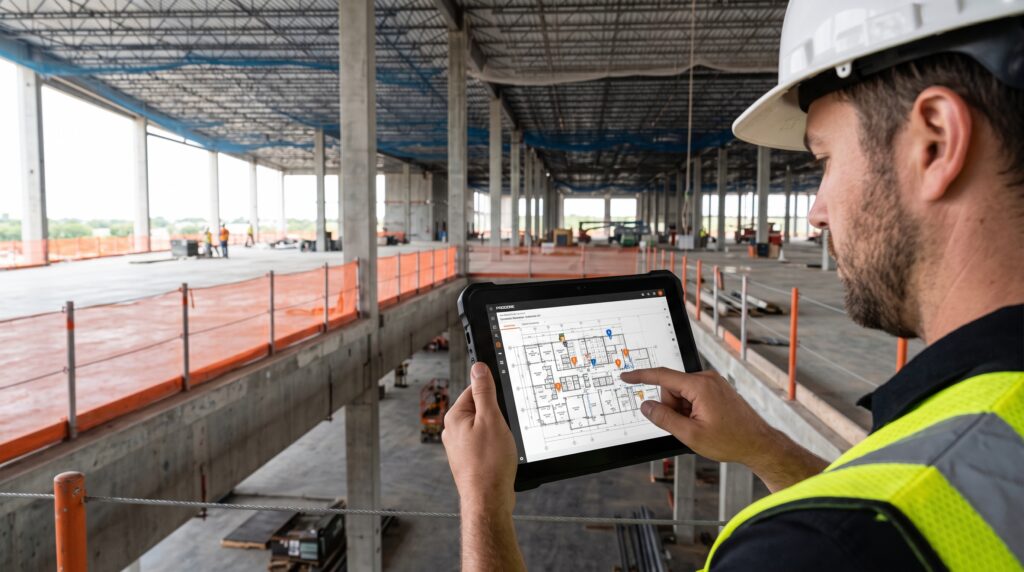
Getting Your Construction Data Ready for AI – What Every Business Needs to Consider Before Launching AI
This is the first of two articles. This part sets out the considerations: what clean and trusted data actually means, how to measure it, how the two systems most businesses...

The Contractor’s Guide to Concrete Inspections
Concrete: It’s the key building block of nearly every structure’s foundation — and it’s the world’s most widely used building material. For most head contractors, understanding how to assess concrete...
Computer-Aided Design (CAD): What It Is — and Why It’s Important
When most people envision a construction worker, they see a person at a construction site wearing a hard hat and a high-vis vest. Perhaps this person is putting up plasterboard,...