After the build: Why documentation makes all the difference in disputes


Last Updated May 27, 2026
Shauna Hurley
22 articles
Shauna is never short of questions when it comes to construction, tech and science. A professional writer, researcher and podcast producer, she loves sitting down with industry insiders for in-depth interviews that uncover the latest developments, debates and emerging trends. Having worked with organisations like Microsoft and the European Bank of Reconstruction, Shauna joined Procore to explore the complex issues facing construction and share fresh, research-rich insights that help professionals navigate a rapidly evolving industry.
Adrian Brown
Founding Director
Adrian Brown is a founding director of Jointly, a leading commercial builder based in Melbourne. A degree qualified Civil Engineer, Adrian has delivered projects in all corners of Australia and the UK. He combines a passion for building with an interest in the way evolving tech tools can support his team and growing business.

As AI, digital twins and automation advance, so too does the expectation that builders can capture every decision, detail and data point on and off site. The reality is that most aren’t yet set up to do so.
Recognising this, Melbourne-based commercial builder Jointly has focused on building systems that track decisions, verify work and create a reliable visual record of the job — so when issues arise down the track, there is clear, verifiable evidence of what was done and when.
For Adrian Brown, co-founder of Jointly, construction remains a people business—even as technology rapidly reshapes the industry. When 90% of Jointly’s private clients vanished overnight, the business survived thanks to a close-knit team and robust systems that kept major projects on track across Victoria.
In this four-part series, Adrian shares what actually made the difference. He explores how the right systems improve visibility, protect documentation, and control costs and risk during a crisis. Finally, he examines how AI is reshaping the field, highlighting the emerging risks of using AI-generated estimates to price and win projects.
Table of contents
A complete, detailed history of every project
Technology is so sophisticated now that clients have come to expect that everything’s been scanned, everything’s visible, it’s all done on fancy computers — and therefore you must know where everything is.
Something in the concrete? Sure, you know exactly to the millimetre where it is. But realistically, have you seen how concrete gets poured? Traditionally you’d be saying 'You’re kidding me.'
Now the expectation is that we know where it all is.
Adrian Brown
Founding Director
Jointly

The bar at The Pelican, built by Jointly at the Melbourne Airport. See more of the project [Facebook].

The Brunetti Classico cafe, built by Jointly at the Melbourne Airport. See more of the project [Facebook].
For most projects, questions are often raised months or even years after completion. Clients come back saying something isn’t working, is missing, or wasn’t built the way they expected.
That’s where documentation becomes critical — what was done, when and to what specification.
Commercial builders carry twelve-month warranty obligations as a minimum. But depending on the product, that can stretch to five or ten years.
So if something fails six years down the track, you get a phone call. And even if it’s a product issue, someone still has to take it off the wall and put it back on again. That’s the builder’s obligation.
And you might have used subcontractors and that subcontractor might now be gone. And even if they weren’t, will they come back and fix that problem from a bad day six years ago?
For us, we go into Procore. You pull up your drawings, specs, last scans and photos and go back through all the drawings and documents so you can literally show — at the time, this wasn’t included. That’s usually the end of the conversation.
Adrian Brown
Founding Director
Jointly
Capturing the job as it happens
That ability to go back and prove what happened depends entirely on what was captured at the time. At Jointly, that’s not left to chance.
It’s just a minimum expectation now. It’s embedded in what we do. Whether it’s the project manager running the financials at the end of the month, or the tools we use to engage a subcontractor, or where’s the latest drawing for the chippy doing his wall set out — it’s all coming out of the one system.
Adrian Brown
Founding Director
Jointly
One of the clearest examples of Jointly’s commitment to documenting projects from beginning to end is their integration with Procore and Matterport — a 3D scanning tool that captures a complete visual site record.
Previously, you’d be asking questions like 'Did I put something behind that wall? Could I prove that I did? And did I take photos? I thought I did.'
But that one photo you really needed — maybe you didn’t take it after all or you can’t find it. Didn’t look up, didn’t look down when and where you needed to. Whereas this tool spins 360 degrees.
When a client comes back with questions about what’s inside a wall, or disputes what was installed before it was closed up, the scan becomes the answer. A complete, timestamped, 360-degree record.
Adrian Brown
Founding Director
Jointly
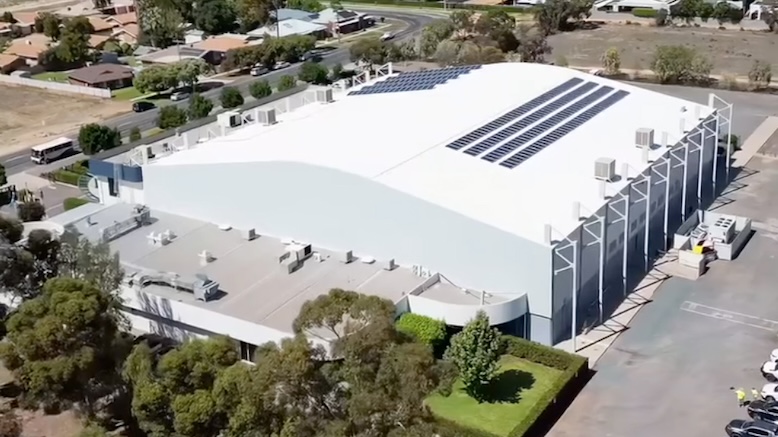
A recladding project in regional Victoria saw the Jointly team entirely reclad 2,000 m2 in under 4 weeks. See a flyover video [Instagram].
The result: Disputes resolved before they start
This ability to show clearly what was done and when doesn’t just reduce disputes: It changes how risk is managed across the life of a project.
For builders, the takeaway is straightforward. If the work isn’t captured as it happens, it becomes harder and more expensive to resolve later. What feels like a minor gap at handover can turn into a warranty issue years later with no clear evidence to resolve it.
The difference is having a complete, accessible record of the job — drawings, decisions, photos and site conditions — all in one place. As Adrian has seen first hand, when that’s in place, issues can be resolved quickly. When it’s not, you’re relying on memory, assumptions or chasing people who may no longer be around.
In an environment where expectations are rising and margins are tight, that level of oversight and documentation is becoming essential.
In the final part of the series, Adrian looks at how AI-generated quotes are reshaping estimating and the new challenges this creates for builders trying to price and win work.
this is part of the series
The Builder's Playbook with Jointly
Categories:
Written by
Shauna Hurley
22 articles
Shauna is never short of questions when it comes to construction, tech and science. A professional writer, researcher and podcast producer, she loves sitting down with industry insiders for in-depth interviews that uncover the latest developments, debates and emerging trends. Having worked with organisations like Microsoft and the European Bank of Reconstruction, Shauna joined Procore to explore the complex issues facing construction and share fresh, research-rich insights that help professionals navigate a rapidly evolving industry.
View profileAdrian Brown
Founding Director | Jointly
Adrian Brown is a founding director of Jointly, a leading commercial builder based in Melbourne. A degree qualified Civil Engineer, Adrian has delivered projects in all corners of Australia and the UK. He combines a passion for building with an interest in the way evolving tech tools can support his team and growing business.
View profileExplore more helpful resources

Scaling with SIERA: Building for now and what comes next
SIERA Founder and Director Brent Thompson has always known that the right people, systems and hands-on approach are fundamental to scaling his business successfully. In Part 1, Brent and Head...
Getting Your Construction Data Ready for AI – What Every Business Needs to Consider Before Launching AI
This is the first of two articles. This part sets out the considerations: what clean and trusted data actually means, how to measure it, how the two systems most businesses...

The Contractor’s Guide to Concrete Inspections
Concrete: It’s the key building block of nearly every structure’s foundation — and it’s the world’s most widely used building material. For most head contractors, understanding how to assess concrete...

Computer-Aided Design (CAD): What It Is — and Why It’s Important
When most people envision a construction worker, they see a person at a construction site wearing a hard hat and a high-vis vest. Perhaps this person is putting up plasterboard,...