Three practical ways to get started with AI today


Last Updated May 28, 2026
Shauna Hurley
22 articles
Shauna is never short of questions when it comes to construction, tech and science. A professional writer, researcher and podcast producer, she loves sitting down with industry insiders for in-depth interviews that uncover the latest developments, debates and emerging trends. Having worked with organisations like Microsoft and the European Bank of Reconstruction, Shauna joined Procore to explore the complex issues facing construction and share fresh, research-rich insights that help professionals navigate a rapidly evolving industry.
Theodore Galanos
Generative AI Leader
Theodore Galanos is Generative AI leader at Aurecon and Chief Science Officer at Infrared City, working at the intersection of AI, design and engineering. His work focuses on the “missing middle” of AI — the workflows, systems and orchestration layers that turn model capability into reliable, real-world outcomes, helping organisations apply AI with greater structure, accountability and impact. He regularly shares his latest research and thinking on his industry blog The Harness.
One of the questions Aurecon’s Generative AI Leader Theodore Galanos gets asked most is still the most basic one: "Where do we even start?"
Most construction teams don’t have a dedicated AI lead, and the idea of building AI workflows can still sound like it belongs squarely in the world of tech, not construction.
Theodore doesn’t see it that way. In his view, the barrier isn’t budget, data or technical capability. It’s finding and focusing on a problem you want to solve.
For all the talk about AI transforming construction right now, it’s hard to see where and how it’s actually transforming how projects are delivered on the ground. In this five-part series, Theodore Galanos, Generative AI Leader at Aurecon, shares a series of practical snapshots of what’s changing, what’s not and what it means for the way we work now.
Table of contents
Start with reporting
When people ask where to begin, Theodore suggests reporting can be the easiest place to start. Pick one report your team already produces — a weekly update, a project report, a client summary — and look at how it actually gets put together: where the information comes from, who contributes, and how it's structured.
When you think about it, the task of creating a report is already embedded in the table of contents. And when we do them over time, we also have a mapping of how the report is usually put together.
For the introduction, I actually write it myself. For the background, I go in this specific folder and I ask these particular people. We can map the information pathways easily.
Theodore Galanos
Generative AI Leader
Aurecon
These are the makings of a simple AI workflow.
You can probably get a powerful model — tools like Claude, ChatGPT or Copilot — and give it a template and say, how should we do this?
That's how I would start.
The model will probably give you something very close to the solution. You can get to 60–70 per cent just like that, with the right data and a clean template.
Interestingly, a lot of construction teams don't always have templates. So the bonus of doing these AI workflows is that you can develop them, and also streamline or standardise your work as you go.
AI might actually be the first time we do standardisation in this industry. We always say we want to do standardisation, but how do you actually action that?
AI can be that persistent force that means we will finally do it.
Theodore Galanos
Generative AI Leader
Aurecon
Take advantage of coding agents
I’d also start with a coding agent. Something like Claude Code GitHub Copilot, or Codex which for me is one of the best tools for engineering right now. It’s around $30 a month, which is usually quite affordable.
It might be a challenge at first to convince your manager or colleagues that it will give you tens of thousands of value if you use it. But it will.
Any coding agent you pick, that would be my simple answer, because these are the best knowledge work tools in the world right now. You can do anything with a coding agent: run your proposals, make presentations, reply to your email, anything. That's where I would start. That's what I say, even internally, to people.
Theodore Galanos
Generative AI Leader
Aurecon
Prepare your data
For many teams, data presents immediate challenges. Legacy systems, fragmented information and inconsistent records are part of the reality. Theodore is clear: You don’t need perfect data to get started with AI. But you do need to think about how your data is stored and structured from now on.
You should develop data generation processes that are correct at the source. We shouldn’t have a future of unstructured data. I think that would be a failure.
But we don’t need to wait and clean our past to do AI. Not at all.
Most of the workflows I do internally, they all start with: 'Here’s my SharePoint folder of the problem, this is what it is.' It’s all a bit structured and messy. But the models and the experts around them can solve it.
Theodore Galanos
Generative AI Leader
Aurecon
The key aim is not to fix everything that came before, but to generate better quality data from this point on. The organisations that will benefit most from AI are those building structured data habits now.
As AI systems advance, the gap between structured and unstructured data becomes more consequential.
The difference in quality between a messy knowledge base and one transformed into a completely structured object is immense.
For example, if you're trying to show me all projects in the last decade in transportation where we had this problem, the exhaustive answer only exists on the structured side.
The other side only gives you a limited view: 'Oh, I found a few of them, here they are.'
Theodore Galanos
Generative AI Leader
Aurecon
The technology that’s set to change everything
Theodore points out that only about 4% of companies -- "Frontier Firms" have fundamentally restructured around AI and autonomous agents, reimagining their entire operating model. "That’s the difference between using AI and being transformed by it,” he says.
So how quickly will other organisations join the ranks of these frontier firms?
I do expect some of the larger firms to transform in the next few years, or at least to organically create smaller counterparts. But smaller companies can move faster, they can test and experiment.
I often tongue-in-cheek say that this is actually the first digital transformation that we will see that actually works.
Think of everything that’s gone before it — BIM, Digital Twins, the Internet of Things, even computational design. They changed the landscape of where we try to solve problems, but in many ways we just shifted things from one place to the other without actually solving them.
There’s a big temptation to think it’s all about efficiency, and that's good. But you should also think about how it actually transforms completely what you're doing.
That might mean new solutions, or actually rebuilding what we have from the point of view of this technology. I do think AI is actually the transformer in technology that will change everything.
Theodore Galanos
Generative AI Leader
Aurecon
this is part of the series
Practical AI with Theodore Galanos
Categories:
Written by
Shauna Hurley
22 articles
Shauna is never short of questions when it comes to construction, tech and science. A professional writer, researcher and podcast producer, she loves sitting down with industry insiders for in-depth interviews that uncover the latest developments, debates and emerging trends. Having worked with organisations like Microsoft and the European Bank of Reconstruction, Shauna joined Procore to explore the complex issues facing construction and share fresh, research-rich insights that help professionals navigate a rapidly evolving industry.
View profileTheodore Galanos
Generative AI Leader | Aurecon
Theodore Galanos is Generative AI leader at Aurecon and Chief Science Officer at Infrared City, working at the intersection of AI, design and engineering. His work focuses on the “missing middle” of AI — the workflows, systems and orchestration layers that turn model capability into reliable, real-world outcomes, helping organisations apply AI with greater structure, accountability and impact. He regularly shares his latest research and thinking on his industry blog The Harness.
View profileExplore more helpful resources
Scaling with SIERA: Building for now and what comes next
SIERA Founder and Director Brent Thompson has always known that the right people, systems and hands-on approach are fundamental to scaling his business successfully. In Part 1, Brent and Head...
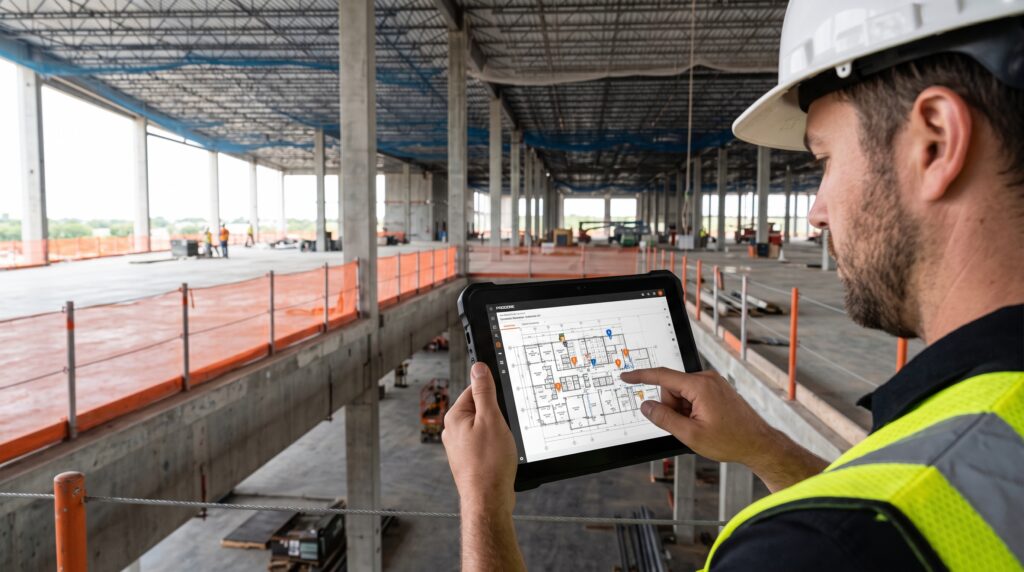
Getting Your Construction Data Ready for AI – What Every Business Needs to Consider Before Launching AI
This is the first of two articles. This part sets out the considerations: what clean and trusted data actually means, how to measure it, how the two systems most businesses...

The Contractor’s Guide to Concrete Inspections
Concrete: It’s the key building block of nearly every structure’s foundation — and it’s the world’s most widely used building material. For most head contractors, understanding how to assess concrete...
Computer-Aided Design (CAD): What It Is — and Why It’s Important
When most people envision a construction worker, they see a person at a construction site wearing a hard hat and a high-vis vest. Perhaps this person is putting up plasterboard,...