From quick wins to workflows: How AI is changing construction on the ground


Last Updated May 20, 2026
Shauna Hurley
22 articles
Shauna is never short of questions when it comes to construction, tech and science. A professional writer, researcher and podcast producer, she loves sitting down with industry insiders for in-depth interviews that uncover the latest developments, debates and emerging trends. Having worked with organisations like Microsoft and the European Bank of Reconstruction, Shauna joined Procore to explore the complex issues facing construction and share fresh, research-rich insights that help professionals navigate a rapidly evolving industry.
Theodore Galanos
Generative AI Leader
Theodore Galanos is Generative AI leader at Aurecon and Chief Science Officer at Infrared City, working at the intersection of AI, design and engineering. His work focuses on the “missing middle” of AI — the workflows, systems and orchestration layers that turn model capability into reliable, real-world outcomes, helping organisations apply AI with greater structure, accountability and impact. He regularly shares his latest research and thinking on his industry blog The Harness.
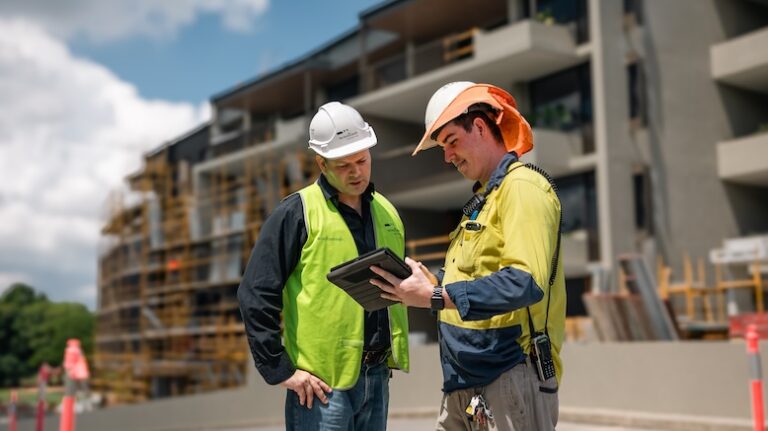
AI tools like ChatGPT, Copilot and Claude have become a familiar fixture of everyday life and work for millions globally.
In construction, conversations about AI often focus on the “quick wins” these tools deliver through time saved on emails, reporting and meeting minutes. But practical examples of any fundamental change in how projects are planned, priced, coordinated or delivered are harder to come by.
For all the talk about AI transforming construction right now, it’s hard to see where and how it’s actually transforming how projects are delivered on the ground. In this five-part series, Theodore Galanos, Generative AI Leader at Aurecon, shares a series of practical snapshots of what’s changing, what’s not and what it means for the way we work now.
So, if AI really is the game-changer we hear so much about, how and when will we move beyond these incremental gains to something that actually shifts how projects are delivered?
As Theodore Galanos explains, the answer sits between the tools most people are using today, and the more advanced systems still to come.
It’s a real time of transition and people are currently being pulled in two directions. One from the past, which is the chatbot and one from the future, which is agents.
Everything rotates around those two technologies at the moment, so it’s easy to lose sight of what’s in the middle.
That’s where the difference between using AI and being transformed by it lies: in workflows built by experts.
Theodore Galanos
Generative AI Leader
Aurecon
That “middle” is where the shift is starting to happen, but few organisations are really focused on it yet. Theodore believes that’s set to change.
“We do see ‘AI-exposed’ industries showing significant productivity growth," he says. "But only around 22% of companies have really moved beyond proof-of-concept.”
That figure is supported by a BCG report, which found that, as of 2024, only around 1 in 5 companies "have implemented an AI strategy, built advanced capabilities, and are beginning to realize substantial gains.”
The majority of organisations are still stuck at level one. So they give employees access to ChatGPT, build simple retrieval systems or create isolated tools that can lead to linear improvements: people might be 10% more productive here or 20% of time is saved there.
Meanwhile, "Frontier Firms" – an elite 4% of all organisations – are operating at a different level entirely. They're not just using AI; they're restructuring around it. These firms stand apart because they recognise systemic transformation beats incremental improvement every time.
Put simply, it’s not about making individual professionals more productive. It's about reshaping how knowledge work itself operates.
Theodore Galanos
Generative AI Leader
Aurecon
For construction, this distinction is critical. The gains most teams are seeing today sit at the level of individual tasks and quick wins.
The bigger shift and potential for real transformation comes when workflows themselves start to change — how information is structured, how decisions are made and how human expertise is scaled across projects.
Up next: In part 2, Theodore looks at how this works in practice, starting with one of construction’s most complex, costly and time-consuming areas: disputes.
this is part of the series
Practical AI with Theodore Galanos
Categories:
Written by
Shauna Hurley
22 articles
Shauna is never short of questions when it comes to construction, tech and science. A professional writer, researcher and podcast producer, she loves sitting down with industry insiders for in-depth interviews that uncover the latest developments, debates and emerging trends. Having worked with organisations like Microsoft and the European Bank of Reconstruction, Shauna joined Procore to explore the complex issues facing construction and share fresh, research-rich insights that help professionals navigate a rapidly evolving industry.
View profileTheodore Galanos
Generative AI Leader | Aurecon
Theodore Galanos is Generative AI leader at Aurecon and Chief Science Officer at Infrared City, working at the intersection of AI, design and engineering. His work focuses on the “missing middle” of AI — the workflows, systems and orchestration layers that turn model capability into reliable, real-world outcomes, helping organisations apply AI with greater structure, accountability and impact. He regularly shares his latest research and thinking on his industry blog The Harness.
View profileExplore more helpful resources
Scaling with SIERA: Building for now and what comes next
SIERA Founder and Director Brent Thompson has always known that the right people, systems and hands-on approach are fundamental to scaling his business successfully. In Part 1, Brent and Head...
Getting Your Construction Data Ready for AI – What Every Business Needs to Consider Before Launching AI
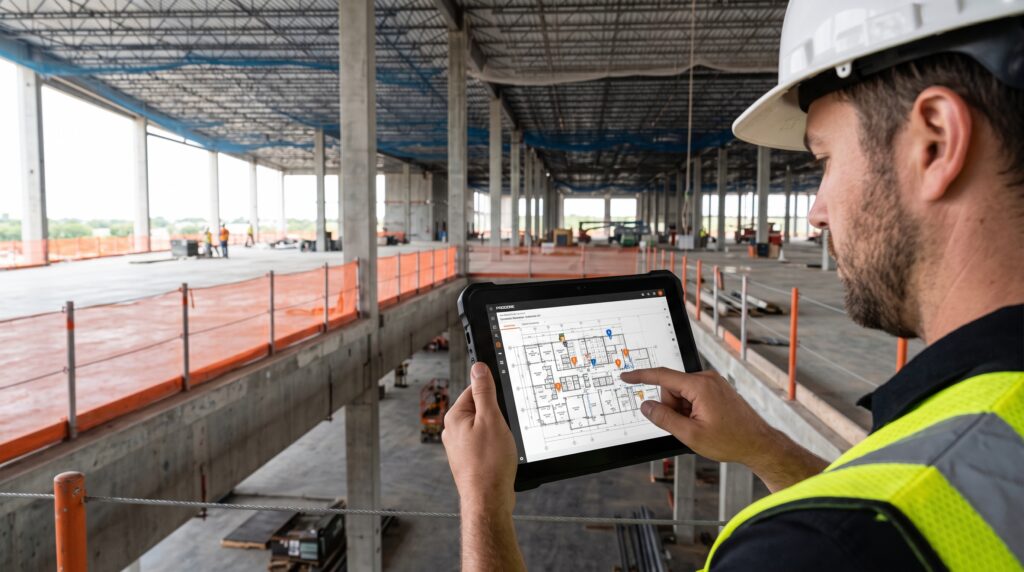
This is the first of two articles. This part sets out the considerations: what clean and trusted data actually means, how to measure it, how the two systems most businesses...

The Contractor’s Guide to Concrete Inspections
Concrete: It’s the key building block of nearly every structure’s foundation — and it’s the world’s most widely used building material. For most head contractors, understanding how to assess concrete...

Computer-Aided Design (CAD): What It Is — and Why It’s Important
When most people envision a construction worker, they see a person at a construction site wearing a hard hat and a high-vis vest. Perhaps this person is putting up plasterboard,...