How AI is changing RFI management



Last Updated May 20, 2026
Shauna Hurley
22 articles
Shauna is never short of questions when it comes to construction, tech and science. A professional writer, researcher and podcast producer, she loves sitting down with industry insiders for in-depth interviews that uncover the latest developments, debates and emerging trends. Having worked with organisations like Microsoft and the European Bank of Reconstruction, Shauna joined Procore to explore the complex issues facing construction and share fresh, research-rich insights that help professionals navigate a rapidly evolving industry.
Theodore Galanos
Generative AI Leader
Theodore Galanos is Generative AI leader at Aurecon and Chief Science Officer at Infrared City, working at the intersection of AI, design and engineering. His work focuses on the “missing middle” of AI — the workflows, systems and orchestration layers that turn model capability into reliable, real-world outcomes, helping organisations apply AI with greater structure, accountability and impact. He regularly shares his latest research and thinking on his industry blog The Harness.
Andy Rampton
Field COO (International)
11 articles
As the APAC Industry Transformation Lead for Procore, Andy Rampton utilises his 30+ years' global experience in engineering, construction and property development to influence industry change and help create a pathway towards the long-awaited digital transformation of construction. Having sat in the industry and experienced the evolution of technology as a user, procurer and strategist, Andy saw first-hand the challenges that companies have in defining and sustaining meaningful technology- and data-enabled change in the face of overwhelming technology choices. He joined Procore with the intent to both promote the benefits of technology and data and also to improve the relationship between tech provider and customer such that the transition to the future of construction becomes a lot easier to navigate.
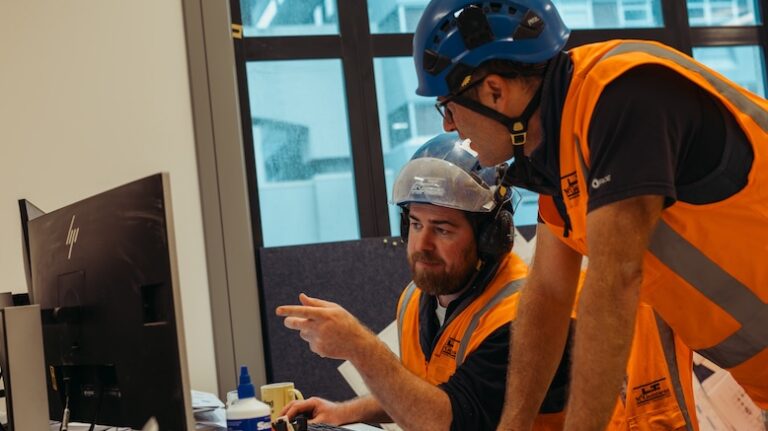
Ask anyone on a construction project what slows them down and RFIs are usually near the top of the list. For Andy Rampton, Procore’s Industry Advancement Lead, that makes them one of the most obvious places AI could make an immediate difference. Here, he sits down with Theodore Galanos, Generative AI Leader at Aurecon, to explore how AI is already changing how RFIs are handled on the ground today.
For all the talk about AI transforming construction right now, it’s hard to see where and how it’s actually transforming how projects are delivered on the ground. In this five-part series, Theodore Galanos, Generative AI Leader at Aurecon, shares a series of practical snapshots of what’s changing, what’s not and what it means for the way we work now.
Table of contents
Needle in a haystack: Finding the right RFI info
RFIs are simple in theory, but often time-consuming and costly in practice. They can take weeks to resolve and often involve multiple people tracking down information across drawings, emails and reports.
Research has found it takes an average of 7 to 12 days to get a response to RFIs, with direct impacts on cost, programme and delivery accumulating over the life of a project.
RFIs are a very interesting space for AI.
At first they seem very simple: We have a question that needs to be answered and it should be easy. And yet the reality is it usually takes up so much time for so many people on every project, because we know it’s actually very difficult to know where the information you need is sitting.
People are communicating in different ways across eleven different channels and documenting decisions (or not) in different ways. When you operate with legacy systems you can’t answer RFIs by saying: here’s our project data, what should we do? Because we’re almost always looking for a needle in a haystack.
What took a while for us to understand was that on the surface, an RFI is a request for an answer. But that's not actually what people need from an RFI agent or harness. They just want information that helps them discover the answer themselves — something that helps them quickly validate what they already know. That was a big shift in understanding what AI actually needs to do here. And that changed the workflow we need to design completely.
Theodore Galanos
Generative AI Leader
Aurecon
It's a problem Andy recognises immediately, having worked on construction projects around the globe for over two decades.
Historically, it's often been easier to submit an RFI than to try and find the data you know is probably in there somewhere. In many cases, RFIs are submitted because people just can't find information that might not actually be missing at all.
Andy Rampton
Field COO (International)
Procore
The job of an AI tool for RFIs isn't purely to generate answers. It's to locate the right documents, emails, drawings and records so teams can find and confirm what they already suspect is there, but don’t know where to begin.
Two sides of the RFI coin: accessible information and accurate documentation
If making information easy to find is one side of the RFI coin, ensuring it’s worth finding is the other.
We’re not domain experts in this, so when we first started working on workflows for RFIs, we’d read a lot of them to get an understanding and we quickly noticed the discussions that were included would say things like: ‘Hi, as we discussed two weeks ago’ or ‘as agreed at the meeting yesterday…’
There was no context included around it — not for an AI tool, and not really for humans either.
The problem is that six months later, no one remembers what these discussions are referring to. What was the meeting? What was the problem? Everyone was busy and the response in writing might have just been ‘sure, go ahead.’
At the time everyone knew why, because they met the day before. But that’s not written down anywhere, so even a few weeks later who knows what detailed decisions were made or why.
Theodore Galanos
Generative AI Leader
Aurecon
That missing context creates real risk later -- when questions come back, disputes arise and the documentation needed to clarify is nowhere to be found.
A real-world example: Generative AI in action on infrastructure projects
The aim is simple: Help teams find information faster, and capture the reasoning behind decisions at the time they’re made.
What if the tool generates a more detailed, high-quality response to the question being raised?
When you look back three years later, you know what that RFI was actually about. The reasoning is there. The references are there. There's a richness to it versus the current reality where the response is just 'sure, go ahead,' because everyone already talked about it in person the day before but never wrote it down.
Theodore Galanos
Generative AI Leader
Aurecon
At Aurecon, that thinking has shaped the development of a generative AI tool called ClaRFI. It interprets RFIs, pulls relevant information from across project documents, emails and drawings, and drafts structured responses in seconds.
Using project-specific databases of thousands of real-world RFIs, ClaRFI helps teams quickly understand what’s being asked, what information is available, and what still needs to be validated. It also features a user-friendly interface that tracks the lifecycle of requests, actions and responses, categorising and routing RFIs to improve coordination between asset owners, developers, designers and contractors. Early results show ClaRFI can reduce the time required to prepare RFI responses by up to 50 per cent.
On major infrastructure projects, the tool helps teams retain and reuse critical knowledge and improve information flows over time. Transport for NSW is now using ClaRFI on a major transport project, giving teams real-time insight into how AI can improve productivity and project delivery in practice.
The task can look or sound simple, but the real work is understanding what experts are actually doing when they process an RFI, what they're looking for, what they're validating, what context they need. Once you understand that, you can build AI workflows and agents that genuinely help.
You just say, 'Here’s our process. How do we turn it into something that can decide how to approach each RFI?'
And then it’s liberating. Suddenly quality can go up, there’s more flexibility, more interpretability. And we can see it's already working.
Theodore Galanos
Generative AI Leader
Aurecon
Next up: In part 5, we close out the series with three practical ways to get started with AI today.
this is part of the series
Practical AI with Theodore Galanos
Categories:
Written by
Shauna Hurley
22 articles
Shauna is never short of questions when it comes to construction, tech and science. A professional writer, researcher and podcast producer, she loves sitting down with industry insiders for in-depth interviews that uncover the latest developments, debates and emerging trends. Having worked with organisations like Microsoft and the European Bank of Reconstruction, Shauna joined Procore to explore the complex issues facing construction and share fresh, research-rich insights that help professionals navigate a rapidly evolving industry.
View profileTheodore Galanos
Generative AI Leader | Aurecon
Theodore Galanos is Generative AI leader at Aurecon and Chief Science Officer at Infrared City, working at the intersection of AI, design and engineering. His work focuses on the “missing middle” of AI — the workflows, systems and orchestration layers that turn model capability into reliable, real-world outcomes, helping organisations apply AI with greater structure, accountability and impact. He regularly shares his latest research and thinking on his industry blog The Harness.
View profileAndy Rampton
Field COO (International) | Procore
11 articles
As the APAC Industry Transformation Lead for Procore, Andy Rampton utilises his 30+ years' global experience in engineering, construction and property development to influence industry change and help create a pathway towards the long-awaited digital transformation of construction. Having sat in the industry and experienced the evolution of technology as a user, procurer and strategist, Andy saw first-hand the challenges that companies have in defining and sustaining meaningful technology- and data-enabled change in the face of overwhelming technology choices. He joined Procore with the intent to both promote the benefits of technology and data and also to improve the relationship between tech provider and customer such that the transition to the future of construction becomes a lot easier to navigate.
View profileExplore more helpful resources
Scaling with SIERA: Building for now and what comes next
SIERA Founder and Director Brent Thompson has always known that the right people, systems and hands-on approach are fundamental to scaling his business successfully. In Part 1, Brent and Head...
Getting Your Construction Data Ready for AI – What Every Business Needs to Consider Before Launching AI
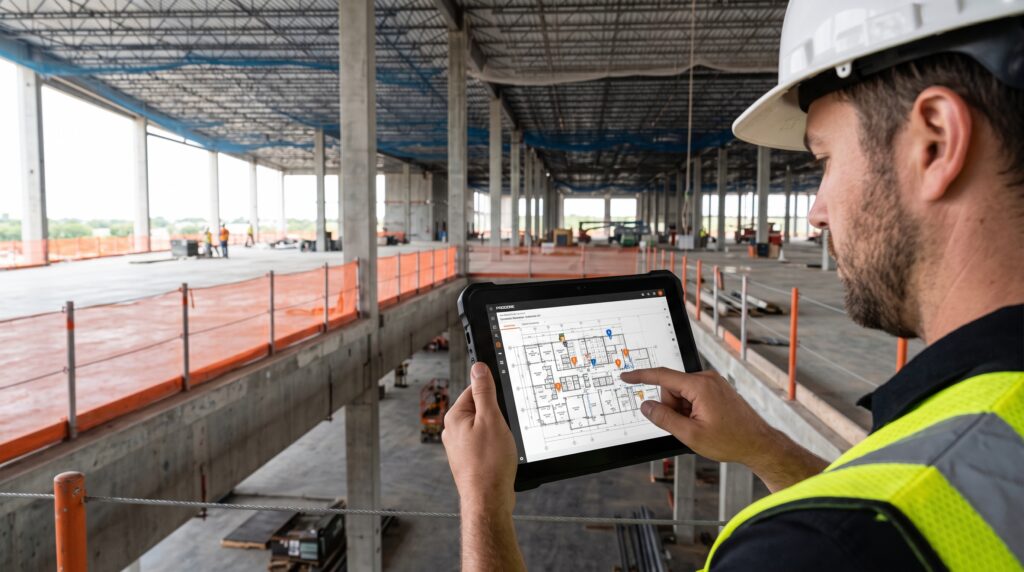
This is the first of two articles. This part sets out the considerations: what clean and trusted data actually means, how to measure it, how the two systems most businesses...

The Contractor’s Guide to Concrete Inspections
Concrete: It’s the key building block of nearly every structure’s foundation — and it’s the world’s most widely used building material. For most head contractors, understanding how to assess concrete...

Computer-Aided Design (CAD): What It Is — and Why It’s Important
When most people envision a construction worker, they see a person at a construction site wearing a hard hat and a high-vis vest. Perhaps this person is putting up plasterboard,...