Multiple Jobs, One Way of Working: Keeping Teams And Projects Aligned


Last Updated May 27, 2026
Shauna Hurley
22 articles
Shauna is never short of questions when it comes to construction, tech and science. A professional writer, researcher and podcast producer, she loves sitting down with industry insiders for in-depth interviews that uncover the latest developments, debates and emerging trends. Having worked with organisations like Microsoft and the European Bank of Reconstruction, Shauna joined Procore to explore the complex issues facing construction and share fresh, research-rich insights that help professionals navigate a rapidly evolving industry.
Adrian Brown
Founding Director
Adrian Brown is a founding director of Jointly, a leading commercial builder based in Melbourne. A degree qualified Civil Engineer, Adrian has delivered projects in all corners of Australia and the UK. He combines a passion for building with an interest in the way evolving tech tools can support his team and growing business.

When COVID hit in 2020, Melbourne-based commercial builder Jointly pivoted from private to government work almost overnight. The systems and approach that made that possible were already in place.
With the whole team working from the same up-to-date information, in a way that fits their role, projects keep moving, guesswork on site is reduced, and the team has a clear view of what’s happening across every job.
Here, Jointly co-founder Adrian Brown explains how to set up company-wide systems, and what it takes to keep an entire team working in a consistent, repeatable way across a portfolio of concurrent projects.
For Adrian Brown, co-founder of Jointly, construction remains a people business—even as technology rapidly reshapes the industry. When 90% of Jointly’s private clients vanished overnight, the business survived thanks to a close-knit team and robust systems that kept major projects on track across Victoria.
In this four-part series, Adrian shares what actually made the difference. He explores how the right systems improve visibility, protect documentation, and control costs and risk during a crisis. Finally, he examines how AI is reshaping the field, highlighting the emerging risks of using AI-generated estimates to price and win projects.
Table of contents
Teams and tools that change outcomes, not just workflows
When it comes to the tech aspect of our business, it's basically innate in who we are.
We've always had a fascination with tech tools, but never just for the sake of ‘cool tech’. If it's not of any value we're not into it at all. It has to add value and offer a point of difference that changes our quality outcome or speeds us up.
A platform like Procore was second nature to us when we started the business because we came from the project management side of the world. That’s not always the case for all builders because in construction, you tend to see a mix of backgrounds.
You’ve got tradies who’ve come up off the tools. They’ve taught themselves the computer side of things and everything that comes with it, but tech systems aren’t native.
Then you’ve got businesses that are much more construction management led — engineers, project managers. They’re all about systems and platforms as part of how everything runs on time and budget.
As a business, we bring both worlds together. One of our main points of difference is that we've got all the technology and smarts that the large construction management companies have, but we also have 40 in-house carpenters. We bring that project management perspective but we're a hands-on builder that loves building.
We like to keep it that way.
Adrian Brown
Founding Director
Jointly
That mindset shaped how Jointly set up its systems from the beginning — to support workflows and communication, and to capture and verify work on site.
They adopted Procore from day one, integrating additional tools like a Matterport 3D scanner over time to create a detailed record of existing conditions, measurements and services locations, while robotic total stations now also improve the accuracy and speed of set-out.
In practice, that means fewer assumptions on site, better coordination between teams and stronger documentation when it matters.

Jointly built 80 illuminated structures that combine to create a symphony of light and sound for the Fibre Optic Symphonic Orchestra installation, a five-year project. Take a video tour [Instagram].
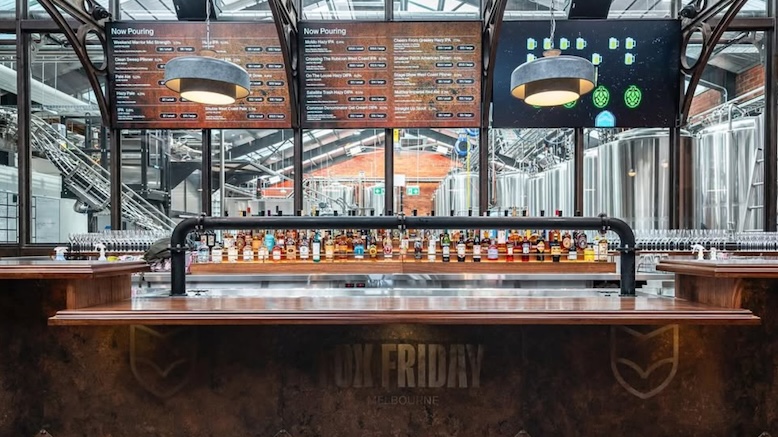
This major site fit out for the Fox Friday brewery in Melbourne is a Jointly team favourite. See more images of the project [Instagram].
Minimum chips, maximum consistency
When it comes to tech to support, our team and their familiarity with everything that’s out there, we have this kind of ‘minimum chips’ approach.
In practical terms that means as a baseline, every single person in our group needs to know how to use Procore and the integrations we have in a way that’s relevant to their role and helpful to their work. We make sure it’s as straightforward as possible, and we support people through it, but everyone has to know how to use the tools and systems.
So for an apprentice, that’s using Procore to fill in their timesheets, see where their safety records are, and find photos from a month ago if they need to check what was in the ground.
Our subbies use the parts they need to access drawings and the information relevant to their work. They don't need to know how to use every system we have, just the tools relevant to their role. Meanwhile our construction managers sit across all elements of Procore, giving us an integrated view of all our projects at any given time.
When it comes down to it, it’s really about the team you have and the way you support them. We can always have the best tech in town but ultimately, construction is a people business. Good people using average tools will still be ok. Average people using amazing tools won’t be.
As a business, it’s really important to us that we provide the right environment to work in. It’s still hard to say we can offer work-life balance, because our industry is hard work and not for the faint hearted — but we try and level the playing field with some flexibility, financial reward and opportunities for different types of projects.
If someone says I’m really passionate about public housing, we go and hunt down projects like that — because if you’re passionate about something, you’re going to get a great outcome.
It’s another point of difference for us. Our clients engage us partly because they know our people have been here for a long time. They know our systems, they know our way. And they get the same product every time.
Adrian Brown
Founding Director
Jointly
Next, we look at how the Jointly team uses systems and project tracking to resolve disputes and prove what was done — often months or years after handover.
this is part of the series
The Builder's Playbook with Jointly
Categories:
Written by
Shauna Hurley
22 articles
Shauna is never short of questions when it comes to construction, tech and science. A professional writer, researcher and podcast producer, she loves sitting down with industry insiders for in-depth interviews that uncover the latest developments, debates and emerging trends. Having worked with organisations like Microsoft and the European Bank of Reconstruction, Shauna joined Procore to explore the complex issues facing construction and share fresh, research-rich insights that help professionals navigate a rapidly evolving industry.
View profileAdrian Brown
Founding Director | Jointly
Adrian Brown is a founding director of Jointly, a leading commercial builder based in Melbourne. A degree qualified Civil Engineer, Adrian has delivered projects in all corners of Australia and the UK. He combines a passion for building with an interest in the way evolving tech tools can support his team and growing business.
View profileExplore more helpful resources
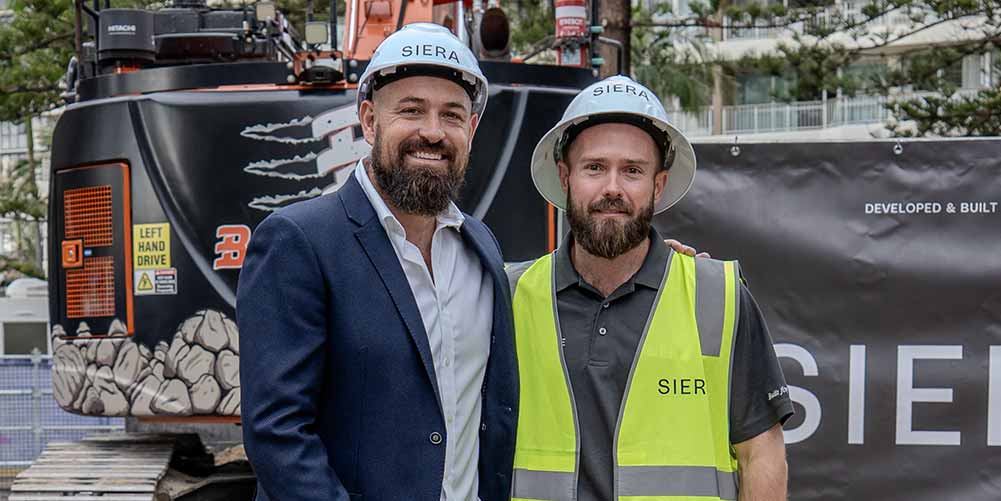
Scaling with SIERA: Building for now and what comes next
SIERA Founder and Director Brent Thompson has always known that the right people, systems and hands-on approach are fundamental to scaling his business successfully. In Part 1, Brent and Head...
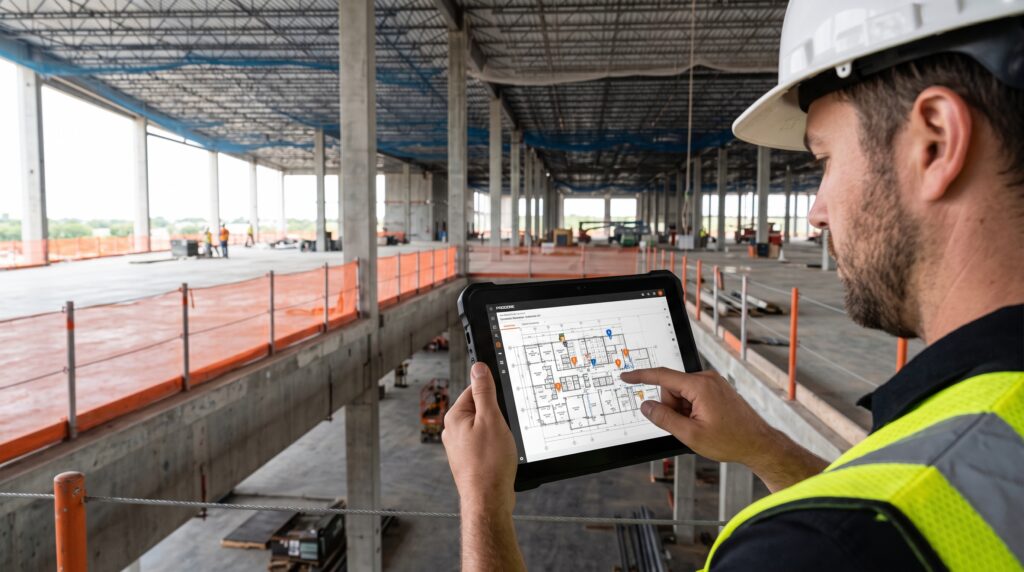
Getting Your Construction Data Ready for AI – What Every Business Needs to Consider Before Launching AI
This is the first of two articles. This part sets out the considerations: what clean and trusted data actually means, how to measure it, how the two systems most businesses...

The Contractor’s Guide to Concrete Inspections
Concrete: It’s the key building block of nearly every structure’s foundation — and it’s the world’s most widely used building material. For most head contractors, understanding how to assess concrete...

Computer-Aided Design (CAD): What It Is — and Why It’s Important
When most people envision a construction worker, they see a person at a construction site wearing a hard hat and a high-vis vest. Perhaps this person is putting up plasterboard,...