Compliance as a competitive advantage


Last Updated May 27, 2026
Shauna Hurley
22 articles
Shauna is never short of questions when it comes to construction, tech and science. A professional writer, researcher and podcast producer, she loves sitting down with industry insiders for in-depth interviews that uncover the latest developments, debates and emerging trends. Having worked with organisations like Microsoft and the European Bank of Reconstruction, Shauna joined Procore to explore the complex issues facing construction and share fresh, research-rich insights that help professionals navigate a rapidly evolving industry.
Adrian Brown
Founding Director
Adrian Brown is a founding director of Jointly, a leading commercial builder based in Melbourne. A degree qualified Civil Engineer, Adrian has delivered projects in all corners of Australia and the UK. He combines a passion for building with an interest in the way evolving tech tools can support his team and growing business.
Adrian Brown moved from the corporate world into boots-on-the-ground construction 15 years ago, and hasn’t looked back since.
"I started out with a degree in structural engineering and a project management job in a global engineering firm," Adrian says. "But building was always in my blood."
"Turns out it took me about 15 years to realise I could turn that passion for building construction into my day job. I had one of those aha moments at 35, when a mate said, 'I've got a project. You want to build it?' I went, 'sure, yeah'. And that literally was the start of Jointly."
"Of the three now owners of the business, one started off as a young carpenter who worked his way up off the tools. The other two of us probably wished we'd done that, but we went down an engineering path early. We've come back at it and swung around, becoming the builders we'd wanted to be all along."
That mix shaped how Jointly was set up from the start, combining hands-on building experience with a project management mindset, and a focus on systems, data and tools that could support both.
For Adrian Brown, co-founder of Melbourne-based commercial builder Jointly, construction remains a people business—even as technology rapidly reshapes the industry. When 90% of Jointly’s private clients vanished overnight, the business survived thanks to a close-knit team and robust systems that kept major projects on track across Victoria.
In this four-part series, Adrian shares what actually made the difference. He explores how the right systems improve visibility, protect documentation, and control costs and risk during a crisis. Finally, he examines how AI is reshaping the field, highlighting the emerging risks of using AI-generated estimates to price and win projects.
Table of contents
Finding the point of difference
"Since 2018, we've gone as wide as we are high with our work," Adrian says, "and that's been possible thanks to our people, processes, platforms and honestly, a bit of good luck in the mix as well."
Today, Jointly has a team of over 100 across their Melbourne, Mildura and Shepparton offices, delivering complex projects for public and private sector clients.
Along the way, compliance hasn’t been just another administrative burden to manage. It unexpectedly became a point of difference — a way to demonstrate capability, win work and operate with confidence as conditions shifted.

The Jointly team grew quickly from three mates to 100 builders across three offices.

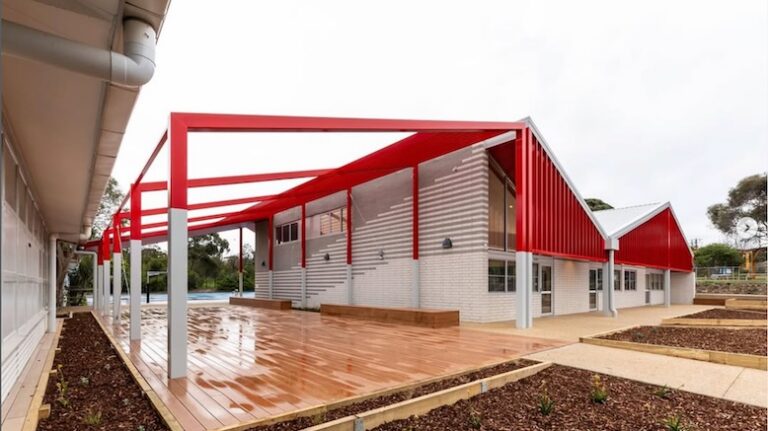
The refurbishment of the Victorian Academy of Teaching and Leadership is one of many government projects Jointly delivers around regional Australia. See behind the scenes on Instagram.
When private work disappeared, teams and systems held
Jointly entered 2020 with a strong pipeline of private sector work. That changed almost overnight.
Obviously, no one knew COVID was coming so it was really a fluke that we'd begun to do a few government projects at the right time. We weren't geared up for major government work back then, but we did have a small portfolio of government office fitouts.
Little did we know that was going to be our saviour, because like most commercial builders our private work completely dried up.
Our main clients were in hospitality, medical and physio practices — a lot of private entrepreneurs having a crack. It went from 'we're good' one day to 'it’s all dead and gone' the next.
We had to really pivot to turn ourselves into a real government contractor, and that's a totally different look and feel, it's a different bureaucracy work-wise. Compliance is front and centre.
Adrian Brown
Founding Director
Jointly
The shift brought stricter requirements around compliance, documentation and reporting.
“Jointly went from probably being 90% private and 10% government work, to 100% government and no private," Adrian says. "We were able to turn it on very quickly, and were almost surprised at how straightforward it ended up being to meet all these compliance requirements.”
“We were able to use the sophistication of Procore and other safety platforms that we had embedded in the business since day one. Literally, we'd been using them forever. We didn’t have to suddenly say, 'Quick, we need a system what’ll we use -- and where do all our drawings and data live?’”
“Our systems were already in place and we could demonstrate compliance across all of these areas. We locked in and grew from there, with visibility across projects, control over documentation and a clear view of compliance and risk. That continues to prove invaluable.”
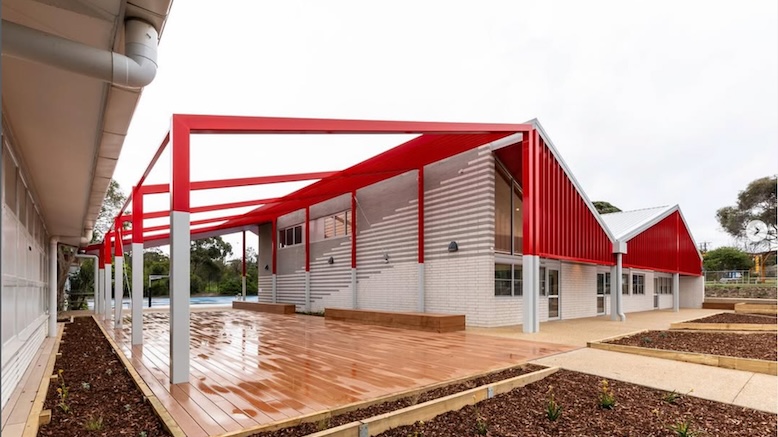
Jointly’s government work includes offices, childcare centres, law courts and educational facilities like the Watsonia Primary School in Melbourne. See inside the project on Instagram.
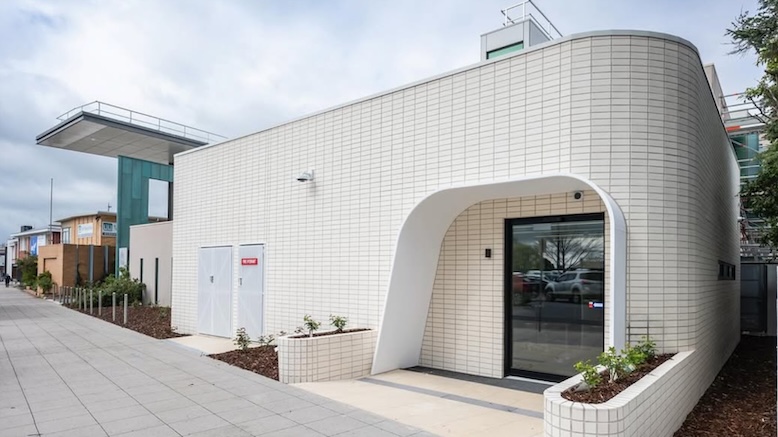
The Jointly team completed extension and refurbishment works on this government project at the Latrobe Valley Magistrates Court. See more of the project on Instagram.
Visibility across projects, risk and financials when it mattered most
Staying compliant was one thing. Staying solvent was another.
One of the many challenges for builders during that time was making sure that you never got caught holding a price for a product. Bid on it today, wait for the client to get back to you for a few months. Make a start. Find out that your materials had gone up by 40% and then go backwards.
Around 1,500 businesses ended up going to the wall post-pandemic, and that wasn’t because they were bad builders.
They were good people who just got caught by that change in the tide. Some were bigger players and managing the moving parts was harder for them.
We were fortunate in that at our size and with our systems, we could keep a finger on every one of our projects, know exactly where each one was at, and where the financials were tricky every week.
Adrian Brown
Founding Director
Jointly
“Pre-COVID, we’d also invested in Matterport 3D site scanning as a QA tool, capturing a complete record of each job. We’d originally bought it as a QA tool, but during COVID it became something more. Clients just loved it, because with lockdowns they couldn’t get to site.”
“We did a project in Mildura and the client was Melbourne-based. They could just log in and do a site walk-through. It was this real point of difference we offered, and still is.”
Because it sat alongside drawings and project data, it wasn’t just captured, it was usable and shareable. What started as QA became a way to keep clients connected and maintain visibility when access wasn’t possible. Post-COVID, it’s remained a standard part of how the team works, and an offering clients continue to value.
Next, we look at the infrastructure that sits behind Jointly's success — how systems are embedded early, and how the whole team works from the same platform, with the same information, on every project.
Construction reporting: What to get right
If you’re a builder looking to improve compliance, visibility and project control, reporting is a practical place to start. These are the essentials:
Standardise report formats
Using consistent templates ensures key information is captured every time. It improves clarity, makes trends easier to track and reduces time spent interpreting reports.
Use digital tools to centralise information
Construction management platforms bring reporting, drawings and project data into one place. This reduces lost documentation, supports real-time updates and improves coordination across teams.
Capture information as work happens
Accurate, timely reporting is critical. Site diaries, photos and field updates create a record that becomes essential when questions arise later.
Make reporting accessible across the team
A centralised system ensures project teams, subcontractors and stakeholders can access up-to-date information. This improves decision-making and reduces delays.
For more, visit The Ultimate Guide to Construction Reporting in Australia
this is part of the series
The Builder's Playbook with Jointly
Categories:
Written by
Shauna Hurley
22 articles
Shauna is never short of questions when it comes to construction, tech and science. A professional writer, researcher and podcast producer, she loves sitting down with industry insiders for in-depth interviews that uncover the latest developments, debates and emerging trends. Having worked with organisations like Microsoft and the European Bank of Reconstruction, Shauna joined Procore to explore the complex issues facing construction and share fresh, research-rich insights that help professionals navigate a rapidly evolving industry.
View profileAdrian Brown
Founding Director | Jointly
Adrian Brown is a founding director of Jointly, a leading commercial builder based in Melbourne. A degree qualified Civil Engineer, Adrian has delivered projects in all corners of Australia and the UK. He combines a passion for building with an interest in the way evolving tech tools can support his team and growing business.
View profileExplore more helpful resources

Scaling with SIERA: Building for now and what comes next
SIERA Founder and Director Brent Thompson has always known that the right people, systems and hands-on approach are fundamental to scaling his business successfully. In Part 1, Brent and Head...
Getting Your Construction Data Ready for AI – What Every Business Needs to Consider Before Launching AI
This is the first of two articles. This part sets out the considerations: what clean and trusted data actually means, how to measure it, how the two systems most businesses...

The Contractor’s Guide to Concrete Inspections
Concrete: It’s the key building block of nearly every structure’s foundation — and it’s the world’s most widely used building material. For most head contractors, understanding how to assess concrete...

Computer-Aided Design (CAD): What It Is — and Why It’s Important
When most people envision a construction worker, they see a person at a construction site wearing a hard hat and a high-vis vest. Perhaps this person is putting up plasterboard,...