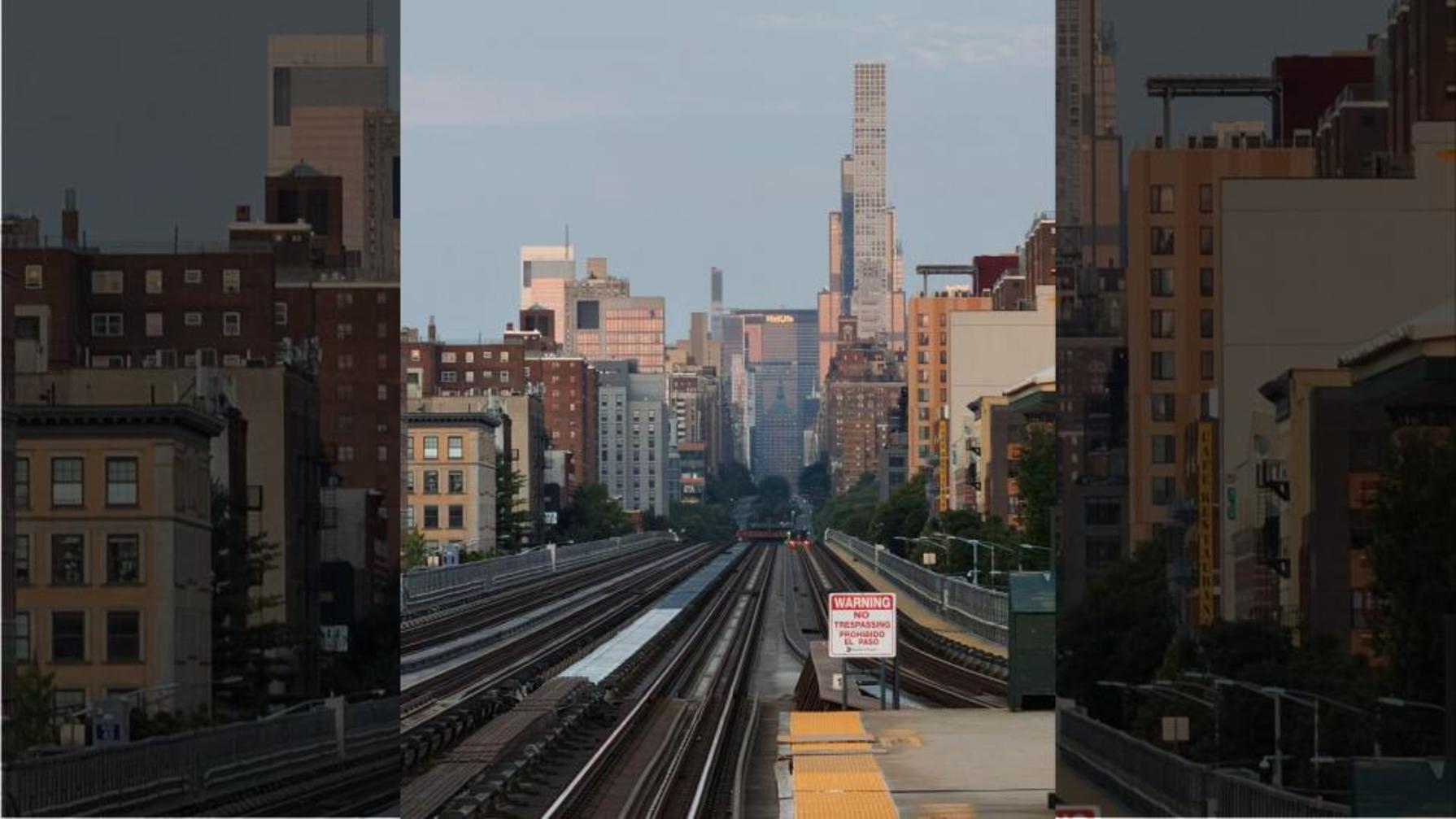
If you rode Metro-North into Grand Central on a Monday morning over the last three years, you rode across a bridge that had been taken apart and put back together over the weekend. You almost certainly didn't know it.
That's the part of the Park Avenue Viaduct story I keep coming back to.
Between October 2023 and July 2026, crews replaced 196 bridge structures and more than 12,600 feet of railroad on a structure whose girders date to the 1890s. They did it over 28 weekends -- without delaying a single train. The MTA announced that the structural replacement was completed 60 months ahead of schedule and $195 million under an initial $960 million budget.
Five years early. $195 million in public funds saved. On a live rail corridor. In Manhattan.
The B1M's documentary tells that story better than I can, and you should watch it. What I want to talk about is what the story exposes about our industry: We've built a system where construction's most impressive feats of collaboration are its least visible work.
Communities grade construction by its inconvenience
Ask most people what they think of construction, and you'll get an answer about a detour, a closed lane, a jackhammer at 6 a.m., or a project that ran long. That's not unfair. The public's lived experience of a project is the disruption it causes. Everything else happens behind an intentional visual barrier of plywood.
That produces a strange scoring system. A project that shuts a corridor for 18 months becomes a story. A project that replaces a century-old viaduct under 750 daily trains without anyone missing a connection goes overlooked. There's no inconvenience to complain about, and therefore no evidence that anything difficult happened.
The Park Avenue Viaduct is the clearest example I've seen in years of how much skill goes into restoration.
Infrastructure is economic infrastructure
The viaduct carries 98% of all Metro-North service and every train moving into and out of Grand Central Terminal: roughly a quarter million riders a day from the Bronx, Westchester, Putnam and Dutchess counties, and Connecticut. That isn't just a transportation asset. It's the mechanism by which a regional economy shows up for work.
Half of the structure carrying it was built before the automobile. That's the condition of a great deal of American infrastructure right now: load-bearing, aging, and impossible to take offline. The B1M's earlier documentary on the Northeast Corridor shows the same condition playing out along the busiest passenger railroad in the country.
The rebuild isn't optional, and the shutdown isn't available. Both of those things are true at once, and that is the actual job facing the industry over the next two decades: deliver more, under more complexity, with less tolerance for disruption than at any point in our history. That requires a different way of operating.
A project isn't just a project — it's an ecosystem
The innovation everyone points to on this job is the custom gantry system, the rig that lifted out old deck segments and set 190,000-pound prefabricated bridge units in their place within a weekend window so four-track service could be restored by Monday.
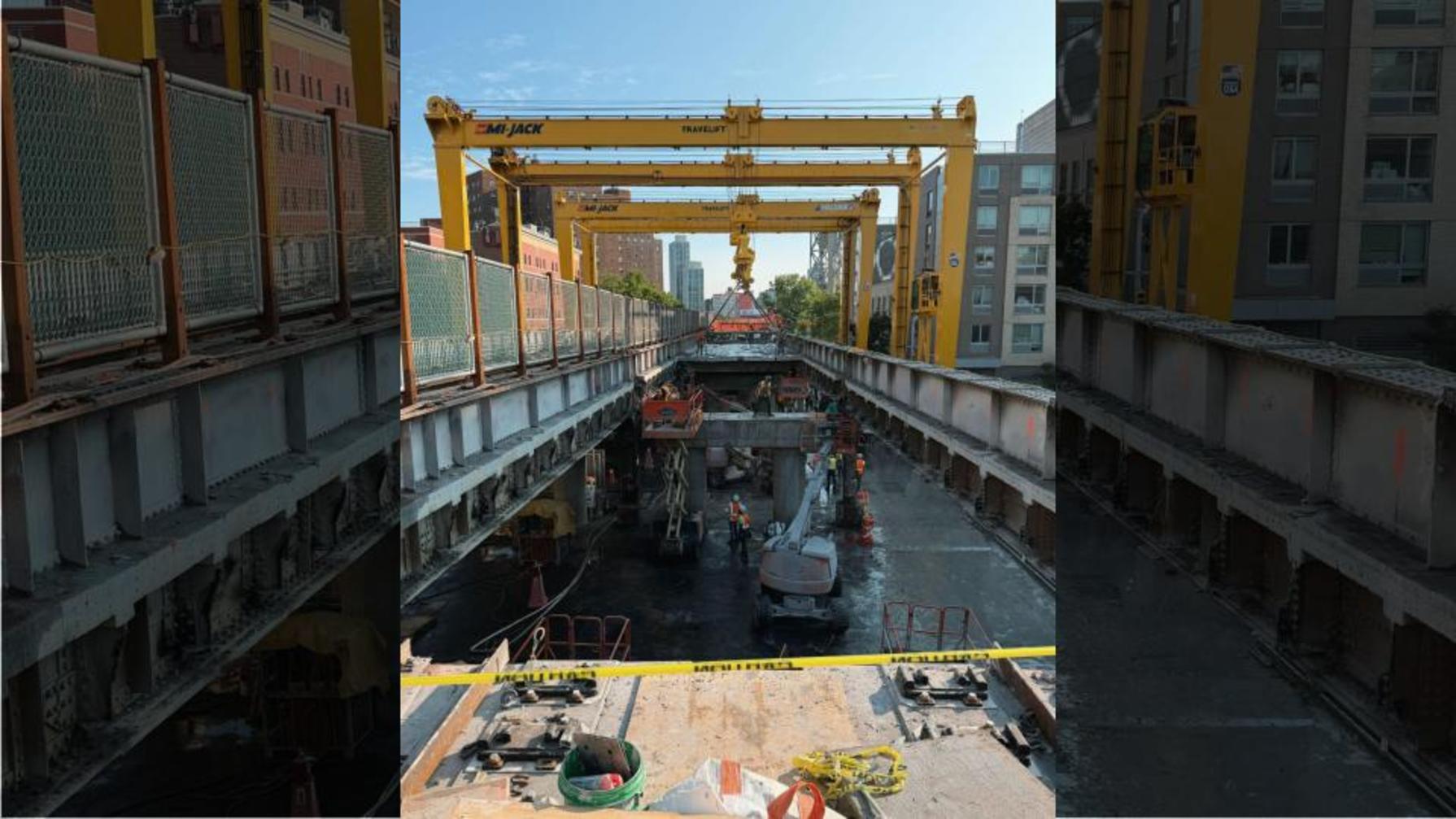
The detail I find more instructive is where that idea came from. The project’s design-build contractor, Halmar International, proposed the gantry approach during procurement. The delivery model created room for the people closest to the work to bring a better method, and then the whole program was organized around making that method survivable.
Nick Almeter, Halmar’s project manager, described the alternative to The B1M: “It would have been a very slow process, more intrusive. It would have closed sidewalks, restricted access to the community.” A conventional crane approach would likely have held the team to one span per weekend. With the gantries, they worked up to six.
This is the shift in stakeholder engagement we’ve been talking about for more than a decade: moving away from design-bid-build and bringing valuable insights from the people who actually do the work earlier in the process. That's the shift I'd ask people to take away from this project.
A build of this kind isn't a sequence of tasks with a contractor at the center. It's an ecosystem — of owner, designer, contractor, trades, program management, the railroad itself — and it only performs when every part of it is working from the same information, at the same time, with the same understanding of what changed.
Coordination at that level isn't a soft skill. It's the load-bearing element. When a weekend outage window is the entire margin, every upstream decision has to be visible downstream immediately, and every part of the ecosystem has to be accountable to the same record of what's true. Get that right, and you buy back months. Get it wrong, and you find out on a Monday morning, in public.
Why Procore invests in stories like these
Inside each weekend outage, the margin is measured in minutes. “New York City, it’s a tight, tight place,” Almeter said. “We plan these weekends out in 10-minute intervals. We’ve got trucks coming in, trucks leaving, just in time. We don’t have the real estate to stage any more than what we can utilize.”
What holds a plan like that together is a single, shared record. Halmar ties RFIs and submittals directly to the drawings, so a superintendent and an engineer open the same sheet and see the same context. “All of our major subs use Procore. Everyone’s on the same page. Everyone can see the latest and greatest,” Almeter said. “It prevents rework. It prevents the schedule from stopping or slipping.”
Halmar built this. The MTA delivered it. Procore’s role is connective tissue — making sure information moves accurately and quickly enough that a team can spend its judgment on the hard problems instead of on reconciling versions of the truth.
It's the same reason we back Fred Mills and The B1M. This industry has no shortage of extraordinary work. It has a shortage of people telling that work's story to anyone outside the fence line, and Fred has been doing that better than anyone else since 2011. For Procore, sponsoring these films ensures the people who build the world are visible doing it and receive the appreciation they deserve. That visibility plays a role in attracting the next generation into an industry that is more technologically advanced and forward-looking than ever before.
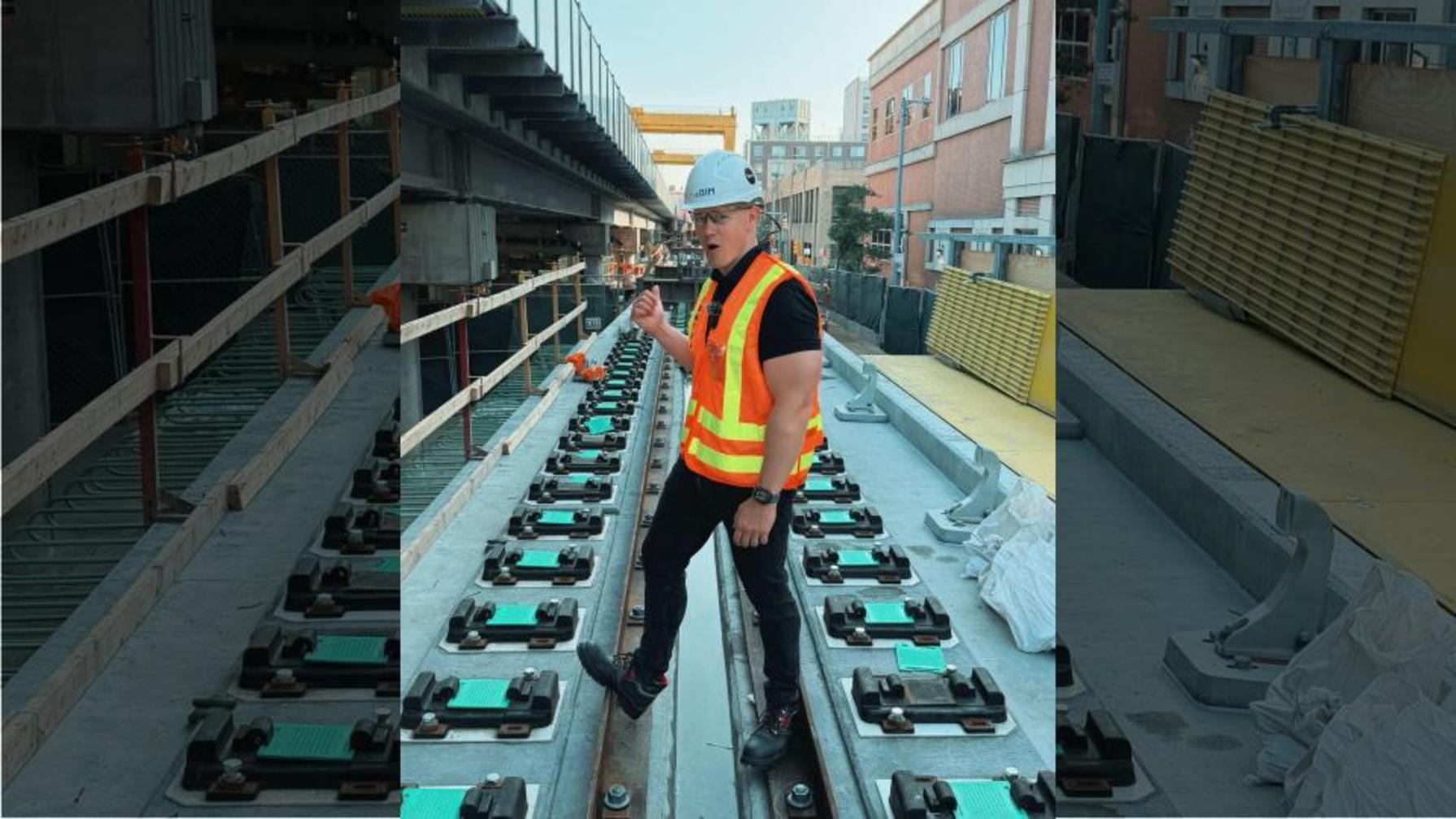
Why the next generation is watching
We talk constantly about the retirement cliff; NCCER estimates that 41% of the current construction workforce will retire by 2031. What gets less attention is the front end of the pipeline. Young workers entering this industry are weighing it against every other option they have, and they're fluent in what modern, well-run, data-rich work feels like.
When they land on a job that runs like the Park Avenue Viaduct (planned down to 10-minute intervals, coordinated in real time, transparent about what's happening and why) construction reads as a serious modern career. When they land on one that doesn't, they leave, and they tell their friends. Operating this way isn't only how you deliver a project five years early. It's how you keep the people who'll deliver the next one.
What gets faster from here
I'll be careful not to overclaim: this was a public project delivered with disciplined process, prefabrication, good procurement, and a contract model in place that supported early stakeholder engagement.
Once an ecosystem is genuinely connected, with information that's validated, current, and shared, AI becomes leverage: surfacing the clash before the outage window, flagging the sequence that won't hold, telling a team what's likely to go wrong while there's still time to act. You can't accelerate coordination that doesn't exist yet. This project shows what it looks like when it does.
Give the invisible work its due
The people who rebuilt the Park Avenue Viaduct may never get a commute's worth of credit from the riders they protected, because the entire measure of their success is that those riders have nothing to report.
So I’ll say it plainly: That was extraordinary work.
That's the whole reason we're here. Procore exists to improve the lives of everyone in construction — and when we do, life gets better for everyone on the planet, including 260,000 people who got to work on time and never had to think about why. When people build together, this is what they're capable of. We're here for it.
Written by