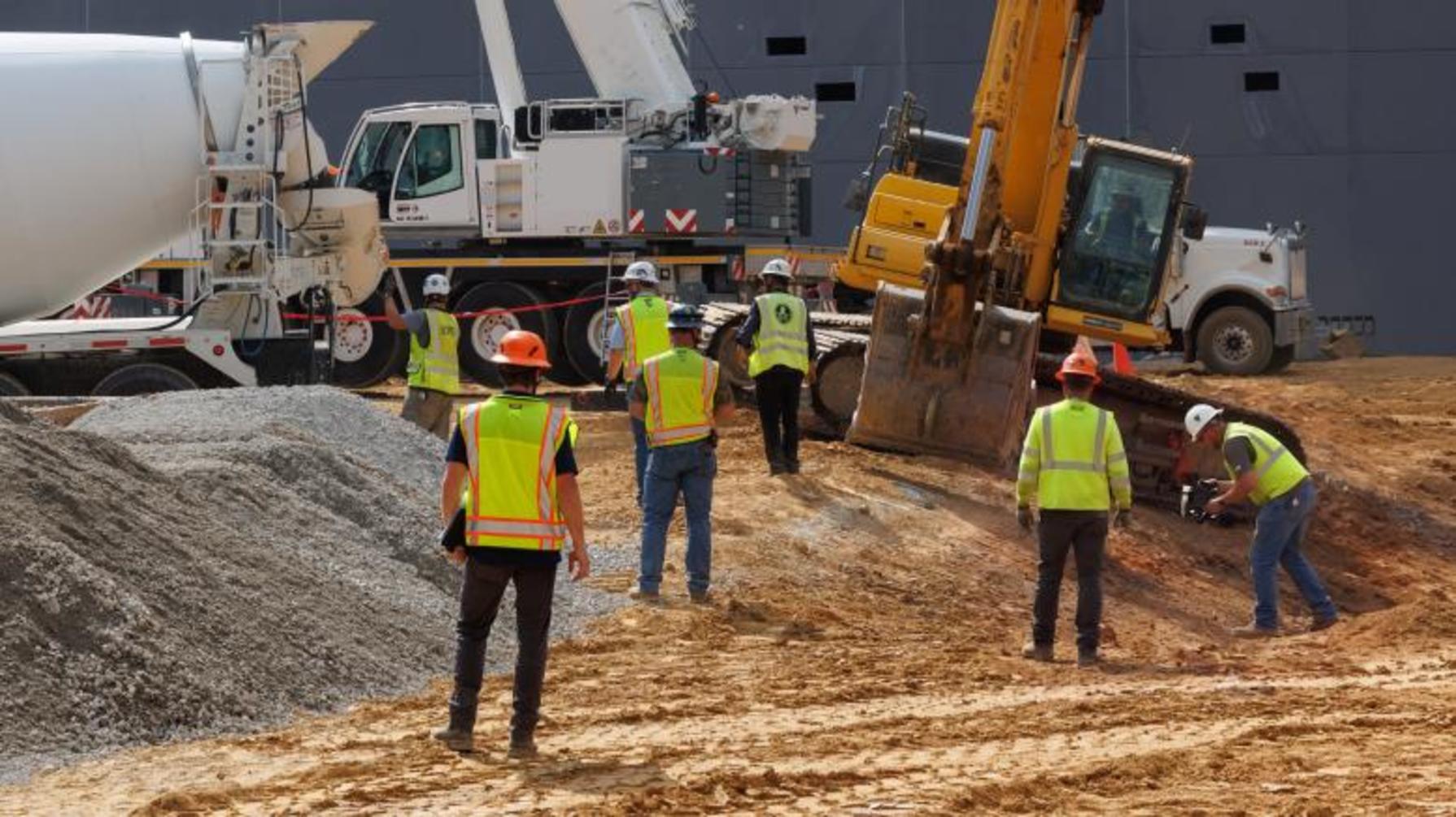
Heavy civil crews move quickly, installing thousands of feet of pipe or grading expansive rights-of-way in just a few days. But when labor and machinery reporting moves at the slow pace of payroll, a critical disconnect sets in. Paper timesheets turned in on Fridays pass through multiple layers of manual review before reaching the office on Monday.
Makenna Ryan understands this timeline gap firsthand. Before leading an infrastructure team at Procore, Makenna spent over a decade as a PE and construction manager at heavy infrastructure firms like McDermott International and Subsea7, directing field execution, asset optimization, and pipeline installation scopes.
You might be two and a half, even four weeks behind before you realize you were losing money for the last month. At this scale, you're potentially burning hundreds of thousands of dollars a week on a big job.
- Makenna Ryan
Procore Resource Management addresses this lag by unifying labor, equipment, and production metrics. Foremen capture hours, crew attendance, and machine logs directly from smartphones or tablets – even when working offline on remote jobsites. This is what same-day visibility looks like in practice: according to the 2026 SC ROI Report, 85% of expert-level Procore users agree that the platform has directly improved operational efficiency.
Maximizing field precision with granular cost coding
Heavy civil crews shift tasks rapidly, moving from mass excavation to trenching or subgrade prep in a single afternoon. General time-tracking lumps these hours together, completely destroying accurate unit-rate tracking.
Procore solves this by allowing foremen to quickly split and allocate labor hours and equipment time to precise cost codes right from the field. To keep it practical, crews are only shown the 5 or 6 codes active during their specific phase of work. Foremen couple these resource inputs with actual quantities installed – such as linear feet of trench dug or tons of rock placed.
This connection converts raw field data into production intelligence. Procore Resource Management brings these datasets together, delivering an immediate feedback loop directly to the field app.
"That foreman may not know how many dollars were bid on that job, but he has an expected production rate required for us to make money as a company,” Makenna says. “It hits him with a green light right there next to that code to say, 'Hey, you hit production today.' If he misses production, it hits him with a red light, letting him know he has to pick up the pace tomorrow."
This immediate operational visibility is one of the reasons why 90% of expert-level Procore users report an increase in field labor productivity.
Synchronizing field productivity with office financials
Labor and equipment data trapped in field silos forces office teams into a loop of manual double-entry, risking human error. Procore bridges this gap by streaming field-captured asset hours dynamically back to the budget.
While heavy civil ERP integrations can prove technically intricate to synchronize seamlessly, a reliable data connection ensures that lead cost controllers, fleet managers, and project managers gain immediate visibility into daily burn rates and cost-per-unit variances.
This connected execution also helps capture out-of-scope work. When unexpected site conditions cause field delays, crews can log T&M tracking on-site instantly, securing the documentation needed to back up change orders before disputes arise.
The value isn’t just realized in the field; it also builds bidding confidence. Instead of asking estimators to rely on best-case scenarios, verified production histories provide data-driven benchmarks for future bids. In a competitive space where trimming a single unit rate by just a few cents separates a winning bid from a losing one, historical accuracy becomes a major competitive advantage.
From blind spots to bid-winning data
Reducing civil blind spots isn't about working harder, but about managing your resources collectively. Labor and machinery will always be the largest variables in heavy civil construction, but waiting until month-end to understand your true production costs is a risk you cannot afford.
Understanding labor production isn't something you should do if you have time. If you don't do it, your company goes under.
- Makenna Ryan
Stop managing your projects through post-mortems. Swap slow, disconnected spreadsheets for an integrated resource strategy. Schedule a Procore Resource Management demo configured for civil operations today.
Written by

Manager, Solution Specialist, Procore

Senior Content Manager, Procore
Start growing with Procore today
With tools to make every part of your process more human and a support team excited to help you, getting started with any project has never been easier.