
From projects to portfolios: Scaling clarity, control, and confidence

Last Updated Apr 7, 2026
James Hamilton
Writer & Producer
89 articles
James Hamilton is a writer based in Brooklyn, New York with experience in television, documentaries, journalism, comedy, and podcasts. His work has been featured on VICE TV and on The Moth. James was a writer and narrator for the show, VICE News Tonight, where he won an Emmy Award and was nominated for a Peabody Award.
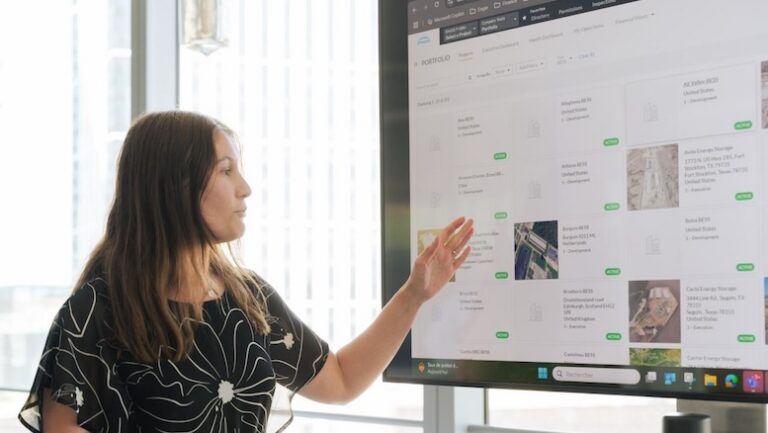
Managing multi-site portfolios has historically been a feat of multi-tasking, with each project demanding a slightly tailored approach to documentation, communication, and risk management.
But as a portfolio grows, so does the risk of even a single, small issue in the field cascading into an array of problems back in the office that ultimately shatters the budget.
Avoiding that requires gaining visibility of the big picture. A unified oversight structure creates the standardized workflows and centralized data needed to stop managing projects in isolation and start managing a portfolio as a scalable, predictable engine.
Table of contents
The ideal project: A plan for predictability
Every portfolio has a library of historical data that spans regions, project types, and contractors. This information is a priceless guide for the future. Analyzing the trends behind successful deliveries outlines the profile of an ideal project, a standardized model that can be used to simplify risk assessment and decision-making.
A portfolio-wide system based on a data-driven understanding of what works and what doesn’t replaces best-case estimates. The ROI of future investments can be modeled using time-phased cost forecasts, which spread anticipated costs across the actual project timeline.
Bid-leveling tools provide side-by-side contractor comparisons against proven benchmarks and past performance. This creates a system where a new build isn’t treated like a bespoke experiment, but as an iteration on a proven model.
The line of sight: Management by exception
High-level portfolio control relies on a system to identify which details require attention. At scale, management becomes a framework of predefined thresholds that surface the projects and KPIs deviating from the plan.
Owners need a quick, customized view of the information needed to manage their portfolio. This “line of sight” provides a lean internal team with a high span of control.
Rather than attending repetitive status meetings, leaders monitor real-time dashboards to compare performance across the entire map. This highlights which teams have established a repeatable rhythm and which are struggling.
Inevitably, schedules slip and budgets bloat, but standardizing how these risks are flagged ensures expertise and resources are applied exactly where they are most needed.
The liquidity engine: Standardizing financial intake
When financial processes rely on disparate systems, a bottleneck often occurs in the manual reconciliation of data between the field and the office. The office becomes a clearinghouse for documentation that requires manual verification before capital can be deployed.
Automating the flow of cost data from the field direction into the ERP (Enterprise Resource Planning) system eliminates the need to manually reconcile stacks of invoices or enter line items by hand. This provides a single, comprehensive view of the portfolio’s financial health.
Leadership can move beyond simply processing payments to actively monitoring budget actuals against forecasts and identifying overruns in real time. A system that prioritizes total financial awareness and capital control identifies issues before they become problems and significantly reduces payment cycles.
Stay updated on what’s happening in construction.
Subscribe to Blueprint, Procore’s free construction newsletter, to get content from industry experts delivered straight to your inbox.

The strategic edge of a connected platform
In an industry with significant risk exposure, fragmented data is a liability. Relying on a makeshift collection of point solutions reinforces the very silos that create delays and quality issues.
Unifying people, processes, and data in a single construction management platform bridges the gap between internal strategic oversight and the external teams performing the work.
The clarity and control unlocked by that unification are necessary to address risks in real-time and make sure an investment delivers measurable value throughout its lifecycle. It is the definitive shift from managing a collection of individual projects to operating a high-performance portfolio.
Was this article helpful?
Scroll less, learn more about construction.
Subscribe to The Blueprint, Procore’s construction newsletter, to get content from industry experts delivered straight to your inbox.
By clicking this button, you agree to our Privacy Notice and Terms of Service.
Categories:
Written by
James Hamilton
Writer & Producer
89 articles
James Hamilton is a writer based in Brooklyn, New York with experience in television, documentaries, journalism, comedy, and podcasts. His work has been featured on VICE TV and on The Moth. James was a writer and narrator for the show, VICE News Tonight, where he won an Emmy Award and was nominated for a Peabody Award.
View profileExplore more helpful resources

Does your asset management workflow actually work?
Every fixed asset installed on a project generates data long before handover. Is your team capturing it as it happens, or scrambling to reconstruct it after the fact? That question...
From spec book chaos to single source of truth
Picture this: An expansion is going in directly beside a high-volume line that cannot stop producing. Structural steel lands in March, mechanical completion is promised for August, and your only...
The hidden risk of relying on your EPC partner for project visibility
Many owners have thought some version of “We don’t need a capital project management platform — our EPC partner manages all of this for us.“ It’s a reasonable position. Your...

Why manufacturing owners are still managing capital projects like it’s 2010
There is a machine on your plant floor right now that knows it’s going to break. A sensor is reading a vibration signature on a bearing about three weeks before...
Free Tools
Calculators
Use our calculators to estimate the cost of construction materials for your next project.
Templates
Find a template to help you with your construction project tasks.
Material Price Tracker
Get the latest U.S. retail prices and view historical trends for common building materials.
Glossary
Explore key terms and phrases used in the industry.