Customer Story
Turning repetition into reliable store openings
Studs built a standardized, Procore-backed program to open 10 to 12 stores a year with a lean Store Development team

The Challenge
When Daniel Nissimov joined piercing retailer Studs, there was little consistency from project to project. Bid sheets weren't tied to real construction trades, documentation lived in scattered places and construction sometimes overlapped with store turnover — leaving retail teams stocking shelves while contractors worked overhead.

The Solution
Nissimov rebuilt store construction around a single repeatable program, with Procore as its system of record. Drawings, bids, RFIs, submittals, inspections and the path to Certificate of Occupancy now run through identical workflows on every project, giving the internal team the consistency needed to open 10 to 12 stores a year.

The Results
- Standardized every project on one repeatable program, from bidding through Certificate of Occupancy
- Built an internal preconstruction process of three weeks to bid, one week to award and two to four weeks to mobilize
- Greatly reduced punch-list items at turnover by resolving defects during construction instead of at the end
- Compiled historical bid responses, from all past projects, per line item to qualify bids on new projects with confidence
- Built a program ready to double store output
“Because every project runs through the same Procore structure, the GC knows what's expected before they mobilize. That consistency is what allows us to run 10 to 12 projects a year with a lean team and still hit our opening dates.”

Daniel Nissimov
Senior Program Manager, Retail Store Development
Studs
A small footprint with major complexity
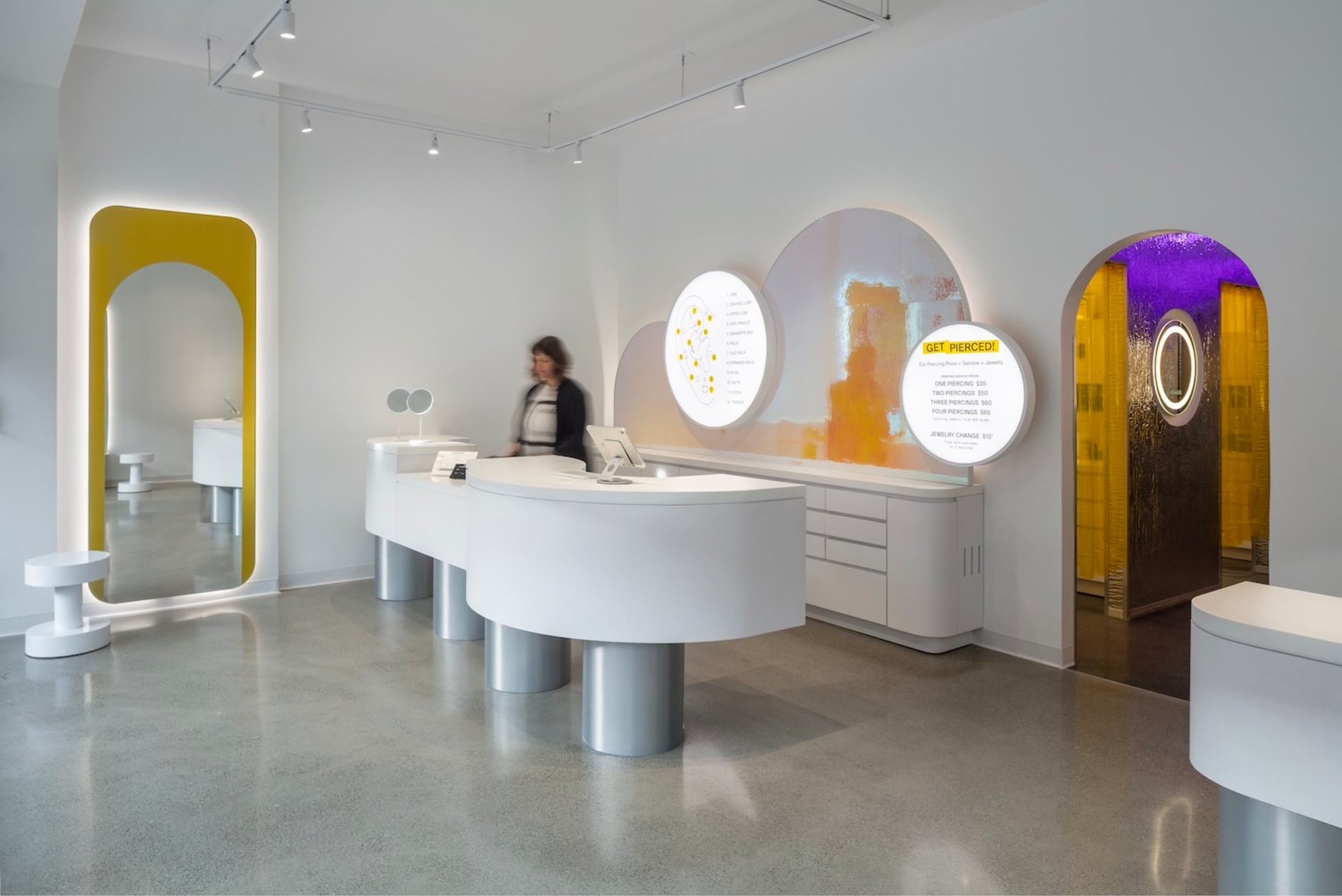
Studs is a piercing and earring brand whose stores are inseparable from the product — small spaces, typically between 1,000-1,500 square feet for street locations, lifestyle centers and inside malls, built on an eight-to-ten-week window. The store development team opens 10 to 12 stores a year across U.S. markets with varying health regulations and a consistent brand look and feel.
Holding that together takes discipline and accountability, not headcount or deep tech stack. “If the program is sharp, the stores open on time,” says Daniel Nissimov, Senior Program Manager, Retail Store Development.
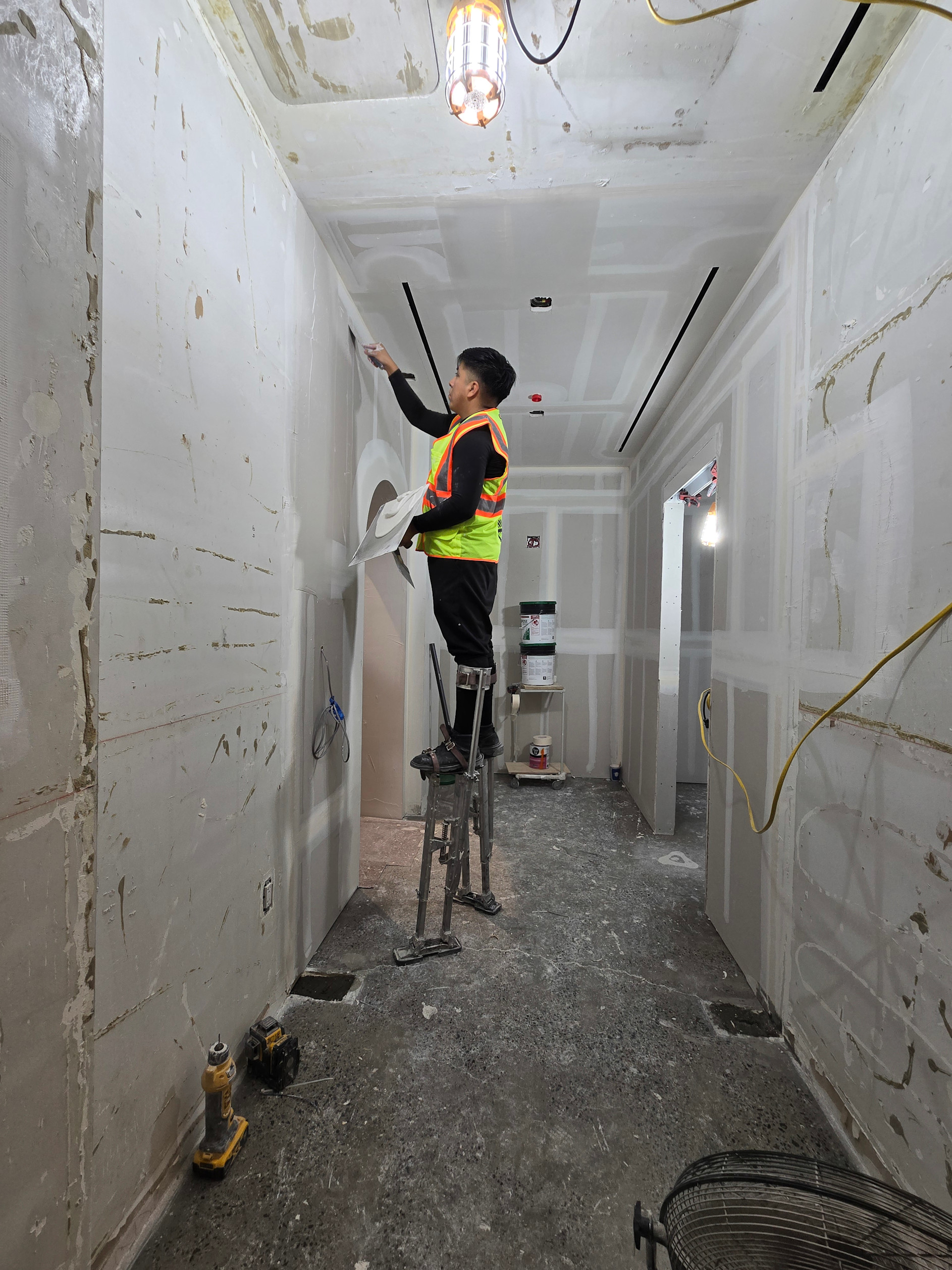
When Nissimov arrived — a former architect and veteran subcontractor turned owner — Studs was already using Procore, but the platform wasn't holding their processes together yet. Bid sheets were built from finished schedules rather than real construction trades. Documentation was inconsistent from one project to the next. On one early job, he watched the retail team unboxing product and stocking shelves while contractors were still finishing construction overhead. “This is insane,” he remembers thinking. “There are people on ladders with drills overhead, and we haven't even done a punch list.”
Nissimov set out to remove the variability. Starting with his first project, store number 23, he standardized how work flowed through Procore and repeated it on every subsequent job. OAC meetings, the bid level sheet, as-builts, folders, submittals and RFIs were all in place from that first project forward. The lessons-learned registers he once updated after every build have mostly gone quiet, because the same questions stopped recurring. “It was a long path to connecting drawings to bid sheets, shop drawings to plans, and finished plans to constructability, etc,” he says of those early revisions, “and now it's just nipping minor points, one at a time.”
Building a predictable path from bid to mobilization
Nissimov built a repeatable timeline — three weeks to bid, one week to qualify and award, two to four weeks to mobilize — that every partner now understands. Bidding for GCs and owner-furnished vendors runs through Procore, and every bid is captured in a standardized level sheet. With nearly 100 historical bid responses per line item, he can judge instantly whether an incoming number is high or low. “We know what things cost,” he says. Many programs don't reach this level of budget confidence until they're halfway through construction.
The clearest sign of the program's maturity is the reduction in the number of punch-list items at turnover: handing a finished store to the retail team with minimal close-out items. Nissimov gets there by front-loading the work. Before a GC breaks ground, their superintendent receives the “Red Book”, a zippered project manual containing a roughly 200-item draft punchlist, with every material spec, installation guide and compliance requirement. “Imagine getting the punch list before you even start the project, giving the field the answers to the test and setting clear expectations,” he says.
He runs the final walkthrough in Procore's Inspections tool on the Wednesday before the last Friday of construction, leaving two days to close out anything found. “Monday is for the Retail Ops team to take over their store,” he says, “not for a GC to finish their job.”
The record and the program
Photos do much of the daily work. GCs upload site photos every day, organized by week, so Nissimov can open a project's Week 4 album and read whether it's ahead or behind — without getting on a plane. The punch-list verification within Procore, which once required a post-turnover site visit, now happens through the photo record.
In health-regulated markets, GCs pre-test and upload thermometer readings into Procore before substantial completion, turning a common health inspection delay into documented proof. And the Certificate of Occupancy path — which a GC often can't fully map until rough inspections clear around week three — lives in Procore's Action Plan tool and is reviewed in every OAC meeting. The OAC ensures the program is tight, and Procore helps support an accurate record.
Built to double
The payoff of all that repetition shows up when the program scales. "Because every project runs through the same Procore structure, the GC knows what's expected before they mobilize," Nissimov says. "That consistency is what allows us to run 10 to 12 projects a year with a lean team and still hit our opening dates."
Today the program runs the same way on project 49 as it did on project 23, and Nissimov has built it to absorb far more volume. “We're ready to double our store count, and we're not planning to double our headcount or tech stack to do it,” he says. And he's already thinking about quadrupling.
Asked how managing that growth would have looked under the old manual processes, he doesn't hesitate: “That would have been impossible.”