Customer Story
Building at AI speed without losing control
As data center demand accelerates, DataBank uses Procore to help manage billions in capital, maintain financial visibility and and deliver mission-critical data center projects with zero margin for error

The Challenge
As demand for data centers accelerates with the rise of AI and high-performance computing, DataBank is scaling at an unprecedented pace. Managing billions of dollars in capital deployment across multiple data center construction projects requires real-time financial visibility, accurate forecasting and tight coordination between stakeholders — without slowing down delivery.

The Solution
DataBank uses Procore to centralize financial and project data across its portfolio, enabling real-time tracking of costs, forecasting and performance. By replacing manual reporting and disconnected spreadsheets with a single system, the company can reforecast quickly, communicate clearly with investors and ensure projects stay on track.

The Results
- Real-time financial visibility across multi-billion-dollar projects
- Helped improve forecasting accuracy and reduced financial guesswork
- Faster, more confident communication with lenders and equity partners
- Reduced reliance on manual reporting and spreadsheet-based processes
- Stronger alignment between owner and general contractor teams
“AI is going to reshape this industry, and companies that can harness data to make better decisions are the ones that will lead.”

Kevin Ooley
President and CFO
DataBank
The next wave of data center growth
DataBank is a leading developer and operator of data centers, building the infrastructure that powers everything from cloud computing to the next generation of AI workloads. In recent years, that role has expanded dramatically, as demand for high-performance computing has accelerated at a pace few in the industry anticipated. For Kevin Ooley, President and CFO of DataBank, that shift has fundamentally changed how the company thinks about growth.
“Back in 2016, I thought we were probably in the fifth inning of this industry,” he said. “Today, with AI workloads coming online, we’re in the top of the first inning of a doubleheader.”
What was once a steady, linear growth curve has become exponential. DataBank has rapidly gone from building 4- to 40-megawatt facilities to delivering projects measured in the hundreds of megawatts, backed by billions of dollars in capital.
“We’re deploying $8 to $10 billion over a relatively short period of time,” Ooley said. “And our capital partners are counting on us to do that in a disciplined way.”
Data centers are not typical construction projects. They are mission-critical infrastructure, where downtime isn’t just an inconvenience, but a real crisis for scores of customers and companies. “There’s zero margin for error in this space,” Ooley said. “If our customers go down, the consequences are significant. Our job is to make sure they stay up at all costs.”
That creates a unique pressure on both execution and financial performance. DataBank must deliver projects on time, on budget and at scale—while simultaneously managing risk across a growing portfolio.
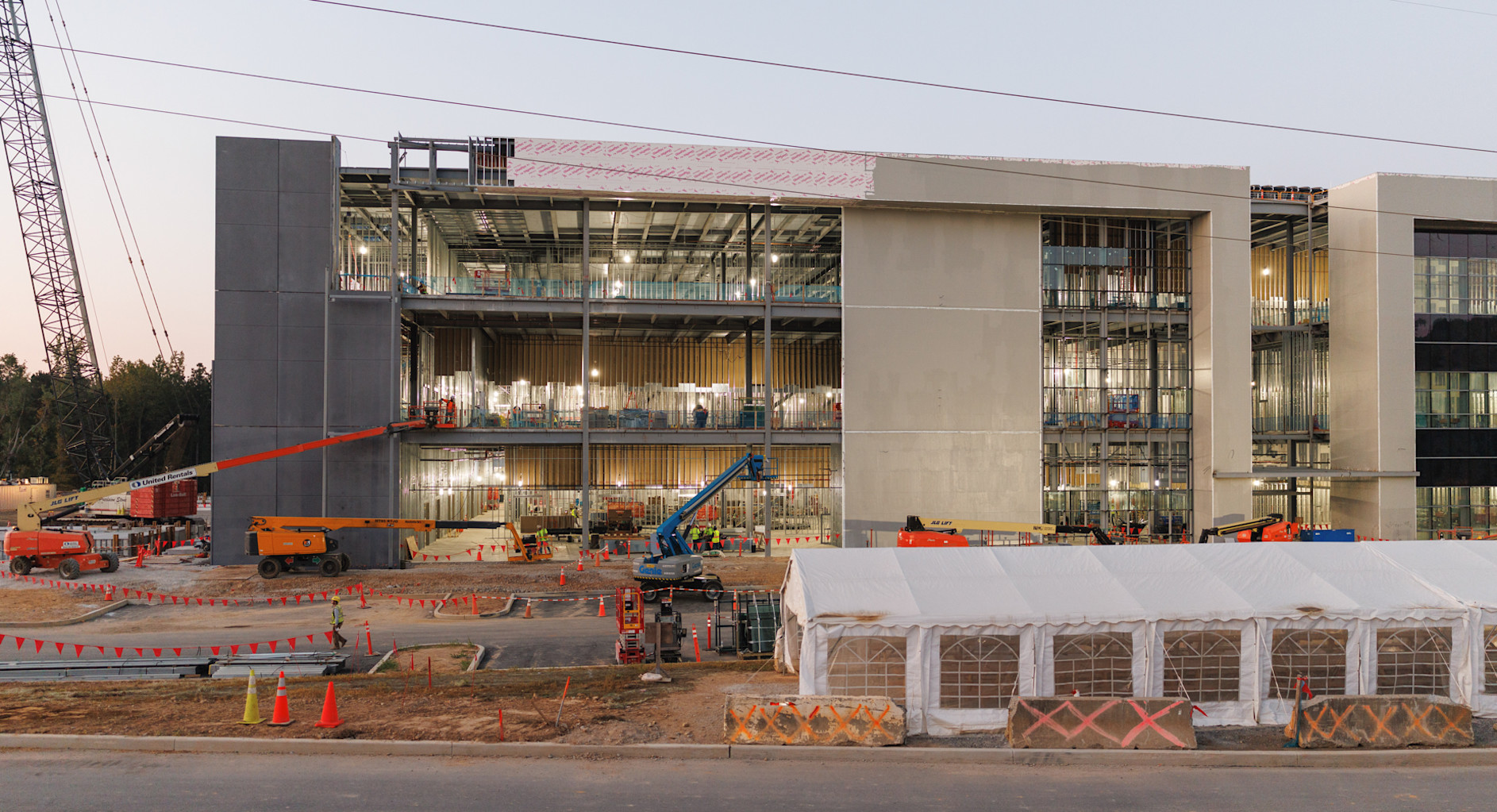
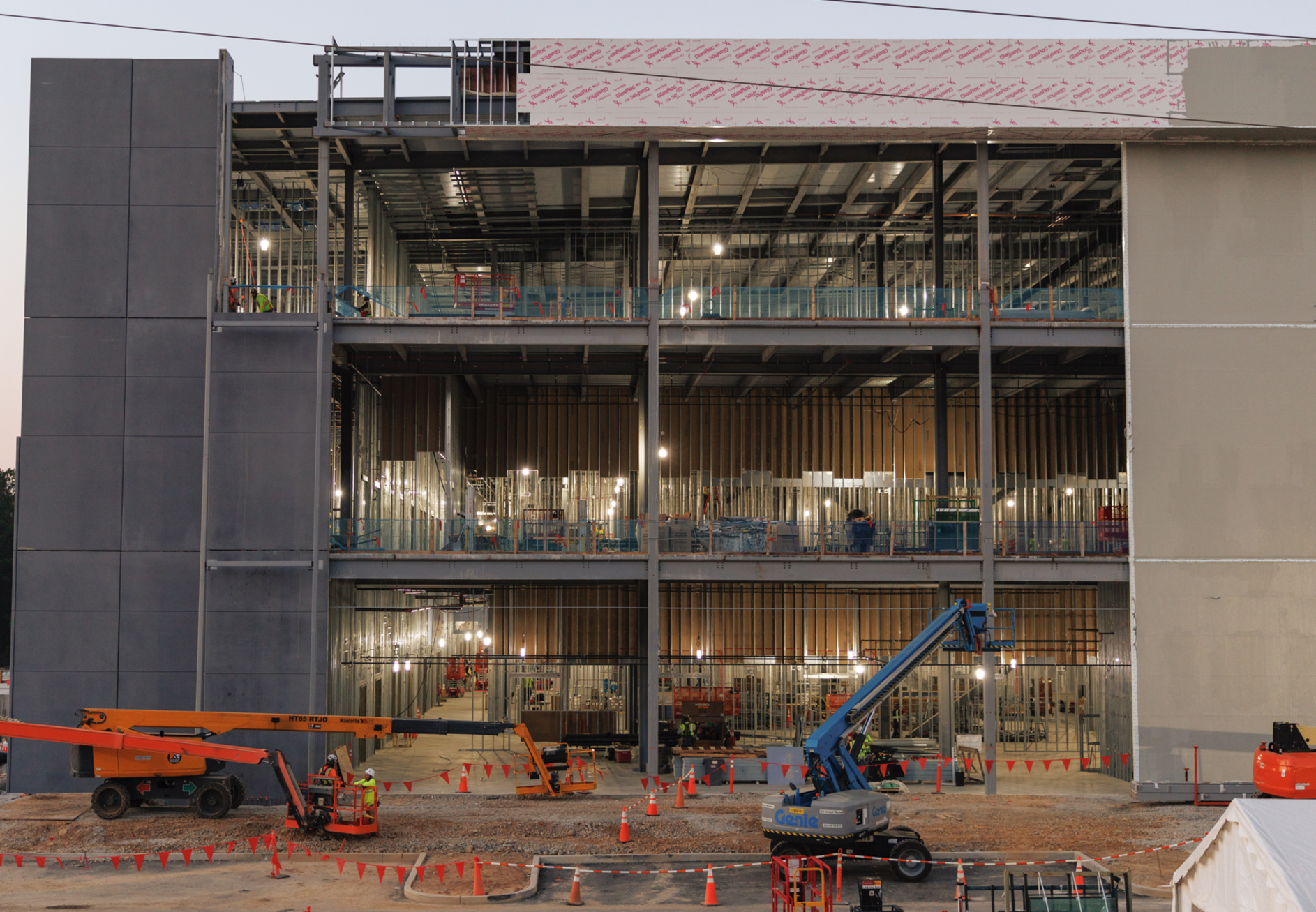
In Atlanta, for example, the company is developing its ATL 5 and 6 campuses, a combined 120-megawatt deployment that highlights both the scale and execution pressure of these next-generation projects, and part of a broader multi-billion-dollar investment in the region.
“We’re building at a pace and scale that’s an order of magnitude larger than what we’ve seen before,” Ooley said.
Removing the guesswork from financial decisions
For Ooley, one of the chief challenges in building data centers is managing the capital behind them. That means understanding, at any given moment, where a project stands financially, where it’s headed and how those outcomes affect investors and partners.
Before Procore, that level of insight required time-consuming manual processes. “With Procore, we’ve been able to take a lot of the financial guesswork out of the equation,” Ooley said. “We can track our spend, see where we are and reforecast as the project evolves.”
That visibility is critical when communicating with lenders and equity partners. “When we’re talking to our capital partners, having that data in real time is extremely valuable,” he said. “It gives them confidence, and it allows us to make better decisions faster.”
Enabling teams to focus on building
For construction teams, having that same visibility into project financials helps to remove a significant administrative burden. “Procore allows our teams to focus on what they do best, which is building,” Ooley said. “Instead of spending time interpreting financial reports or reconciling data, they can stay focused on execution.”
Zach Edwards, Senior Director of Construction Operations at DataBank, sees the same benefit from the field perspective. “It allows us to get out from behind the computer and go build,” Edwards said. “We can focus on relationships with our partners and understanding where the risks are, rather than managing spreadsheets.”
That clarity also strengthens the relationship between DataBank and its general contractor on the project.. “We don’t really think of them as a vendor,” Ooley said. “They’re more of a partner. Our teams have really gelled, and we’re all working toward the same outcome.”
One of the reasons for that alignment is that both teams operate within the same system from day one. “Starting the project with Procore on both sides allowed us to establish a rhythm early,” Edwards said. “We didn’t have to pivot mid-project—we were aligned from the beginning.”
That dynamic makes it easier to adapt when conditions change. “Whether it’s a design change or a schedule adjustment, we’re all looking at the same data,” he said. “That helps us move quickly without losing control.”
From individual projects to portfolio insight
As DataBank continues to scale, Procore is making it easier to maintain a bird’s eye view of their entire portfolio. “We’re not just looking at one project at a time,” Edwards said. “We’re looking at the entire portfolio.”
By capturing data from conceptual design through commissioning, the company can benchmark performance and apply those insights to future developments. “We can see where we started, where we are today and where we’re going to land,” he said. “That helps us make better decisions as we expand into new markets.”
It also supports a more consistent approach across projects. “We want to track one project one way — and do the same thing on the next,” Edwards said. “That’s how you get better as a company.”
The infrastructure behind the digital world
For Ooley, the significance of DataBank’s work is about much more than construction. “Our data centers are where the internet lives,” he said. “Whether it’s streaming video, financial transactions or AI workloads, it all runs through facilities like the ones we build.”
As AI continues to evolve, that role will only grow more important. “We’re seeing a whole new wave of demand driven by AI learning and inference,” Ooley said. “It’s going to change how people interact with technology — and we’re right at the center of that.”
And while the scale may be increasing, the objectives remain the same: deliver projects reliably, manage capital responsibly and stay ahead of the next wave of demand.
“AI is going to reshape this industry,” Ooley said. “And companies that can harness data to make better decisions are the ones that will lead.”