Customer Story
Keeping rapid growth from becoming operational chaos
With Procore, Carroll Daniel built the visibility and accountability needed to standardize construction project management and support its next phase of expansion

The Challenge
Carroll Daniel skyrocketed from a $200 million regional builder into a nearly $1 billion diversified business through a combination of organic expansion and strategic investments in innovation. As the company grew, new businesses were also acquired, which added new project teams who were using a variety of diƯerent tools, diƯerent processes and diƯerent ways of tracking work, making it hard to compare projects, maintain consistency and get a clear picture of performance across the business.

The Solution
Carroll Daniel adopted Procore to unify its project management processes into one system. With standardized workflows for everything from daily reports to quality inspections and financial tracking, the company established consistent processes, improved accountability and gave leadership the visibility needed to identify risks, track performance and support continued growth.

The Results
- Created a standardized operating model that generated consistent data across eight construction divisions
- Gave leadership real-time visibility into performance across more than 100 active jobsites
- Strengthening accountability by consolidating project, quality, safety and financial data into one system
- Enabled a more proactive approach to quality, risk management and operational decision-making
- Reduced financial the risk of overpayments by connecting field data with financial tracking
“Procore drives accountability by providing the guardrails needed to standardize processes, while making data easily accessible in a structured, consistent format that supports better decision-making.”
David Stone
Executive Vice President
Carroll Daniel
Growth Without Compromise
Carroll Daniel grew from a $200 million regional builder into a nearly $1 billion diversified business by investing in more efficient ways to serve their clients, including the ability to self-perform key capabilities and serve a broader geography, while staying on top of the latest market insights to mitigate risks - and then building the capabilities needed to get there.
Supply chain volatility has been a significant factor in shaping the company’s strategic decisions, particularly within its steel fabrication operations. In response to evolving market conditions, the company has focused on strengthening its ability to serve customers with greater reliability, efficiency, and responsiveness.
Even when facing larger competitors, the company has remained focused on what sets it apart: exceptional service, agile execution, and solutions designed around customer success. Rather than competing on size alone, it has prioritized delivering value in the areas that matter most to its clients - helping them stay on schedule, meet critical project deadlines, and minimize disruptions. This approach has enabled the company to build strong customer relationships and consistently provide solutions that extend beyond what larger competitors may be able to offer.
“Ultimately, all of these decisions come back to one principle:
If you don’t differentiate yourself intentionally, the market will commoditize you.” says Brian Daniel, CEO of Carroll Daniel. “We’ve chosen to invest in capabilities and markets that give us - and our clients - more control, more certainty, and better outcomes.”
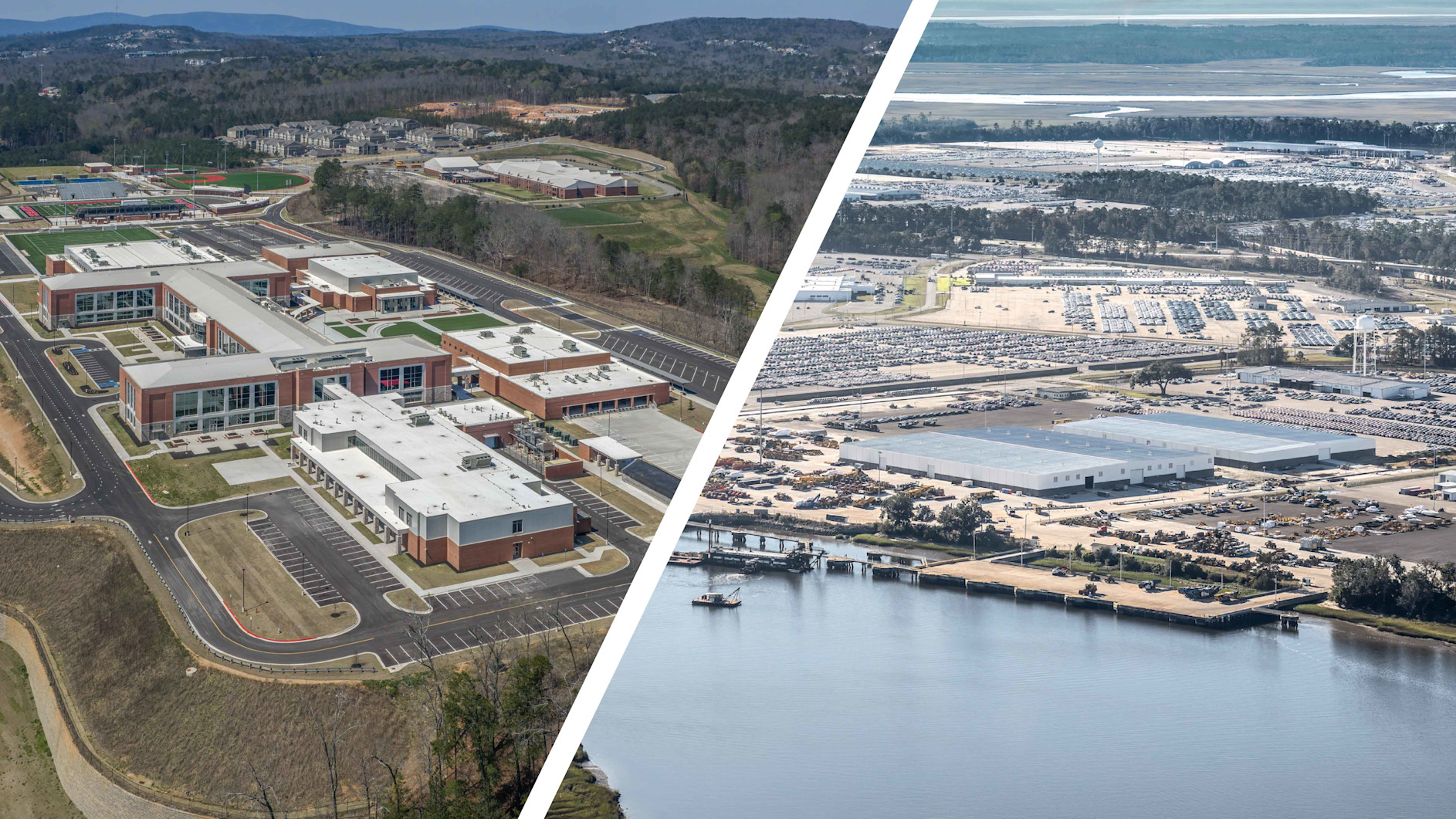
Today, Carrol Daniel builds everything from industrial manufacturing facilities and mission critical projects such as data centers and ocean terminals, as well as K-12 and Higher-Ed facilities and more, with eight construction divisions serving across seven offices. They are differentiated not only by their vast range of services, but by their “Beyond the Build” philosophy. “We don’t just build it and walk away,” says Amanda Correa, VP of Marketing. “We continue to invest in those relationships, strengthen communities, and help establish careers for people.”
Process Variability Hindering Growth
With aggressive growth came a growing operational problem: different teams across the company were managing projects in different ways.
“If you’ve got two or three job sites, it’s not a big deal if each does things their own way,” says Ashlyn Mattle, VP of Technology and Innovation. “But if you’re trying to track metrics across 100+ sites, it becomes a lot harder to have different processes on every single one.”
Project information was spread across multiple systems, spreadsheets and workflows. Teams relied on different tools and processes for scheduling, field management, financial tracking, and reporting, creating inconsistencies, limiting visibility, and making it difficult to compare performance across divisions.
The more the company grew, the more that fragmentation became a threat to its ambitions. “As we continue to grow, having timely access to accurate information becomes increasingly critical,” said Stone. “When everyone is working from the same system and following the same processes, we can identify potential project issues early and address them before they escalate.”
Procore provides the guardrails
To find a project management solution, leadership started by asking larger, more established competitors what helped them scale. After performing their own tests and analysis, Procore emerged as the obvious leader in the project management software marketplace.
Procore helped define the operational structure that the company had been missing of the growing company. Instead of rebuilding workflows from scratch on every project, teams could now operate inside a shared template for daily reports, RFIs, quality tracking, safety inspections, and financials.
“Procore provided the guardrails,” Mattle says. “The system makes you do things a certain way, which helped define the SOPs we’d been needing.”
That consistency became especially important as Carroll Daniel invested more heavily in operational analytics and reporting. Standardized workflows meant leadership could finally compare projects, identify trends, and surface risks across the organization using the same data structure. “Getting everyone standardized inside Procore has made that a whole lot easier,” Stone says. “Once people buy into it, they start to see why we’re doing things this way and wonder how we ever operated differently.
Turning standardized data into smarter, faster decisions
With workflows standardized inside Procore, the company could start using project data in a more meaningful way.
One of the biggest impacts came through financial tracking for self-perform work. With field teams, project managers and accounting staff all working inside the same system, the company could now compare material deliveries, installed quantities and subcontractor invoices without chasing information across multiple reports.
“I know now that 100,000 blocks have been delivered to that job,” Stone says. “I know the superintendent says there’s 80,000 of those that have been installed. Then I can go look at the sub-invoice asking for 110,000 units installed and very quickly say, ‘Hey man, there’s no way this can be more than 85,000.’”
Such visibility also helped the company identify quality issues earlier. Stone recalls a project where recurring window leaks began appearing during testing. Because observations, inspections and quality reports were being tracked consistently inside Procore, his team recognized the pattern before it was too late.
“We found a flaw in how the window installer was assembling their pans at the bottom of the windows,” Stone says. “Had those processes not been in place not been there, the owner could be sitting in a building right now that has some form of water intrusion in 60% of their windows.”
Most importantly, the structure and insight provided by Procore have helped create a culture of accountability and efficiency across the entire company. “The platform puts accountability front and center and gets everyone pulling in the same direction.” Says Stone.
Finding new ways to think ‘Beyond the Build’
With standardized processes established, Carroll Daniel leadership is increasingly focused on using operational data to look forward instead of simply documenting the past. Quality inspections, safety observations and field reports are now being analyzed across projects to identify recurring issues, spot risks earlier, and guide company-wide training efforts.
“We generate hundreds of reports across the company every week. By applying advanced analytics to that data, we can quickly identify the top trends and recurring issues across our projects, allowing us to focus our attention where it will have the greatest impact”, Stone says.
Such an approach is not just changing how the company operates; it’s providing a competitive advantage in the marketplace, says Correa. “This model we’ve built that blends deep experience with forward-thinking execution is one of the things that truly sets us apart.”
With the ability to see around corners and prepare for what’s coming, Carroll Daniel is bringing new meaning to the idea of seeing “Beyond the Build."