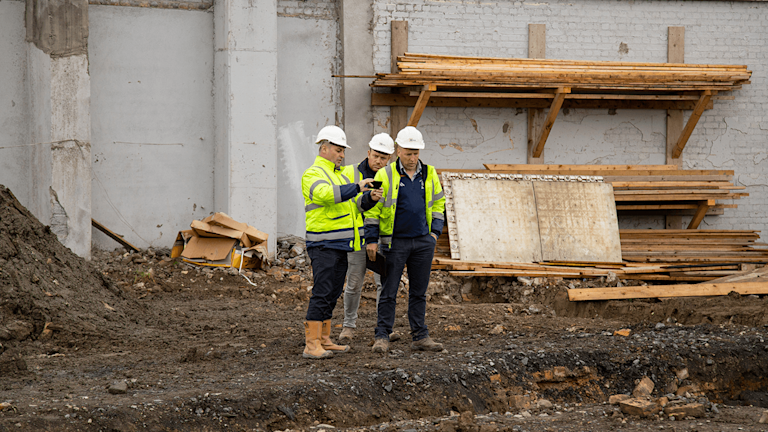
In today’s market, competitive advantage is increasingly tied to how successfully a company integrates AI into its everyday operations. However, the construction industry faces a unique “physical economy hurdle”: Data is often trapped in fragmented silos ranging from messy spreadsheets and buried emails to handwritten notes left on the jobsite.
The path forward isn’t about chasing “perfect data”—it’s about scaling the expertise of your field teams and project managers to make the workday more predictable.
Why perfect data is the wrong goal
Hesitance to invest in the change management necessary to adopt a software often stems from concern related to operational inconsistencies and the limits they may impose on the value of your project data. If your data is not collected through standardized methods, how can you meaningfully learn from this historical project information and apply it to an AI tool?
The reality is, a history of project performance is always useful. However, this data only benefits the teams that use it. Data maturity isn’t the only variable—willingness to adapt is equally important, particularly when it comes to adopting AI. For an effective methodology to evaluate when to implement construction AI, consider an assessment of where you are most confident in your data and start there.
Beginning with small, meaningful AI use cases based on the data you trust most will allow your teams to move on to larger, more complex use-cases over time.
The trust factor: Scaling expertise, not replacing it
In the near future, every construction company will have access to the same AI capabilities. Your real edge won't come from the software itself, but from how deeply your teams trust it.
Building genuine trust in any software means addressing nuanced concerns related to the company’s realistic ability to benefit from it. It has to work reliably and make those using it more efficient.
It’s true that if the data feeding an AI tool is substandard, you run the risk of discouraging adoption as soon as a team member receives an inaccurate or incomplete response to their prompt. To begin to address this concern, change management leaders must be clear about why they are prioritizing any software implementation.
Clearly communicate that AI is here to reduce the drudge work and increase capacity, not to monitor or replace staff.
Beyond those fundamentals, pace matters enormously. Change that moves faster than the team can adapt to it creates anxiety and resistance. So does a culture that punishes experimentation. If a project engineer is afraid to try an AI-generated RFI draft because it might reflect badly on them if it's wrong, they'll never use the tool. Psychological safety isn't soft, it's a prerequisite for any successful AI rollout.
Finally, vendor trust is a real and underappreciated factor. Construction firms handling sensitive project data, such as pay schedules and proprietary designs, need confidence that their AI provider understands the built world. Its specific workflows, risks, and regulatory hurdles—not just machine learning in the abstract.
What agentic AI changes
Most teams that have experimented with AI have used it like a smarter search engine—ask a question, get an answer, and then go do the work yourself manually. The next evolution, with agentic AI, moves from simple information retrieval to complex task execution.
General-purpose AI struggles with the density of a 1,500-page spec book, containing domain-specific language, cross-references, and dependencies. Datagrid, however, is purpose-built for construction. Datagrid connects your data and tools across systems into an intelligence layer that understands the nuanced relationship between a submittal log and an RFI workflow. With this deep understanding of your business, AI agents can execute the repetitive tasks you usually do by hand.
With AI agents working with your team, everyone can do more with less. Instead of just flagging missing information in a submittal, an AI agent drafts the response and routes it for approval. Meanwhile, a foreman can use a simple prompt to get the day's schedule and open RFIs without ever opening a laptop. The cumulative effect is less friction at each step of the construction project, which at scale, mitigates risk and drives performance.
Making the AI transition
The transition from AI-as-assistant to AI-as-predictor doesn't start with a moonshot. It starts with solving the tedious problems like extracting data from spec sheets, reviewing submittals, or daily log overviews.
Every small task handled correctly builds the data consistency and organizational trust required for the next, more ambitious application. The industry has spent decades generating project data and leaving most of it on the table. The leaders of the next decade won't be the ones who generate the most data, they'll be the ones who finally put it to work to create a more predictable, profitable jobsite.
Ready to build your AI foundation? For a deeper dive into this topic, watch the full session:
Written by
Campaign Manager, NAMER, Procore
Tags
Accélérez vos projets dès aujourd'hui grâce à Procore
Avec une plateforme qui rend vos differents processus d’affaires plus humains et une équipe de support francophone à votre disposition, démarrer un projet n’a jamais été aussi facile.