Greenfield development: A guide for Australian construction teams

Last Updated May 21, 2026
Josh Krissansen
122 articles
Josh Krissansen is a freelance writer with two years of experience contributing to Procore's educational library. He specialises in transforming complex construction concepts into clear, actionable insights for professionals in the industry.
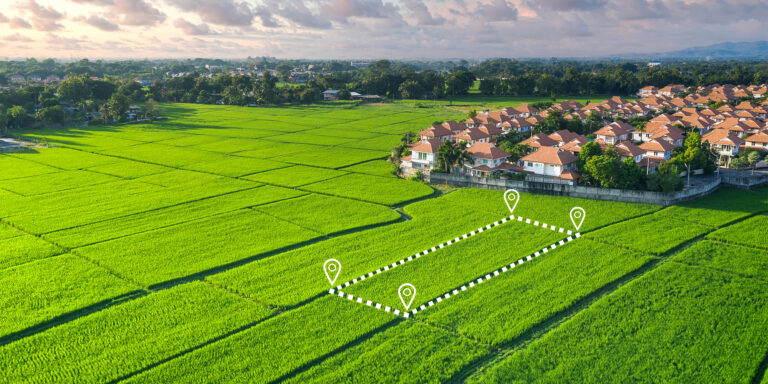
Greenfield projects can appear straightforward at the outset. There are no existing structures to demolish, no legacy services to work around, and fewer site constraints than on brownfield developments.
But greenfield delivery carries its own risks. Infrastructure often needs to be delivered or extended before construction can begin, while early cost planning is typically done with limited site-specific information.
On commercial projects, how these risks are managed directly affects cost certainty, programme performance, and project viability.
This article explores how greenfield development differs from brownfield construction, the types of projects commonly delivered on greenfield sites, and the key risks teams need to manage from planning through to project completion.
Table of contents
What is greenfield development?
Greenfield development is the process of building on previously undeveloped land, typically with no existing structures or services. Unlike brownfield or infill projects, there are no existing site conditions to work around, shaping everything from programme structure to early cost planning.
Types of greenfield projects in Australia
In Australia, greenfield projects are typically concentrated in the outer metropolitan growth zones of Sydney, Melbourne, Brisbane, and Perth, as well as regional expansion areas and industrial and logistics precincts on city fringes where large land parcels remain available.
The following project types are most commonly delivered on greenfield sites:
Residential masterplanned communities and land subdivisions:
Large-scale staged developments in outer metropolitan growth areas, typically involving civil works and land release ahead of dwelling construction.
Industrial and logistics precincts:
Warehouse, distribution, and manufacturing facilities built on undeveloped land at city fringes, where large footprints and heavy vehicle access requirements make greenfield sites more practical than infill locations.
Commercial and mixed-use developments:
Office, retail, and mixed-use projects in newly established town centres or growth area activity centres, typically delivered in stages as surrounding population density increases.
Civil and infrastructure projects:
Roads, water and sewer trunk infrastructure, and stormwater systems delivered ahead of or alongside other development, often as the first phase of a broader greenfield programme.
Hospitals and health facilities:
Frequently sited on greenfield land where footprint, car parking, and future expansion requirements cannot be accommodated on established sites.
Schools and education campuses:
Consistently delivered as greenfield projects in growth areas, with staged enrolment growth often driving staged capital works programmes.
Data centres and energy facilities:
Require large land parcels with access to transmission infrastructure, making greenfield sites on city fringes the dominant delivery model.
Greenfield vs. brownfield development
Greenfield starts with undeveloped land, while brownfield begins with existing conditions. Brownfield development refers to construction on previously developed or industrially used land, typically with existing structures, services, or contamination requiring remediation before work can begin.
Each carries distinct cost profiles and risk management protocols that should inform how the project is structured from the outset.
Cost planning
Greenfield sites require infrastructure to be costed from scratch, with limited site-specific information available in early planning stages. Brownfield sites have existing infrastructure that reduces some costs but introduces demolition, remediation, and unknown existing conditions that routinely affect budgets.
On greenfield projects, early cost plans typically need to carry wider contingency ranges until site-specific investigation is complete.
Programme
Greenfield programmes avoid demolition and remediation lead times but are exposed to authority approval delays, infrastructure staging dependencies, and wet weather risk on exposed sites. Brownfield programmes are constrained by existing conditions but typically have more predictable early-phase durations.
For greenfield projects, approval milestones are often treated as critical path activities from day one.
Risk profile
Greenfield risk is concentrated in unknown ground conditions, authority approvals, and infrastructure cost uncertainty. Brownfield risk is concentrated in contamination, structural unknowns, and scope creep from existing conditions.
Understanding where risk is concentrated early allows teams to structure investigation programmes and contract terms accordingly.
Contract structure
Early works scopes on greenfield projects are frequently incomplete at tender because development approval (DA) conditions and authority requirements are not yet finalised. Brownfield variation risk is higher once demolition exposes conditions behind walls and under floors.
In both cases, the contract structure should reflect the level of scope definition available at the time of tender.
Approval process
Greenfield projects involve state government rezoning, local council DA, infrastructure contribution determinations, and utility authority approvals. Brownfield approvals on established sites are typically simpler and faster.
Teams delivering greenfield projects should map authority dependencies at project commencement and build realistic lead times into the master programme.
Advantages of greenfield development
Greenfield sites offer four distinct advantages over brownfield sites, and those advantages are often what determine whether a greenfield site is the right choice for a given project.
Design freedom
With no existing structure constraining layout, orientation, or services, head contractors and design teams can sequence work logically and optimise the build programme around delivery efficiency. That flexibility is rarely available on brownfield or infill projects where existing conditions dictate how and where work can proceed.
Current standards from the outset
Greenfield projects can be designed and built to current code, energy, and sustainability standards without the cost and complexity of integrating with ageing systems. This reduces both the risk of non-compliance and the variation exposure that typically comes with upgrading existing infrastructure mid-project.
Programme baseline
Without demolition or remediation on the critical path, the programme can be built from scratch, providing more control over sequencing and staging when preconstruction investigation has been completed properly. This gives the project team a cleaner starting point for resource planning and subcontractor coordination.
Future staging
Greenfield masterplans can design in expansion and future staging from the outset, avoiding the cost of retrofitting capacity that was never planned for. On long-term infrastructure and precinct projects, this has a material impact on whole-of-life cost.
Challenges of greenfield development
The same site characteristics that create opportunity also introduce risk. Understanding where greenfield projects typically run into trouble is as important as knowing where they perform well.
Infrastructure from scratch
Roads, water, sewer, stormwater, power, and communications must all be delivered and coordinated with relevant authorities. This adds cost and sequencing complexity that established sites do not carry, and the lead times involved are often underestimated at the planning stage.
Procurement on an incomplete scope
Early works packages are frequently tendered before DA conditions are finalised. Where scope is not yet defined, lump sum contract structures transfer risk to the contractor in ways that are not always visible at tender.
For instance, a civil works package priced on indicative drawings may not reflect the final earthworks volumes or service corridor alignments confirmed by the authority, leaving the contractor exposed to variations the contract does not adequately provide for.
Cost planning without benchmarks
Without site-specific precedent, early cost estimates carry wider ranges than brownfield equivalents. Greenfield infrastructure costs vary significantly by location and authority requirements, and standard rate benchmarks do not reliably reflect what a specific site will cost to service.
Geotechnical and contamination risk
Greenfield does not necessarily mean clean. Agricultural land can carry contamination, and sites in growth areas frequently have complex soil profiles that affect foundation design, earthworks costs, programme, and the contingency needed to cover ground conditions that only become clear once earthworks begin.
Programme exposure
Exposed sites with no existing shelter are more vulnerable to wet weather than most programmes account for. Early earthworks and civil packages sit on the critical path, and when wet weather hits during this phase, the delay may place pressure on every package that follows.
Approval and staging complexity
Greenfield approvals in Australia involve multiple state and local authorities, infrastructure contribution frameworks, and staged release conditions. These processes run in parallel but carry dependencies that are difficult to sequence and easy to underestimate. A utility authority response that arrives three months late, for example, can delay DA lodgement and affect the overall programme.
Best practices for managing risk on a greenfield project
Greenfield projects reward teams that plan for uncertainty early. These best practices give construction teams a framework for controlling the risks that most commonly affect greenfield delivery.
Complete geotechnical and environmental investigation before finalising the cost plan
Site-specific ground conditions and contamination status need to be confirmed before budgets are finalised, not after. Without this, cost plans are built on assumptions that investigation will later contradict, and by that point, scope, programme, and subcontract commitments may already be in place.
Rawlinsons and AIQS data provide useful reference rates, but they reflect market averages rather than site-specific conditions. On greenfield sites where soil profiles, fill history, and contamination status are unknown, those averages can be misleading in practice.
The investigation programme should be scoped, tendered, and completed early enough that its findings can be properly incorporated into the cost plan before budgets are presented to the client or financier.
Treat authority approvals as a critical path activity
Approval delays are the most common source of programme delay on greenfield projects, and they are among the most preventable when dependencies are identified and managed from the outset.
At project commencement, map every approval required across state, local, and utility authorities, assign ownership for each, and build realistic lead times into the master programme.
Pre-engage with utility authorities early
Pre-engage with utility authorities before DA lodgement.
Power, water, sewer, and telecommunications coordination takes longer than most programmes allow for, and authority requirements confirmed late in design can force layout changes, service corridor realignments, and cost plan revisions at a point when each is expensive to accommodate.
Early engagement gives the project team the information needed to design around authority requirements rather than react to them.
Match contract structure to the level of scope definition
Where early works scope cannot be fully defined, cost-plus or schedule of rates structures are more appropriate than a lump sum.
Executing a lump sum contract on a scope that is not yet stable transfers risk to the contractor in ways that are not always visible at tender, and that risk typically resurfaces as variations and programme pressure during delivery.
Before executing subcontracts on packages with unresolved scope, confirm how risk is allocated under AS 4000 or AS 2124 and make sure the contract structure reflects the actual state of the design, not the state the team hopes it will reach.
Establish commercial registers at project commencement
A variation register, EOT register, and RFI log should be in place before site works begin, not set up reactively once issues start to emerge. Greenfield projects create variation risk through scope evolution, design development, and authority-driven changes, and the volume of changes on a complex greenfield project can be significant.
Records built contemporaneously during delivery carry far more weight than records reconstructed after a dispute has arisen. Getting commercial administration in place at the start is one of the lowest-cost risk controls available on a greenfield project.
Build wet weather allowances into the programme
On exposed greenfield sites, wet weather is a foreseeable risk that should be planned for from the start. Confirm wet weather provisions under the applicable contract and ensure float in the early works programme reflects seasonal exposure for the site location.
Early earthworks and civil packages are the most vulnerable, and a programme that carries no wet weather allowance in this phase may experience delays it was not designed to accommodate.
Greenfield development rewards preparation over assumption
Greenfield sites offer real advantages, but they come with risks that need to be managed from the outset. Teams that invest in early investigation, map approval dependencies, and match contract structures to scope definition are best placed to deliver on programme and within budget.
Categories:
Written by
Josh Krissansen
122 articles
Josh Krissansen is a freelance writer with two years of experience contributing to Procore's educational library. He specialises in transforming complex construction concepts into clear, actionable insights for professionals in the industry.
View profileExplore more helpful resources
Scaling with SIERA: Building for now and what comes next
SIERA Founder and Director Brent Thompson has always known that the right people, systems and hands-on approach are fundamental to scaling his business successfully. In Part 1, Brent and Head...
Getting Your Construction Data Ready for AI – What Every Business Needs to Consider Before Launching AI
This is the first of two articles. This part sets out the considerations: what clean and trusted data actually means, how to measure it, how the two systems most businesses...

The Contractor’s Guide to Concrete Inspections
Concrete: It’s the key building block of nearly every structure’s foundation — and it’s the world’s most widely used building material. For most head contractors, understanding how to assess concrete...

Computer-Aided Design (CAD): What It Is — and Why It’s Important
When most people envision a construction worker, they see a person at a construction site wearing a hard hat and a high-vis vest. Perhaps this person is putting up plasterboard,...