Construction Contingency: Protecting Profit, Schedule, and Governance

Last Updated Mar 22, 2026
Josh Krissansen
122 articles
Josh Krissansen is a freelance writer with two years of experience contributing to Procore's educational library. He specialises in transforming complex construction concepts into clear, actionable insights for professionals in the industry.
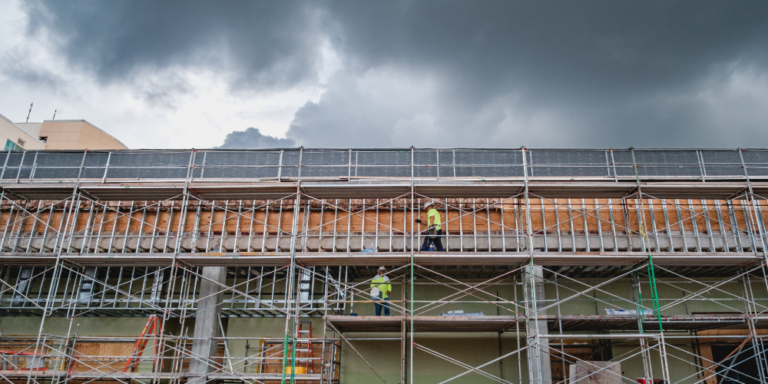
Australia’s Snowy Hydro 2.0 is a cautionary tale for every construction leader.
A project initially forecasted to cost around $2 billion has since ballooned to more than $13 billion, driven by unforeseen geological conditions, supply chain pressures, and productivity constraints. This has resulted in stalled delivery, public scrutiny, and significant financial consequences for stakeholders.
It's a clear example of how extreme budget overruns can become, and why disciplined contingency planning is essential to maintaining commercial control when conditions change.
Contingency is a core financial control that protects margin, cash flow, and delivery performance when the unexpected occurs. It absorbs unforeseen costs before they erode earnings before interest and tax (EBIT) targets, trigger emergency capital requests, or delay work.
In this article, we outline how to plan, fund, manage, and release construction contingency to protect profit, prevent delays, and strengthen governance across every stage of project delivery.
Table of contents
What is a Contingency Sum?
A contingency sum is a reserved portion of the project budget that covers unforeseen costs that may arise during delivery. It acts as a financial buffer, allowing work to continue when unexpected conditions, design changes, or market shifts affect cost or productivity.
In Australian commercial construction, it is a standard risk management control. It is included in the total project budget to account for uncertainty that cannot be fully quantified at the tender stage.
A contingency is not a profit line, even though good contingency management can improve profitability. It is also not a fallback for poor estimating, scope gaps, or avoidable errors. It exists to manage latent risk, not foreseeable items that should have been defined or documented.
On Australian commercial projects, contingency is typically set at around 5% to 10% during early feasibility and concept design, when uncertainty is highest and key risks have not yet been fully defined.
As design documentation is completed, scope is firmed, and risks are progressively retired, the contingency allowance is reviewed and reduced. By contract award or GMP execution, well-defined projects generally carry a materially lower contingency than early estimates.
Larger, longer-duration, or higher-risk projects may retain higher allowances for longer, particularly where ground conditions, market volatility, or complex interfaces remain unresolved.
When contingency is governed correctly, funds are released in a controlled way and only when clear justification exists. On well-planned projects with effective risk treatment, the sum should remain largely untouched.
| Contingency vs Provisional Sum A provisional sum is an allowance for scope that is known in principle at tender but cannot be fully quantified or detailed at that time. This commonly includes elements such as services relocations, authority works, early works packages, or items dependent on approvals, selections, or further design development. Contingency, by contrast, exists to manage unforeseen events or latent risks that could not reasonably be predicted or measured when the contract was priced. For example, a provisional sum may be included for authority-required services relocations where the scope is understood, but final requirements are subject to approval. If unexpected rock is later encountered during excavation, the resulting cost and programme impact should be managed through contingency rather than absorbed into the provisional sum. Keeping these as separate budget lines preserves transparency, prevents scope creep, and avoids masking cost growth within reporting. |
Why is a Contingency Fund Important in Construction?
Cost overruns are the rule in construction, not the exception. Infrastructure Australia’s Annual Budget Statement 2024 proved as much, reporting that ‘most (86%) major transport infrastructure projects experience cost increases or delays,’ and that over half (53%) of major transport projects exceed their initial cost estimates.
Given that backdrop, a contingency fund stops those “almost inevitable” overruns from cutting into project profitability — just one of several reasons why contingency funds are so critical.
Protects Finances
A contingency fund gives projects somewhere to absorb the unexpected without immediately cutting scope or margin. It reduces the need for last-minute capital injections and helps prevent cost pressure from forcing scope reductions or eroding margin.
Avoids Delays
A funded contingency keeps work progressing when surprises occur, rather than pausing for reapproval or additional funding. This reduces disputes, variation standstills, schedule slippage, and associated delay costs.
Builds Confidence
A clearly defined contingency demonstrates disciplined planning and strengthens trust with clients, funders, and delivery partners. Stakeholders can see that both identified and unidentified risks have a financial response behind them.
Supports Risk Management
Contingency is what gives a risk strategy financial backing. It allows teams to respond to unexpected conditions in a measured way, instead of reacting under pressure in ways that drive up costs or introduce delays.
Common Reasons for Construction Contingency
Contingency exists to manage uncertainty. Even well-planned projects face events that cannot be fully predicted at the tender stage. The most common drivers include the following:
Design Evolution
While changes due to errors, omissions, and clashes in design are generally consequences of inadequate planning, decisions to revise the design for good reasons do happen, and construction contingencies exist in part to support these changes.
Constructability issues can also emerge once work is underway and access is opened up.
For instance, once demolition is complete and existing structures are exposed, the design team may identify that the specified connection details are impractical to install safely or efficiently. Adjusting the design to suit actual site conditions can be a valid evolution, with contingency absorbing the cost and time impact where the issue could not reasonably have been identified earlier.
Unforeseen Site Conditions
Undiscovered latent conditions, such as ground contamination or unrecorded services, can increase cost and time.
Structural issues uncovered during demolition or refurbishment may require redesign and additional trades. Access constraints and complex logistics can further extend labour or equipment time.
Weather Impacts and Environmental Events
Flooding, storms, extreme heat, and other prolonged weather conditions can disrupt planned work sequences and reduce productivity.
Damage to partially completed works may also require remediation or protection measures to stabilise the site.
Market and Supply Chain Volatility
Material price escalation, shortages, or unreliable supply can increase procurement costs and extend programmes. Contractor insolvency, disrupted logistics, and long lead times also introduce unplanned cost and delay risk.
For example, a specialist façade subcontractor entering administration mid-project can force the contractor to reprocure at short notice, often at higher rates and with extended lead times.
The resulting cost premium and programme slippage reflect market volatility rather than performance failure and must be managed through contingency and revised sequencing.
Labour and Workforce Disruptions
Skilled labour shortages, overtime requirements, or industrial action can reduce productivity and extend preliminaries. The replacement of subcontractors who default or fail to perform can also increase costs and disrupt sequencing.
Regulatory and Compliance Changes
New permit requirements, safety directives, or code changes may introduce redesign or additional cost obligations. Slow approvals and extended review cycles increase time-related site costs.
For example, amendments to the National Construction Code (NCC) introduced in 2022 and adopted across Australian jurisdictions from mid-2024 include enhanced energy efficiency and condensation management requirements for residential and mixed-use buildings.
These changes require more rigorous design detailing and compliance documentation, which forces projects already in design or approval phases to revise façade, insulation, and moisture-management systems, adding cost and delaying certification and construction starts.
Project Complexity and Scale
Large and complex projects are inherently more exposed to cost shocks. As project scale increases, the likelihood and severity of cost overruns rise due to greater complexity, longer delivery timeframes, and higher exposure to market volatility.
Types of Construction Contingencies
Different contingencies exist to manage uncertainty from the perspective of each project stakeholder. The three most common categories are outlined below.
Owner and Developer Contingency
The owner holds this fund outside the contract sum to cover scope changes, upgrades, or new regulatory obligations that arise during delivery. Any unused amount typically remains with the owner or returns to them.
This fund is allocated during design or pre-construction to cover drawing changes as the design evolves. It is reduced or reallocated once construction begins and the scope is fully defined.
Construction Contingency
The contractor carries this fund within their budget or price to manage risks that sit within their control, such as coordination errors, minor rework, or labour issues.
In GMP (guaranteed maximum price) or cost-plus contracts, unused amounts may revert to the owner, while in lump-sum contracts, the contingency forms part of the contractor’s commercial position.
Each contingency type manages a different layer of uncertainty, and together they form the project’s total contingency framework.
How to Calculate an Appropriate Construction Contingency
Contemporary guidance from Engineers Australia’s 2025 Contingency Guideline explicitly ties contingency to the reality that cost overruns and schedule delays are systemic features of projects, not outliers. It also recommends structured contingency planning as a core risk-control tool rather than a discretionary padding exercise.
Planning contingency begins with calculating it, using a structured, stepwise approach rather than relying on arbitrary uplifts.
Use Standard Percentage Ranges as a Starting Point
Allocate an initial range of 5-10% of the total project cost to cover unforeseen events. Increase this to as high as 20% on complex, high-risk, brownfield, or renovation projects where uncertainty is significantly greater.
Adjust the Percentage Based on Project Risk
Scale the contingency in line with ground conditions, weather exposure, supply volatility, site logistics, and the capability of the delivery team. Renovation and brownfield work typically require higher levels because conditions become fully known only after works begin.
For example, a refurbishment project may carry a higher contingency allowance where services are undocumented and existing structure drawings are incomplete.
Once ceilings and walls are opened, latent services conflicts and structural constraints often emerge, requiring design adjustments and resequencing that would not typically arise on a greenfield project.Use Data and Historical Performance
Benchmark assumptions against similar completed projects, not just estimates on paper. Looking at where past jobs overran and how much uplift they actually needed helps set a contingency that reflects real outcomes, rather than relying on generic rules of thumb.
Apply Risk Modelling for Major Projects
Use risk registers and probabilistic techniques such as Monte Carlo simulation to model uncertainty and cost variability.
Australian government estimation guidance recommends setting contingency at a confidence level that reflects organisational risk appetite by selecting an appropriate P value, which is the probability that the proposed cost will not be exceeded.
Model both systemic and project-specific risks to produce a defensible provisional sum.Review and Refine Throughout the Project
Carry a higher contingency during the early design phase when uncertainty is greatest. Reduce or reallocate funds progressively as scope stabilises and risks are retired.
Managing and Accessing Contingency Funds
Contingency must be governed with the same discipline as any other project control. Clear rules, structured approvals, and transparent reporting ensure the fund remains a strategic tool rather than a convenient pool of money.
A controlled approach also protects the program, cost, and commercial relationships by preventing misuse and maintaining stakeholder confidence.
Define Clear Usage Rules
Contingency should be reserved for unforeseen residual risks only. It must not be used to cover poor estimating, incomplete scope definition, or optimism bias in planning.
Setting clear rules for how contingency can be used from the start helps avoid arguments later on. Documenting the basis of estimate and key assumptions also means every drawdown can be traced back and explained if it’s questioned.
Set a Formal Approval Workflow
A structured release process safeguards the fund's integrity.
On Australian projects, the superintendent plays a central role in governing access to contingency under most standard form contracts. Drawdowns should be assessed through the formal variation or cost adjustment process and certified by the superintendent before being incorporated into the project budget.
Owner approvals typically sit at a governance level, providing oversight rather than day-to-day administration. Even where a contractor holds contingency under a cost-plus or GMP arrangement, all releases should be documented, justified against project risk, and recorded through the contract administration process to maintain transparency and auditability.
Linking each use to the variation process ensures cost, time, and scope impacts are authorised before work proceeds, avoiding informal decisions that create commercial ambiguity.
Pro Tip
When a contingency request comes through, ask two simple questions: Was this genuinely unforeseeable, and is this the least-cost fix? If either answer is unclear, send it back for clarification. This keeps contingency focused on true latent risks, not avoidable overruns.
Track and Document All Drawdowns
A detailed contingency log is essential for governance. Record the date, amount, justification, approval, and remaining balance for every drawdown.
Use project financial software to provide real-time visibility for cost reviews and audits. Review contingency status in cost-to-complete meetings so spending remains aligned to current risk exposure rather than historical assumptions.
Integrate with Risk and Change Control
Contingency management should be tied directly to the risk register and change process. When funds are used, update the register, forecasts, and exposure levels so financial and risk positions remain synchronised.
As uncertainty reduces and risks are retired, reallocate or reduce contingency to prevent over-resourcing. Maintain strict separation between contingency, provisional sums, and the base estimate to avoid masking cost growth.
Communicate Status and Exposure
Transparent reporting reinforces stakeholder confidence. Provide clear reasoning for each use and summarise the remaining balance, upcoming risks, and likely future drawdowns at cost and governance meetings.
This ensures decision-makers understand not only what has been spent, but why, and how it affects remaining exposure.
Strong contingency planning protects profit, schedule, and governance
Disciplined contingency management ensures projects can absorb uncertainty without eroding margin, delaying delivery, or undermining stakeholder confidence.
When contractors correctly plan, fund, govern, and review contingency with intent, they maintain commercial control and deliver predictable outcomes in a high-risk construction environment.
Categories:
Written by
Josh Krissansen
122 articles
Josh Krissansen is a freelance writer with two years of experience contributing to Procore's educational library. He specialises in transforming complex construction concepts into clear, actionable insights for professionals in the industry.
View profileExplore more helpful resources

Scaling with SIERA: Building for now and what comes next
SIERA Founder and Director Brent Thompson has always known that the right people, systems and hands-on approach are fundamental to scaling his business successfully. In Part 1, Brent and Head...
Getting Your Construction Data Ready for AI – What Every Business Needs to Consider Before Launching AI
This is the first of two articles. This part sets out the considerations: what clean and trusted data actually means, how to measure it, how the two systems most businesses...

The Contractor’s Guide to Concrete Inspections
Concrete: It’s the key building block of nearly every structure’s foundation — and it’s the world’s most widely used building material. For most head contractors, understanding how to assess concrete...

Computer-Aided Design (CAD): What It Is — and Why It’s Important
When most people envision a construction worker, they see a person at a construction site wearing a hard hat and a high-vis vest. Perhaps this person is putting up plasterboard,...