What is a BIM manager in construction?

Last Updated Sep 29, 2026
Josh Krissansen
122 articles
Josh Krissansen is a freelance writer with two years of experience contributing to Procore's educational library. He specialises in transforming complex construction concepts into clear, actionable insights for professionals in the industry.
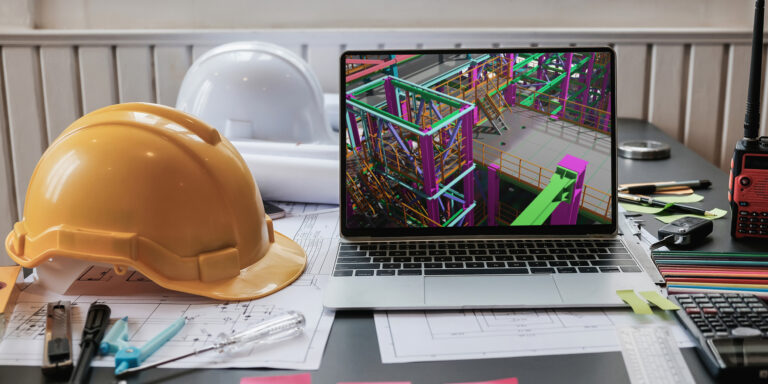
Building information modelling (BIM) brings design, construction and project information together in a coordinated digital model. Rather than treating drawings, specifications, schedules and model data as separate pieces of information, BIM helps project teams work from a more connected view of how a building or asset is designed, built and managed.
A BIM manager sets up and manages the standards, workflows and tools that make that coordination possible. Their role is to help ensure architectural, structural, services and subcontractor models can be reviewed, coordinated and used by the wider project team.
On commercial and infrastructure projects, that work can help reduce information gaps before they become requests for information (RFIs), variations, rework or delays on site.
This guide explains what a BIM manager does, where the role sits within the project team, the skills and software the role requires, and what it takes to build a BIM management career in the Australian construction industry.
Table of contents
What does a BIM manager do on a construction project?
A BIM manager is responsible for the strategy, standards, and day-to-day coordination of BIM across a project or organisation. They help manage BIM workflows, information requirements and coordination processes the project team relies on.
The BIM manager works closely with the BIM coordinator, but the two roles are distinct.
The BIM coordinator handles more of the hands-on coordination work, such as running clash reports and checking that subcontractor submissions meet project requirements. The BIM manager defines those requirements, manages the software platforms and workflows, and oversees issues that affect multiple disciplines or the wider project team.
In Australian commercial construction, the role is typically engaged by head contractors, Tier 1 and Tier 2 builders, or specialist BIM consultancies on complex projects such as hospitals, data centres, commercial towers, and major infrastructure.
How BIM managers work with project managers
The BIM manager doesn’t own a programme or budget, but their work directly affects both.
Unresolved clashes can generate RFIs and variations, and inaccurate models generate site queries and rework. The BIM manager helps prevent that by coordinating disciplines before construction begins and helping keep model information aligned as design and delivery details change.
The project manager depends on that coordination work, even though programme and commercial responsibility remains with them.How BIM managers work with design consultants
The BIM manager coordinates across architectural and engineering models, checks compliance with project standards, and flags where a consultant's output falls short. Design decisions stay with the consultants.
The BIM manager’s role is to ensure that design information is structured, coordinated, and delivered in a format the wider project team can reliably work from.How BIM managers work with subcontractors
On Australian commercial projects, the BIM manager is often the main point of contact for subcontractor model submissions. Mechanical, electrical, hydraulic, and fire services are often the disciplines where coordination issues concentrate.
The BIM manager sets the submission requirements, reviews compliance, and works with subcontractors to resolve models that cannot be properly coordinated.
Where the role sits within the business
In many Australian firms, the BIM manager sits within a construction technology, digital delivery, or preconstruction team.
Where the role sits within the business affects what the BIM manager can realistically influence and at what stage of the project.
A BIM manager embedded in preconstruction can help shape subcontract scope and information requirements before they are locked in, while one sitting within a technology function typically has a stronger influence over software platforms and workflows but less involvement in commercial or contractual decisions.
Key BIM manager responsibilities
The BIM manager's responsibilities span the full project lifecycle, from establishing project BIM standards before design begins to maintaining records that support commercial decisions during delivery.
The role runs across every discipline and every phase, which is what separates it from more narrowly focused technical positions on the project team.
Developing and enforcing the BIM execution plan
The BIM Execution Plan (BEP) is the core document that sets out how BIM will operate on the project. It defines model standards, naming conventions, file structures, data exchange protocols, and the level of information needed to align with ISO 19650. Without it, disciplines default to their own standards and coordination becomes significantly harder to manage.
Developing the BEP is one of the first things a BIM manager does on a new project, and maintaining compliance with it continues throughout delivery.
Federated model management
The BIM manager brings together models from architects, structural engineers, and services consultants into a single coordinated model environment. From there, they manage clash detection workflows and help coordinate resolutions before construction begins.
Clashes that make it through to site often lead to RFIs, variations, and rework that are far more expensive to resolve during construction than they would have been during coordination.
Subcontractor model coordination
Subcontractor model submissions are some of the most difficult inputs for a BIM manager to coordinate consistently. Mechanical, electrical, and hydraulic models in particular require close oversight.
The BIM manager sets the submission requirements, reviews compliance, and works with subcontractors to resolve models that arrive in unusable formats or at inconsistent levels of quality.
Standards and compliance
The BIM manager is responsible for ensuring that project BIM deliverables meet contract requirements and client information requirements.
ISO 19650 is increasingly referenced on government and infrastructure projects because it sets out a structured approach to managing project information across the asset lifecycle. That means information delivery planning, naming conventions, approval workflows and responsibilities need to be built into the project from the outset.
Software and platform management
The BIM manager may help select and manage the common data environment (CDE), including access, version control, and document control workflows across the project team.
A poorly configured CDE creates version control failures, gets the wrong drawing issued to the site, or leaves subcontractors working from superseded models. A platform change mid-project forces retraining and risks losing document history.
The BIM manager is responsible for setting up those systems early and ensuring they continue working effectively as the project progresses.
Training and adoption
The BIM manager helps onboard project staff, subcontractors, and consultants to project BIM standards and manages resistance from site teams and trade contractors unfamiliar with model-based workflows.
A BIM standard only works if everyone follows it. A subcontractor submitting models in the wrong format, or a site team bypassing the CDE and sharing drawings by email, breaks the coordination chain regardless of how well the standard has been set up.
Getting people to work consistently within the system is just as important as setting the system up in the first place.
Reporting and documentation
The BIM manager maintains BIM progress records, clash detection logs, and model audit trails throughout delivery.
Where model data becomes relevant to an RFI, variation, or coordination issue, those records form part of the project documentation used to track decisions and delivery history. Accurate records maintained during delivery are significantly more reliable than documentation reconstructed after issues have already emerged.
Key skills for a BIM manager
The BIM manager role requires a combination of technical knowledge, construction understanding, and strong communication skills.
Technical BIM skills are the starting point. What separates effective BIM managers on complex projects is their ability to apply construction knowledge, coordinate across disciplines, and work with teams that do not report directly to them.
Construction knowledge
Technical proficiency in BIM software is essential, but construction knowledge is what shapes the quality of a BIM manager’s decisions.
Understanding how a project is sequenced, how subcontract interfaces work, and how model decisions affect site delivery is what allows a BIM manager to prioritise the right clashes or anticipate coordination problems before they escalate.ISO 19650 and information management
Practical knowledge of information delivery planning, client information requirements, and the BEP framework is increasingly required on government, health, and infrastructure projects in Australia.
Leadership and stakeholder management
The BIM manager has to get subcontractors, consultants, and site teams working to the same standard, even though none of them reports to them. To do this successfully, BIM managers need to be good at:
- Running effective coordination meetings
- Giving clear and actionable feedback on model submissions
- Escalating unresolved issues through the right channels
- Building enough credibility with trade contractors that they treat BIM requirements as non- negotiable rather than optionalProblem-solving under programme pressure
Issues come up mid-programme that the process alone can't resolve.
When a structural model lands late and conflicts with hydraulic layouts that have already been coordinated, the BIM manager has to get the structural engineer and hydraulic subcontractor aligned on a fix without stopping the coordination programme.
That kind of situation, under time pressure and across parties with competing priorities, is a regular part of the role.
BIM manager software and tools
BIM managers work across several categories of software, and the role requires practical working knowledge across all of them.
BIM authoring
Revit is the most widely used BIM authoring tool on Australian commercial projects. ArchiCAD is common in the architectural sector, and structural and services disciplines may use Tekla, Bentley OpenBuildings, or specialist MEP tools depending on the project type.
Clash detection and coordination
Navisworks is one of the standard tools used for clash detection and coordination. Solibri is used where model quality auditing and ISO 19650 compliance checking are required, particularly on government and infrastructure projects.
Construction management and document control
Procore, Autodesk Construction Cloud, and Aconex are the platforms most commonly used on Australian commercial and infrastructure projects for model hosting, document control, and team collaboration. The BIM manager is typically responsible for configuring and administering whichever platform the project uses.
Interoperability
IFC (Industry Foundation Classes) is the neutral format for cross-platform model exchange. Practical knowledge of IFC export settings and import limitations across authoring tools is essential for managing coordination across disciplines that use different software, which, on a large commercial project, is almost always the case.
How to become a BIM manager in Australia
Most BIM managers move into the role through modelling and coordination positions, but stepping into management requires a broader skill set than technical modelling alone.
Educational pathway
A bachelor's degree in architecture, engineering, or construction management is the most common entry point. BIM-specific postgraduate study and short-course certification are available through universities, TAFEs, professional bodies and software providers.
Career progression
Most BIM managers begin as BIM technicians or coordinators, often spend several years building up modelling and coordination experience before moving into a management role. Some transition from architectural drafting, structural detailing, or MEP coordination backgrounds, rather than a traditional BIM technician path.
The jump from coordinator to manager isn't just a seniority bump.
A BIM coordinator typically works within an existing process. A BIM manager is responsible for shaping those processes, managing coordination across multiple disciplines, making platform and workflow decisions, and dealing with issues that affect the wider project team.
Candidates who have only modelled, without exposure to cross-discipline coordination or project governance, often find that the transition is harder than expected.
What makes candidates competitive
Beyond certifications, the candidates who stand out have delivered a specific complex project type, whether a hospital, data centre, or major infrastructure project, where the coordination demands and ISO 19650 obligations often more complex.
Hands-on CDE administration experience is increasingly sought after, as is demonstrated experience managing subcontractor model submissions across mechanical, electrical, and hydraulic disciplines.
Certifications
The Chartered Institute of Building offers BIM management certification. Autodesk certifications in Revit and Navisworks are widely recognised by Australian contractors and consultancies as evidence of software proficiency.
Salary
BIM manager salaries in Australia range from approximately $110,000 to $170,000 per year, depending on experience, firm size, and project complexity. Tier 1 contractor and specialist consultancy roles sit at the higher end of that range.
Where BIM manager roles are found
BIM manager roles in Australia are most commonly held within Tier 1 and Tier 2 head contractors, where the role sits across multiple concurrent projects or is dedicated to a single large programme.
Specialist BIM consultancies offer another pathway, typically working across several clients and project types simultaneously.
On major government or infrastructure programmes, BIM managers are sometimes engaged client-side to oversee project information requirements across the full delivery team, including the head contractor and their subcontractors.
BIM managers keep model-based delivery coordinated
On complex commercial and infrastructure projects, digital models and project information can either support delivery or create coordination risk. A BIM manager is responsible for keeping that environment organised, coordinated, and aligned with how the project is actually being delivered.
From setting standards and managing software platforms to coordinating across disciplines, the role helps keep models accurate, teams aligned, and projects moving.
Categories:
Written by
Josh Krissansen
122 articles
Josh Krissansen is a freelance writer with two years of experience contributing to Procore's educational library. He specialises in transforming complex construction concepts into clear, actionable insights for professionals in the industry.
View profileExplore more helpful resources
Scaling with SIERA: Building for now and what comes next
SIERA Founder and Director Brent Thompson has always known that the right people, systems and hands-on approach are fundamental to scaling his business successfully. In Part 1, Brent and Head...
Getting Your Construction Data Ready for AI – What Every Business Needs to Consider Before Launching AI
This is the first of two articles. This part sets out the considerations: what clean and trusted data actually means, how to measure it, how the two systems most businesses...

The Contractor’s Guide to Concrete Inspections
Concrete: It’s the key building block of nearly every structure’s foundation — and it’s the world’s most widely used building material. For most head contractors, understanding how to assess concrete...

Computer-Aided Design (CAD): What It Is — and Why It’s Important
When most people envision a construction worker, they see a person at a construction site wearing a hard hat and a high-vis vest. Perhaps this person is putting up plasterboard,...