Customer Story
Boosting visibility and control across complex residential projects
Melbourne builder Arch10 centralises project information with Procore to support a growing portfolio

The Challenge
When brothers David and Daniel Filice founded Arch10, they combined decades of construction experience, site smarts and industry know-how with a shared vision for the business they wanted to build.
“We’d both worked across different parts of the industry and the globe,” David explains. “Daniel had delivered over 150 residential projects, and I’d spent 20 years on major infrastructure projects in Australia and the Middle East.”
“From day one, we’ve wanted to streamline the building process for our clients, and that’s resonated,” David says. “Today, our clients come to us because they’re after a real depth of experience and genuine understanding of the complexities of their projects. That’s what we’re recognised for.”
As the business grew, David and Daniel could see that stronger systems, clearer workflows and greater visibility would be critical to Arch10’s next chapter. Taking on larger and more complex residential projects, the systems supporting the business were starting to show their limitations. Project information, reporting and workflows were spread across spreadsheets, emails, messaging platforms and legacy software systems.
“We were making it work, but you could see that with older systems everything just became too scattered and there was nothing we could do to improve on that,” David says. “Every time we had to go and audit something, we’d have to look through different spreadsheets, emails, messages and systems.”
For Operations Manager Lesley Pritchard, the lack of a single view showed up in the day-to-day work of keeping projects visible and moving.
“Our previous software left us relying on separate spreadsheets and systems that weren’t user-friendly, so our site managers didn’t even use it,” Lesley says. “That made full oversight more challenging. I’d spend most of my time looking for information or chasing people up for it.”
The same fragmentation affected drawings, client communication and financial workflows and led to frustration across the team, as David explains.
“Add all these workarounds up and you start recognising how much time, money and energy is being wasted. It felt like we were just giving money away because of silly software problems that couldn’t be resolved, no matter how many help desk calls we all made.”
Despite these underlying issues, David and Daniel were gaining confidence that Arch10 had the project pipeline, stability and team it needed to keep growing. What they needed was a more connected system to support that growth.
“We’d always known we’d need to invest in a more holistic and centralised system at some point,” David says. “Last year we landed some significant projects, Lesley came on board and the stars really aligned time-wise. We had the stability, the team and the confidence to make the move.”

The Solution
For David, Daniel and Arch10 Construction Director Tom Abbott, the decision to move to Procore was considered and deliberate. The team wanted a platform that could centralise project information, improve visibility and support the next stage of growth.
“We’d done our homework and knew Procore could help us because it’s accessible anywhere, on any device, and teams can see everything that’s going on,” David says. “It had been on our radar for a couple of years and we’d been in dialogue with Procore throughout that time, so when we were ready to make the move, we felt really comfortable with it.”
Lesley’s arrival as Operations Manager helped give the transition momentum. With hands-on experience using Procore from the subcontractor side, she was able to lead the rollout across the business as new projects were starting.
“It turned out to be just the right time for me to come into the role and the business,” Lesley says. “The projects we put onto Procore were just starting, so we could transition in stages, moving new work into Procore while gradually phasing out projects already running through the previous system. The whole team has been positive about learning as we go.”
For Arch10, the immediate value was a more connected way to manage growth, visibility and project delivery across an expanding portfolio.
“Procore has a sweet spot,” David says. “If you have the project volume and you’re ready to leverage your time and find efficiencies, it really adds value and opens up new opportunities to scale. That’s where we’re starting to see the difference.”
With Procore, Arch10 has strengthened visibility and control across a growing portfolio of complex residential projects. The team now has one place to manage drawings, revisions, site diaries, photos, workflows and project records, reducing the risk of information being missed or delayed. For Arch10, that means less time chasing updates, clearer accountability across the team and stronger systems to support the next stage of growth.

The Results
- Visibility across workflows, approvals, and project documentation saves time on follow-up
- Reliable access to the latest drawings, revisions, site diaries, photos and project records
- Reduced risk of missed information causing delays, disputes or rework
- Clearer accountability, with visibility of who is “holding the ball” and what needs to happen next
- Connected systems support growth, compliance, and increased project complexity
“Having one central dashboard has been a game changer. We can all see what’s going on, fill in the gaps and ramp up where we need to, both on and off site.”

David Filice
Founder
Arch10
Greater visibility on complex residential projects
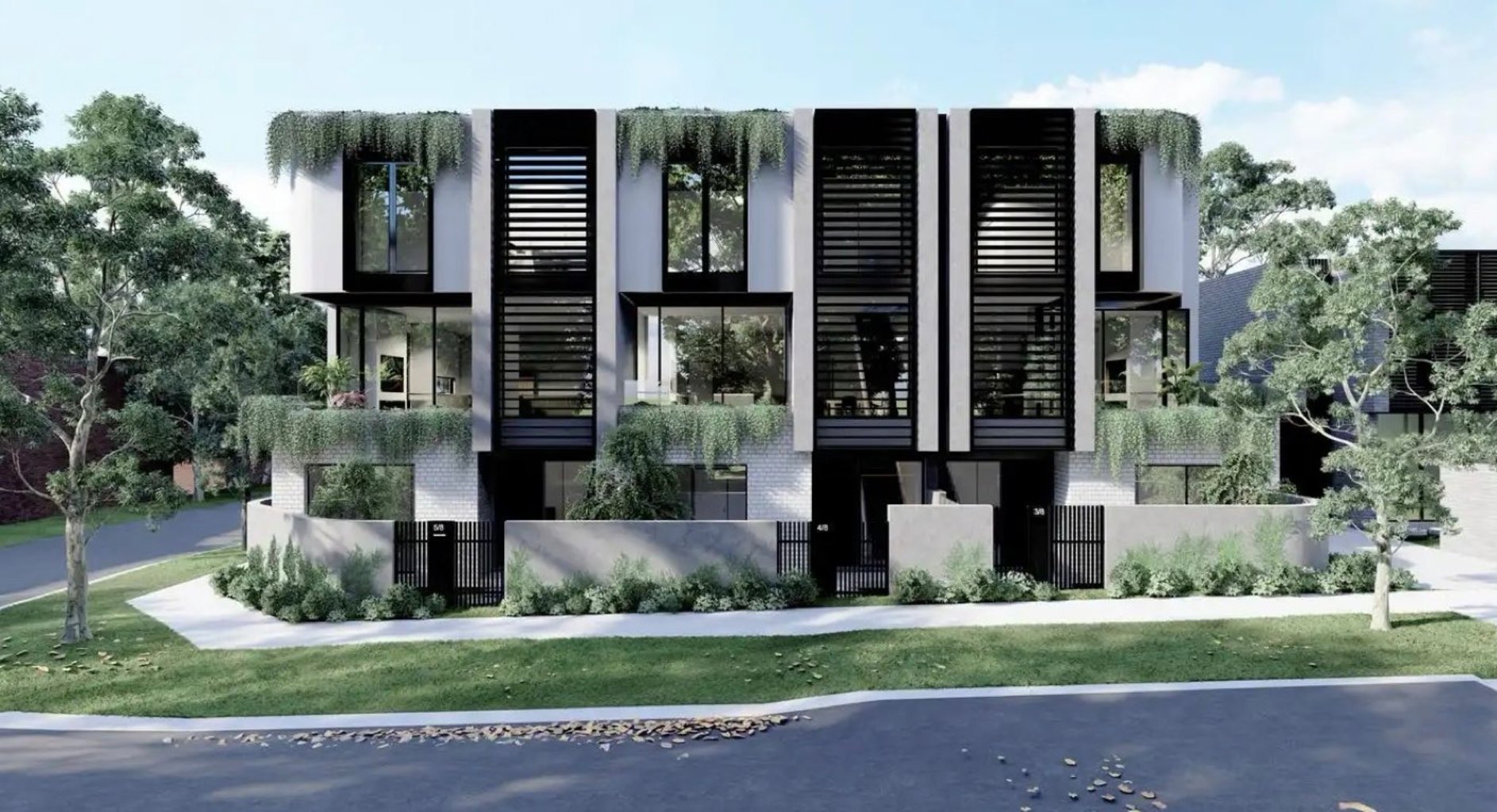
For a practical snapshot of what greater visibility delivers, David points to Arch10’s current North Road project in Melbourne’s Bentleigh East.
The development includes eight high-end townhouses on a former service station site, with extensive authority approvals, remediation work and multiple design revisions across several years in the making. For this type of project, shared visibility, document control, site diaries and workflow tracking are not optional extras. They are must-haves.
“North Road is a genuinely complex project that’s taken nearly five years in the design phase due to all kinds of site-specific challenges, but we have the systems and work under way now to deliver,” David says.
Arch10 had delivered projects of similar size before, but David says Procore gives the team a more connected way to manage the information and workflows that support delivery across their project portfolio.
“From a procurement perspective, we’ve done projects of similar size in the past and had our previous systems in place, so it’s not as though we couldn’t do it,” he says. “But this time will be different. Procore streamlines how we all work and improves the transfer of information, transparency and overall workflow across the entire project.”
For Arch10, this is where the value of connected systems becomes clear. Shared visibility across drawings, approvals, workflows and project records reduces the risk of information being missed as projects move from planning into delivery.
“Ultimately you just need a dashboard where you can see what’s going on and fill in the gaps or ramp up where needed,” David says. “We needed one umbrella to put it all under and that changes what’s possible both on and off site.”

Improved workflows, less chasing and more accountability
For Lesley, one of the biggest changes has been the ability to see where work sits across the business. Workflow functionality has quickly become one of the team’s most valuable tools because it makes responsibilities and next steps clearer.
“Whatever needs doing, Procore clarifies where the responsibility sits, whether that’s with the site manager, a trade or whoever it is,” Lesley says. “That’s something we can see and act on straight away.”
That visibility matters because even simple project actions can involve several people and steps. A change event on site, for example, may require a scope, pricing, approval and issue before work can move forward.
“You’d be asking, ‘Who’s got that? Where’s that at? What are we waiting on?’” David says. “Whereas now Lesley is the hub, we can all see the Procore dashboard and we know who’s holding the ball on all the issues.”
“One of the main benefits for us is being able to compare revisions and know everyone is looking at the right version,” Lesley adds. “That’s actually been amazing.”
For David, the time saving is another valued benefit.
“We had one project where a client uploaded 41 revisions and it was only a small residential project,” he says. “But with Procore, all the drawings go onto the repository and we can immediately look at what changed rather than having to trawl through every drawing hoping the architect marked the revisions.”
“Site photos are also easier to capture, upload and retrieve, giving both our team and clients better visibility of what’s happening on site at any given time,” David says. “One of our clients in Dubai likes to hop on and see what’s going on, and I don’t need all those extra site visits to make sure we have the right photos. There are real benefits and efficiencies there.”
Stronger systems for the next stage of growth

For Arch10, the move to Procore was all about strengthening and scaling a family business with solid foundations, clear processes and promising opportunities ahead.
“We were already in a good place with our planning, processes and data, so it was a smooth transition to level up,” Lesley says. “Procore helped us put the right systems in place to bolster what we already had and be in a position to scale.”
For businesses considering the same move, Lesley says the most important thing is to give people time to build confidence with the system.
“Rather than trying to implement everything at once, you can focus on building confidence and progressively introducing features as people become familiar with the system,” Lesley says. “Strong communication, leadership support, and a willingness to learn as you go help drive adoption and ensure you get the most value from the platform over the long term.”
As Arch10 grows, David sees user-friendly systems as increasingly important for supporting the team and building capability.
“When people in our team see that these sorts of systems are in place, it adds confidence that they’re in a place where things are done properly,” David says. “Key induction or project information isn’t just written down on a piece of paper and put in a folder on a shelf somewhere, or filed away in some spreadsheet that no one can see.”
That combination of confidence and systemisation is key as Arch10 looks to move into larger and more complex work.
“We definitely want to move the scale of our projects into a different range,” David says. “North Road’s probably where we set ourselves apart in that space between five and ten million dollar projects. That’s where we find our comfort zone at the moment, and using Procore tools now, we know we can and will go a lot further than that.”
“We chose Procore because we wanted to scale and expand into other industry sectors. To compete at that level and with larger outfits without it would be very difficult. So naturally, we saw Procore as the next step and really a prerequisite for scaling up.”
That ambition builds on the vision David and Daniel Filice set for the business from day one.
“When we named the business back in 2010, Daniel chose the arch because it’s the strongest geometric shape,” David says. “With the right team, systems and pipeline now in place, it continues to reflect the kind of business we’re building.”
With a stronger data foundation in place, Arch10 is already thinking about what comes next. Read how they're preparing for construction's AI future.
MYOB