
Real-time construction reporting: a guide for Australian construction teams

Last Updated Aug 30, 2026
Josh Krissansen
122 articles
Josh Krissansen is a freelance writer with two years of experience contributing to Procore's educational library. He specialises in transforming complex construction concepts into clear, actionable insights for professionals in the industry.
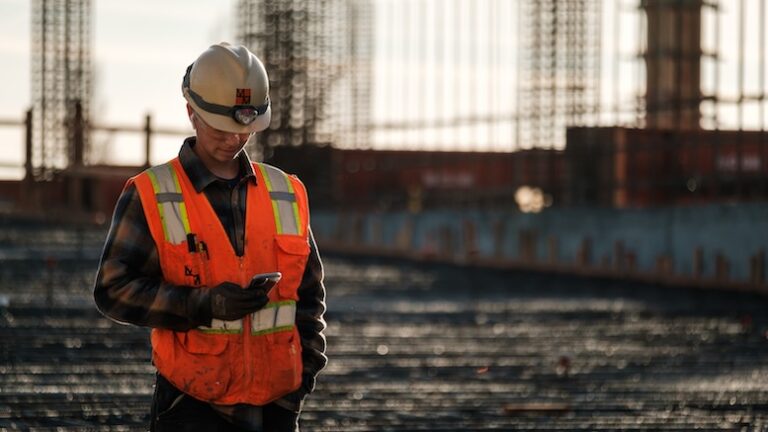
Real-time construction reporting is the continuous capture and delivery of project data, cost, schedule, safety, and progress, from the site to decision-makers. The key distinction is that the data is captured as the event takes place, rather than through periodic manual reports.
The change from periodic to real-time improves more than just reporting speed.
It changes how progress claims are substantiated, how variations and Extension of Time (EOT) claims are evidenced, and how project teams manage risk allocation under the contract.
In this article, we explain what real-time reporting involves in practice, how it differs from traditional reporting, what data it captures and how, and how project teams can implement it to strengthen both delivery control and commercial position.
Table of contents
What is real-time construction reporting?
Real-time construction reporting is the continuous, automated capture and delivery of project data as events happen on site, rather than batched into daily, weekly, or milestone reports.
Traditional construction reporting relies on site diaries, weekly status reports, and monthly stakeholder updates. Someone compiles these manually, and by the time they reach a decision maker, the information is already hours or weeks old.
Real-time reporting captures data at the point of activity. Mobile daily logs, sensors, access control systems, schedule updates, and cost actuals all feed directly into a shared system as the work happens, rather than sitting in someone's notebook or inbox until the next reporting cycle pulls it together.
What changes when reporting moves from periodic to real-time?
Moving from periodic to real-time reporting changes how fast information moves, how much weight it carries as evidence, who can see it, and who can dispute it.
- 1. Decision lag: Traditional reporting can create a gap of 24 to 72 hours between an issue occurring on site and a project manager finding out about it. Real-time reporting removes that lag altogether, so a delay, a safety incident, or a quality defect reaches the person who can act on it while there is still time to act.
- 2. Evidentiary quality: Traditional records are compiled after the fact from memory, photos, and notes, which means the record is only as reliable as whoever reconstructed it days later. Real-time records are timestamped and captured at the point of activity, and that timing is what determines how well they hold up when a claim is challenged.
- 3. Data flow: Traditional reporting moves in one direction, from site to office, on a fixed cycle. Real-time reporting moves continuously in both directions, and every party with permission sees the same information at the same time rather than waiting for the next scheduled update.
- 4. Accountability: When every trade and crew logs progress into a shared system as it happens, no single party can plausibly dispute what the system already shows. A subcontractor cannot later claim a delay was recorded differently, because the record was made at the time and is visible to everyone from that point on.
Real-time reporting strengthens contractual risk management
Better evidence changes a project team's position in every conversation, from progress claims through to variations, EOT claims, and dispute resolution.
Progress claims
Under AS 4000 and AS 2124, a progress claim must be substantiated with evidence of work actually completed, and an EOT claim must show the specific cause of delay and the period it affected.
The timestamped, point-of-activity record becomes the evidence a head contractor relies on to support a claim.
The same record also supports a payment claim under the applicable state or territory Security of Payment Act, since the statutory timeframes leave little room to reconstruct evidence after the fact. A superintendent or principal can reject a claim built on a site diary written up two days later, or a foreman's recollection of when wet weather actually stopped work.
Real-time reporting replaces that reconstruction with a record made at the time the work happened.
Variations and EOT
Real-time records of weather, access, authority delay, and site conditions let project teams demonstrate cause and effect for variation, and EOT claims as events occur, rather than reconstructing a timeline once the dispute has already started.
Data ownership
Real-time reporting generates a far larger and more detailed record than periodic reporting ever did, which makes the question of who owns that record, where it sits, and how it can be produced far more consequential than it used to be. A dispute is the point at which this matters most, and it is also the point at which a project team without a clear answer is least able to do anything about it.
Risk allocation
Real-time systems don’t change how the construction contract allocates risk, but they do change how well a party can prove what happened, and that has a direct effect on how confidently a party can manage risk under the allocation it already agreed to.
What data does real-time construction reporting capture?
Real-time reporting extracts from several sources across the project, pulling them together into a single reporting location.
Site-level data
Mobile daily logs covering labour hours, work completed by cost code, weather, and site conditions give a head contractor the granular record needed to support a progress claim line by line, rather than a broad assertion that work is "on track."
Sensor and equipment data
Environmental monitors, equipment telematics reporting location and utilisation, and access control systems logging time on site turn disputed claims about who was on site, and when, into a record the other party cannot contest without contrary evidence of their own.
Survey data
Drone and photogrammetry capture compares earthworks or structural progress against the design model. This matters most when a variation is disputed and both parties need an independent, dated record of quantities completed rather than competing estimates.
Project controls data
Schedule updates from the programme, RFI and submittal status, budget actuals from the accounting system, and quality inspection or defect data connect the commercial position directly to the programme, so a delay claim can point to the exact schedule activity affected rather than a general description of disruption.
Why these sources need to be connected
A progress claim built from a mobile log that never reconciles with the accounting system's cost actuals is still open to challenge, since the two records can be argued to show different outcomes. Real-time reporting only works as intended once every source feeds into one shared system.
Implementing real-time reporting on a project
These are the first steps to take to move from traditional to real-time reporting in commercial construction:
Audit the current reporting workflow
Map how long site data currently takes to reach the project manager, and identify where it gets lost, duplicated, or delayed along the way. This is the baseline that tells you what the new system actually needs to fix.
Define the metrics that matter
What number you're going to measure to track progress" is a roundabout way of saying "which metric to track. Choosing a platform first and working out what to track afterwards means the system ends up capturing data for its own sake rather than the figures that actually drive decisions.
Select a platform built for construction
Choose a platform built for construction cost codes and scheduling logic, not a generic business tool adapted to the industry. A platform that treats cost codes and schedule activities as an afterthought will always need workarounds that a construction-first system does not.
Integrate with existing systems
Connect the platform to the accounting system, scheduling tool, and document management system so cost, schedule, and site data share one source. A reporting tool that sits apart from these systems just adds a fourth place where the numbers can disagree.
Prioritise adoption on site
Frame the change to site teams as protection, not surveillance, and keep data entry to a few minutes at most. If entering data takes longer than that, or if crews see it as a way to catch them out rather than back them up, accuracy at the source will suffer, and the rest of the system inherits bad data.
Set a reporting cadence and escalation protocol
Define who receives what information, at what frequency, and what variance triggers an automatic escalation to the project manager or owner's representative. Without this, the data sits in the system unused instead of prompting the decisions it was collected to support.
Key risks and how to manage them
Real-time reporting introduces its own failure points. Most of them occur early, and can be avoided altogether with these controls.
Site adoption resistance
Site teams often read a new reporting tool as a way to catch them out rather than a way to run the job better. Left unaddressed, that reaction shows up as short answers in daily logs or crews logging the bare minimum, and once a site has decided the tool is a surveillance device, that view is hard to shift.
Address this directly during rollout.
Explain that the record protects the person entering the data as much as the business, since a timestamped log is the same evidence that backs up a foreman's account of a delay or a dispute over hours worked.
System fragmentation
A reporting platform that doesn’t talk to the accounting system or the scheduling tool creates a second version of the same information, recorded separately and open to disagreement.
Someone still has to manually reconcile the site record against the cost report, which reintroduces the same delay and risk of error the new system was meant to remove.
Confirm that integration before you choose a platform. Ask any vendor directly how their system connects to the accounting and scheduling tools already in use, and treat a vague answer as a reason to keep looking.
Over-collection without action
It’s easy to configure a system to capture everything it is technically capable of capturing, on the assumption that more data means better oversight.
In practice, when every metric gets equal weight, the ones that actually predict a schedule slip or cost overrun get lost in the noise, and the team reacts later than it would with a narrower set of numbers.
Instead, anchor the reporting structure to the KPIs that actually drive decisions on that project (schedule performance, cost performance, labour productivity, or safety incident rate) and expand only if a genuine gap in visibility shows up.
Evidentiary weight left unconfirmed
Teams commonly adopt a real-time system for its day-to-day visibility and only think about how the data behaves as legal evidence once a dispute is already underway. By then, questions about storage, timestamp reliability, and data ownership have no good time to be asked for the first time.
Confirm this upfront. Check how the vendor stores and timestamps data, who owns it under the contract with the vendor and the head contract, and what format it can be produced in if a dispute reaches adjudication or arbitration.
Real-time construction reporting turns site data into evidence a project team can actually rely on
Real-time construction reporting closes the gap between when something happens on site and when the people managing the project can see it and act on it. That shift strengthens progress claims, variations, and EOT claims, and gives project teams a clearer basis for managing risk under the contract they have already agreed to.
Categories:
Written by
Josh Krissansen
122 articles
Josh Krissansen is a freelance writer with two years of experience contributing to Procore's educational library. He specialises in transforming complex construction concepts into clear, actionable insights for professionals in the industry.
View profileExplore more helpful resources

Scaling with SIERA: Building for now and what comes next
SIERA Founder and Director Brent Thompson has always known that the right people, systems and hands-on approach are fundamental to scaling his business successfully. In Part 1, Brent and Head...
Getting Your Construction Data Ready for AI – What Every Business Needs to Consider Before Launching AI
This is the first of two articles. This part sets out the considerations: what clean and trusted data actually means, how to measure it, how the two systems most businesses...

The Contractor’s Guide to Concrete Inspections
Concrete: It’s the key building block of nearly every structure’s foundation — and it’s the world’s most widely used building material. For most head contractors, understanding how to assess concrete...

Computer-Aided Design (CAD): What It Is — and Why It’s Important
When most people envision a construction worker, they see a person at a construction site wearing a hard hat and a high-vis vest. Perhaps this person is putting up plasterboard,...