
Just in time delivery in construction: A guide for Australian project teams

Last Updated Aug 30, 2026
Josh Krissansen
122 articles
Josh Krissansen is a freelance writer with two years of experience contributing to Procore's educational library. He specialises in transforming complex construction concepts into clear, actionable insights for professionals in the industry.
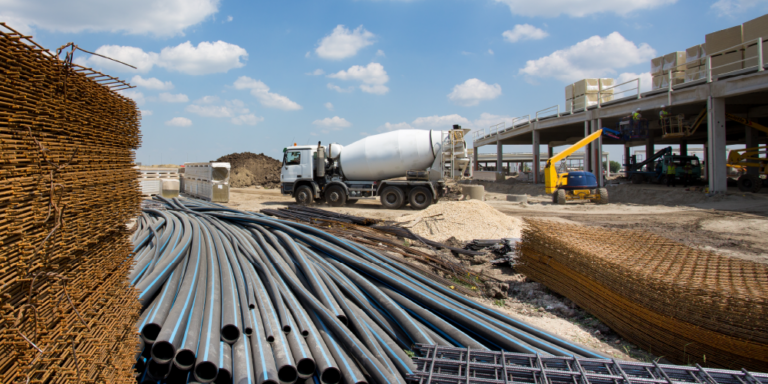
Just in time delivery is the practice of scheduling materials, plant, and labour to arrive on site at the point of installation rather than being stockpiled in advance.
On constrained commercial sites, stockpiling ties up cash, clutters limited laydown space, and exposes materials to damage and theft, meaning how delivery timing is structured carries cost and programme consequences.
In this article, we explain how JIT delivery works across scheduling, procurement, and site logistics, the risks it introduces on Australian commercial projects, and how project teams can plan and control it so that you can protect programme and cost outcomes.
Table of contents
What is just in time delivery in construction?
Just in time delivery is a method of scheduling materials, plant, and labour to arrive on site at the point of installation rather than being ordered and stored in advance. The approach originated in lean manufacturing and the Toyota production system, and has been adapted to construction procurement and site logistics.
Under a JIT approach, delivery timing is tied to the construction programme rather than to bulk order quantities or supplier convenience. Each delivery is scheduled against the date its trade needs it, so what arrives on site matches what can be installed.
JIT sits within lean construction, which works to cut waste from the build, including the time, labour, and storage spent holding materials on site before a trade needs them. This makes it distinct from the agile project management approaches used in other industries, which prioritise iterative delivery and adapting scope as work progresses.
How JIT delivery works across the construction programme
JIT depends on three functions operating as one system: the construction programme, procurement and purchase orders, and site logistics and access.
Each is a distinct area of control, but for JIT to work correctly, they need to work hand-in-hand, as a change in one moves the timing of the others.
- The construction programme sets the sequence of trades and the dates by which each package of work must be ready to start. It’s the reference point everything else is scheduled against.
- Procurement translates that sequence into purchase orders and supplier lead times, working backward from the date each material is needed rather than forward from when an order is placed.
- Site logistics then governs whether a delivery can actually be received and installed when it arrives, covering crane availability, hoist bookings, unloading access, and laydown space at that point in the programme.
Timing is driven by the lookahead programme, typically two to six weeks out, not the master programme, meaning deliveries are sequenced against the lookahead and shift as it is updated, rather than ordered in bulk against fixed master programme dates.
On multi-subcontractor projects, purchase orders and delivery windows need to be tied to trade sequencing so each delivery lands within the window a trade needs it, not simply within the week.
JIT only works when scheduling, procurement, and site logistics are managed together. Track them in separate systems and an update to one never reaches the others, so delivery timing falls out of sync with the work on site.
Benefits of JIT delivery for construction projects
Implemented well, JIT can reduce the cost, congestion, and risk that come with holding materials on site before they are needed.
Reduced site congestion and laydown requirements
Deliveries timed to installation can free up laydown space and reduce congestion, which matters especially on constrained urban CBD and infill commercial sites where laydown space is limited or unavailable.
Lower risk of material damage, theft, and deterioration
Materials held on site for extended periods are exposed to damage, theft, and weather. Reducing storage time cuts that exposure, which is of particular importance on open Australian sites where materials left in the yard face sun, rain, and humidity before they are installed.
Reduced double handling
Materials that go into storage before installation have to be moved twice, once into the yard and again to the point of work. Each move carries a labour cost, even if it isn’t in the budget. Delivering to the point of installation removes that second handling and the unplanned labour that comes with it.
Improved cash flow
Stockpiled materials tie up capital that sits unused until the work is ready. Ordering to the programme keeps that capital in hand for longer, so cash is committed closer to the point where the material is actually installed and claimed.
Schedule risk when JIT goes wrong
Aligning material delivery to the schedule is what removes the cost and congestion of stored materials, but it also removes the stockpile that acts as a buffer against a late delivery or a last-minute change in the programme.
That’s the trade-off at the centre of the JIT method. When timing fails, there is nothing held in reserve to fall back on, and the problems on site can cost more than bulk ordering would have in the first place.
On Australian commercial projects, that trade-off is sharpened by the contract. Under superintendent-administered standard-form contracts such as AS 4000, both the treatment of unfixed materials and the assessment of delay sit with the superintendent, and JIT changes what the contractor can claim under each.
These are the six risks that are associated with getting JIT wrong.
A single late delivery can cascade across trades
A late delivery can stall an entire trade sequence and flow into the trades that follow it. That risk is heightened on Australian commercial projects, where multi-subcontractor coordination is the norm rather than the exception, and one held-up trade delays every trade sequenced behind it.
Long lead times narrow the margin for error
Long lead times on imported materials are common on Australian projects and leave little room to recover once an order is missed or delayed. The further out a material has to be ordered, the harder it is to correct a timing error without stalling the work that depends on it.
Poor access coordination causes delay even when timing is right
Materials can arrive on the correct day and still cause delay if unloading access, crane availability, or site access has not been coordinated to receive them. This is a particular risk on constrained CBD sites with limited access windows, where a delivery that can’t be received on arrival holds up the work behind it.
Programme changes push materials back into storage
When a programme change means a delivery can no longer be installed on arrival, it goes into storage. That brings back the double handling and storage cost JIT was meant to remove, undermining the cost benefit the method is supposed to deliver.
JIT removes claimable value from progress claims
AS 4000 allows payment for unfixed plant and materials delivered to site but not yet incorporated into the works, subject to the conditions the contract attaches to them. JIT deliberately keeps those materials off site until installation, so there is less claimable value in the progress claim at each reference date under the relevant Security of Payment Act.
The cash committed on order therefore sits with the contractor for longer than it would under a stockpiling approach. Model the payment position across the lookahead before committing to JIT on a package, because the site efficiency gain and the cash position can pull in opposite directions.Supplier delay is rarely a qualifying cause of delay
Under AS 4000, an extension of time depends on the delay falling within a qualifying cause. Supplier failure and shipping delay on imported materials generally sit outside that definition, so the contractor carries both the time and the cost when a JIT delivery misses its window.
Stockpiling absorbs that exposure before it reaches the programme. JIT does not, which puts the superintendent's assessment of any EOT claim at the centre of the risk. Check the qualifying causes in your executed contract before you compress procurement float out of a package.
How to plan and control JIT delivery on your project
The risks above are manageable, but the controls have to be in place before work starts, not added once deliveries are already slipping. Here's how you keep scheduling, procurement, and site logistics aligned in practice, at the points where they usually come apart.
Schedule procurement against the lookahead programme
Align your procurement schedules and purchase orders directly against the lookahead programme, not the master programme alone. Working to the lookahead keeps order and delivery dates tied to the two to six week window where the sequence is firm, rather than to fixed dates set months earlier that no longer match the work.
Work backward from each need-by date, allow for the supplier's lead time, and reissue delivery dates each time the lookahead is updated so orders track the sequence as it actually firms up.
Set delivery and access requirements at award stage
Build delivery windows and site access requirements into subcontract packages at award stage.
Writing these terms into the package makes each subcontractor responsible for delivering within the window the programme allows, before crane time and access have already been committed elsewhere.
Spell out the delivery hours, the notice required to book a crane or hoist, and who the subcontractor coordinates with on site, so the obligations are priced into the package rather than argued over once trades are on the ground.
Keep scheduling, procurement, and logistics in one view
Keep the programme, purchase orders, and crane and access bookings in one place that everyone works off, so a change to one is seen by the people running the other two.
When scheduling sits in one spreadsheet, procurement in another, and the crane bookings on a whiteboard in the site office, a shift in the programme never reaches the people ordering materials or booking access, and delivery timing falls out of sync with the live sequence.
Hold a short delivery coordination meeting against the lookahead each week so the next fortnight of deliveries is checked against where the trades will actually be.
Assign ownership for delivery coordination
Assign clear ownership for delivery coordination on multi-subcontractor packages so a single missed delivery cannot cascade across trades unnoticed.
When one person is accountable for the delivery sequence across trades, a slipping delivery is caught and resequenced before it stalls the trades behind it. Name that person early, give them sight of every trade's delivery schedule, and make the confirmation of next week's deliveries their standing job rather than something split across separate subcontractors who only see their own scope.
JIT delivery can protect both programme and cost on commercial projects
JIT delivery only pays off when scheduling, procurement, and site logistics are held to the same live programme, because the method removes the stockpile that would otherwise absorb a late delivery or a change in sequence.
Build the controls in from the award stage, keep the three functions working off one view, and give delivery coordination a clear owner, so the cost and space savings do not come at the expense of the programme.
Categories:
Written by
Josh Krissansen
122 articles
Josh Krissansen is a freelance writer with two years of experience contributing to Procore's educational library. He specialises in transforming complex construction concepts into clear, actionable insights for professionals in the industry.
View profileExplore more helpful resources

Scaling with SIERA: Building for now and what comes next
SIERA Founder and Director Brent Thompson has always known that the right people, systems and hands-on approach are fundamental to scaling his business successfully. In Part 1, Brent and Head...

Getting Your Construction Data Ready for AI – What Every Business Needs to Consider Before Launching AI
This is the first of two articles. This part sets out the considerations: what clean and trusted data actually means, how to measure it, how the two systems most businesses...

The Contractor’s Guide to Concrete Inspections
Concrete: It’s the key building block of nearly every structure’s foundation — and it’s the world’s most widely used building material. For most head contractors, understanding how to assess concrete...

Computer-Aided Design (CAD): What It Is — and Why It’s Important
When most people envision a construction worker, they see a person at a construction site wearing a hard hat and a high-vis vest. Perhaps this person is putting up plasterboard,...