4D BIM: Integrating time into construction planning

Last Updated Apr 27, 2026
Josh Krissansen
122 articles
Josh Krissansen is a freelance writer with two years of experience contributing to Procore's educational library. He specialises in transforming complex construction concepts into clear, actionable insights for professionals in the industry.
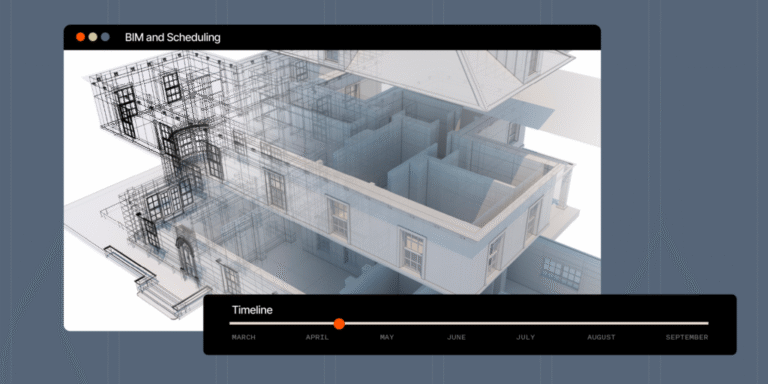
BIM programmes can look solid on paper, but sequence risk often isn’t properly tested until work is about to start on site.
Traditional programme tools show dates and durations, but they do not reveal access constraints, trade stacking, crane availability, or logistics conflicts that determine whether work can actually flow on site. Those construction risks typically come up only once crews and plant are committed, when changes are expensive and disruptive.
4D BIM links the programme to the model, so time, space, and sequence are tested together.
This exposes sequencing issues early, while adjustments are still practical and cost-effective, and before delay, rework, and recovery pressure impact margin. It turns the programme from a planning assumption into an active delivery control.
In this article, we explain how 4D BIM integrates time into construction planning, where traditional programmes fall short, and how Australian project teams use 4D workflows to reduce sequencing risk before construction begins.
Table of contents
What is 4D BIM?
4D BIM adds time to a 3D building information model by linking building objects to programme activities. Each element in the model is tied to a specific task, duration, and sequence so teams can see not just what is being built, but when and in what order.
This link is typically created and maintained across clear roles:
- The VDC or BIM manager manages the model and activity connections
- The scheduler owns the programme logic and updates
- The site team, led by the superintendent, uses the 4D output to understand sequence, access, and workflow before and during construction
3D BIM vs. 4D BIM
Time is the key distinction between 4D and 3D BIM.
3D models identify spatial clashes, such as services intersecting structures. 4D BIM shows when those clashes occur in the programme and whether they can be resolved through sequencing, temporary works, or access changes.
This makes 4D BIM a planning and delivery tool, not just a coordination exercise, and places it early in the project lifecycle where sequencing decisions still have leverage.
4D BIM Benefits for Scheduling and Field Coordination
When time, model, and site data stay connected, teams make faster decisions and align labour, plant, and space to the actual build order. Office and site teams work from the same sequence, not parallel interpretations.
Research supports this move. Peer-reviewed studies on BIM and construction logistics show that 4D coordination improves understanding of logistics, site efficiency, layout planning, and safety outcomes, while reducing waste through more integrated planning.
Visual Sequencing for Faster Consensus
Animated sequences show how the project is intended to be built, not just when activities are scheduled. This makes complex methodologies easier to test than bar charts or layered drawings, particularly on constrained commercial sites.
Owners, contractors, and trades can review the same visual sequence and address differences early. That reduces gaps between planning intent and what happens on site and shortens coordination cycles by resolving sequencing questions visually rather than through lengthy RFI exchanges.
Risk Analysis for Safer Jobsites
4D BIM reveals when risks emerge during construction, not just where they exist. Time-based sequencing highlights conditions such as crane overlap, temporary edge protection gaps, congested work zones, and concurrent high-risk activities that only occur at specific stages of the build.
This allows safety planning to move with the sequence rather than rely on static drawings.
Australian research into BIM and WHS planning shows that using BIM from early project phases supports earlier identification and analysis of construction safety risks, enabling preventative controls before crews are exposed. The result is fewer reactive responses caused by late programme changes.
Resource Planning For Improved Productivity
Sequence-driven planning clarifies when trades arrive, how long they need access, and where work occurs. Crane time, hoists, and laydown areas can be planned against the actual build order rather than assumed availability.
This prevents crews from waiting for access due to untested sequencing assumptions and reduces rework caused by out-of-sequence installations. It also supports more reliable short-term planning on active sites, where daily decisions depend on whether space, plant, and labour can work together as planned.
4D BIM Workflow and Common Applications
4D BIM workflows start with a reliable construction programme and coordinated design models.
The programme and model are linked to simulate the build sequence over time and tested for access, logistics, and constructability. As work progresses, the model is updated to reflect actual conditions, keeping the sequence credible as the project evolves. The real value lies in focusing on high-risk scopes rather than modelling every activity in detail.
Common applications for the following workflow include:
- Structural steel erection
- Complex services coordination
- Site logistics and crane planning
- Phased handover or staged occupancy
Build The Baseline Programme
A credible 4D model depends on a credible programme. Define the work breakdown structure, logic, durations, and key milestones before any model linkage begins. Validate the sequence early with input from the site team, especially around access, temporary works, and trade interfaces.
The programme should be treated as a live delivery control, not a contractual formality, because weak logic or unresolved dependencies carry straight into the 4D model and quickly erode confidence in the outputs.
Link Model Elements to Activities
Model elements are assigned to programme activities using consistent naming conventions and shared standards. Links should be created only where sequencing risk or logistics complexity justifies the effort.
These links must be maintained as design and programme changes occur. Poor standards or unmanaged revisions lead to broken links, outdated sequences, and loss of trust in the model.
Plan Site Logistics and Crane Access
4D BIM allows teams to visualise deliveries, laydown areas, temporary works, and crane movements over time. This allows testing whether access routes, swing paths, and staging areas remain viable as the build progresses.
Conflicts such as blocked laydown zones or crane overlap can be identified and resolved before mobilisation. This is particularly valuable on constrained urban sites and projects with staged construction.
Sequence Structural Steel Installation
Sequencing errors at this stage cascade quickly through the programme. Steel members or zones are linked to testing lift order, crane capacity, and access constraints.
The sequence can then be checked against weather exposure, stability requirements, and downstream trade impacts. This reduces the risk of early sequencing errors that later drive critical path delays.
Challenges With 4D BIM and How to Reduce Risk
4D BIM breaks down when data is fragmented, ownership is unclear, or links fail during handoffs.
The most common failure points are siloed information, capability gaps across teams, and the loss of model-to-programme linkage. These are operational problems. They are resolved through cadence, training, and standards, not better visuals.
Siloed Information and Outdated Models
Programmes, models, and site information often sit in separate systems. When programme changes are not reflected in the model quickly, the 4D view drifts from reality. Once that happens, teams stop trusting it and revert to bar charts and ad hoc coordination.
Risk is reduced by setting a regular update cadence that includes planning, VDC, and site leadership. Treating the 4D model as a live delivery tool, supported by a shared source of truth, ensures approved changes flow through the programme and model together.
Skill Gaps Across Project Teams
VDC teams understand modelling. Planners understand programme logic. Site teams understand buildability and constraints. 4D BIM fails when these perspectives are not aligned.
Australian research into BIM adoption highlights limited organisational capability, uneven digital skills, and low digital maturity as barriers to deeper BIM use, including advanced workflows that link workforce scheduling data. When these gaps persist, the model remains technically correct but operationally disconnected.
Risk is reduced by assigning clear ownership for maintaining the 4D model and providing targeted training for site leadership focused on interpreting sequences rather than authoring models. Field-friendly viewers allow site teams to interrogate the sequence without specialist software or skills.
Data Loss Between BIM and Scheduling Tools
Linkages commonly break during exports, renaming, or version changes. Inconsistent standards across consultants and subcontractors increase rework and erode confidence. Teams spend time repairing links instead of using the model to manage delivery risk.
Risk is reduced by enforcing consistent naming conventions and handoff rules from the outset. Defining interoperability requirements in the BIM execution plan and limiting unnecessary tool changes helps prevent data degradation and broken links.
4D BIM vs 5D and Other BIM Dimensions
BIM dimensions add different data layers to the same model, with each layer serving a specific delivery purpose.
These dimensions build on one another. They do not replace each other. Without a reliable programme and tested sequence, later dimensions lose accuracy and credibility.
4D BIM: The time dimension
4D BIM links the 3D model to the construction programme. This allows teams to test whether the planned sequence can actually be built on site.
By visualising time and space together, 4D BIM exposes access constraints, logistics conflicts, trade stacking, and crane limitations before mobilisation. This supports sequencing decisions that protect programme certainty and reduce recovery risk during delivery.5D BIM: The cost dimension
5D BIM connects quantities and rates to model elements to support estimating, change analysis, and cost optimisation. Its accuracy depends on understanding when work occurs, not just what is built.
Without 4D, cost forecasts lose their timing context. Cash flow curves, progress payment schedules, and change impacts are harder to validate because the sequence that drives when costs are actually incurred isn’t clear.6D BIM: Sustainability and performance
6D BIM adds data related to energy use, carbon performance, and asset efficiency. It supports compliance with NCC energy requirements and broader sustainability targets.
Construction sequence matters here. Installation timing, temporary conditions, and staging all influence performance modelling. Without a reliable 4D foundation, sustainability modelling reflects design intent rather than actual construction conditions.7D BIM: Facility and asset management
7D BIM extends the model into operations and maintenance. It captures asset data for handover, warranties, and lifecycle planning.
The quality of this data depends on how well the model is maintained during construction. Gaps created by poor sequencing control or unmanaged changes persist in operations, reducing long-term asset value.
Why 4D Comes First
The sequence determines when work occurs, when costs are incurred, and when assets are installed. Reliable scheduling data gives context to cost control, sustainability outcomes, and lifecycle performance.
Teams that skip 4D often struggle to realise value from later BIM dimensions. Programme certainty is the gateway to effective cost management and long-term asset performance.
4D BIM turns time from an assumption into a delivery control
4D BIM integrates time into construction planning by linking the programme to the model, allowing teams to test sequence, access, and logistics before work starts on site.
When applied to high-risk scopes and maintained as a live tool, 4D BIM improves programme certainty, reduces delivery risk, and protects margin across Australian commercial projects.
Categories:
Written by
Josh Krissansen
122 articles
Josh Krissansen is a freelance writer with two years of experience contributing to Procore's educational library. He specialises in transforming complex construction concepts into clear, actionable insights for professionals in the industry.
View profileExplore more helpful resources

Scaling with SIERA: Building for now and what comes next
SIERA Founder and Director Brent Thompson has always known that the right people, systems and hands-on approach are fundamental to scaling his business successfully. In Part 1, Brent and Head...
Getting Your Construction Data Ready for AI – What Every Business Needs to Consider Before Launching AI
This is the first of two articles. This part sets out the considerations: what clean and trusted data actually means, how to measure it, how the two systems most businesses...

The Contractor’s Guide to Concrete Inspections
Concrete: It’s the key building block of nearly every structure’s foundation — and it’s the world’s most widely used building material. For most head contractors, understanding how to assess concrete...

Computer-Aided Design (CAD): What It Is — and Why It’s Important
When most people envision a construction worker, they see a person at a construction site wearing a hard hat and a high-vis vest. Perhaps this person is putting up plasterboard,...