Using AI for Construction Drawings: Benefits & Trends

Last Updated Nov 17, 2026
Samantha Nemeny
37 articles
Sam has spent a decade in content marketing, with eight years focused on Australia’s construction industry. She has a knack for making complex ideas easy to understand, turning industry jargon into clear, engaging stories. With a background in SEO and marketing, she’s spent the past four years at Procore, helping industry professionals navigate the world of construction with content that’s both insightful and easy to digest.
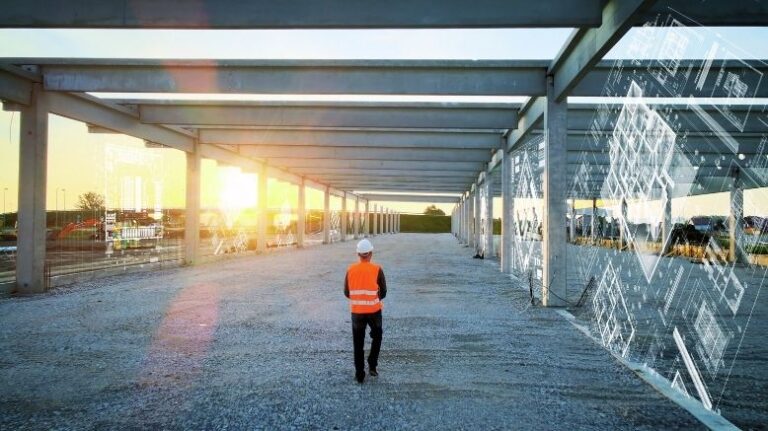
Using AI for construction drawings can provide real-time interpretation of architectural designs to improve planning and coordination.
This article examines the challenges and transformative potential of AI in construction drawings, including AI’s ability to enhance efficiency and accuracy while also addressing integration challenges and future trends, like AI-powered 3D printing.
Table of contents
Why use AI for construction drawings?
From automating mundane tasks to providing deep insights from complex data, AI is already changing the way projects are planned, executed and managed. By analysing data and offering instant feedback, AI can automate tasks that would typically require input from professionals, allowing them to address these issues before construction begins.
Utilising AI for construction drawings gives project teams a real-time view of architectural plans, quickly analyses data, automates repetitive tasks and even optimises drawings for sustainability and cost.
Plus, integrating of AI with tools like Building Information Modeling (BIM) enhances collaboration and efficiency. While AI applications in drafting, clash detection and design optimisation reduce errors and improve sustainability, challenges such as initial investment and integration complexity remain.
Yet, AI is a potent force that is accelerating change in the industry, providing undeniable time savings and financial benefits.
3 Key Challenges of Using AI for Construction Drawings
The current challenges of using AI in construction drawings revolve around managing large drawing sets, mitigating errors that lead to time-consuming manual delays and finding the right balance between human and AI creativity.
1. Large sets of drawings can have too much data.
As the complexity of modern construction projects increases, AI can interpret the extensive drawing sets required. However, large data volumes can overwhelm generic AI, impacting efficiency and even minor misinterpretations can result in costly errors, delays or compliance issues.
2. Errors can cause substantial delays.
While AI can expedite many processes, errors in algorithms or data interpretation can still occur, necessitating manual intervention that can delay project timelines.
A minor oversight in an automated workflow can lead to inconsistencies, resulting in inaccuracies in cost estimates, material orders or timelines. This is why the human element, and verifiable source citations back to the original drawing sheets remains critical when working with AI.
3. Human and machine hours can stack.
Blending AI's capabilities with human creativity remains a delicate task, as making sure that AI enhances rather than stifles innovation and creativity is challenging. Plus, any error by humans or automation can lead to a trail of problems and a domino effect of delays. Poor or inadequate input data can lead to incorrect predictions, unintended biases and even "hallucinations" that mislead decision-makers.
Read More: How AI Agents are Transforming Construction
Benefits of AI for Construction Drawings
Leveraging AI in construction drawing offers significant advantages, boosting precision, enabling data-informed decision-making and collaboration while reducing costs and risks.
AI can significantly boost project efficiency and accuracy by automating repetitive tasks like drafting and revisions, which can accelerate project timelines. This automation also helps to improve precision in designs by minimising human error, resulting in higher-quality outcomes and fewer costly mistakes during construction. This frees up architects and engineers to focus on more innovative design solutions and take a more creative approach to their work.
Another key benefit of using AI during the design phase is the way it enhances team coordination and communication. AI tools can help teams collaborate seamlessly by providing real-time updates and insights, which keeps everyone aligned and informed throughout a project. Purpose-built construction AI agents can also cross-reference plan details directly against specifications, reconciling drawings against spec requirements, flagging missing call-outs and surfacing scope gaps before trade site teams begin work. Additionally, AI can use predictive analytics to identify potential structural issues or safety hazards, prompting proactive solutions that reduce or prevent on-site problems.
5 Automated Technologies to Use With Construction Drawings
AI system features have numerous applications when working with drawings and documentation on a construction project.
Machine Learning
AI systems utilise feedback from previous projects, both positive and negative, to refine construction plans, leading to more efficient and practical designs.
Computer Vision
This deep learning technology allows AI to scrutinize blueprints and 3D models, identifying potential mistakes and inconsistencies in specifications and dimensions.
Chatbots and AI Agents
AI Agents facilitate real-time communication of changes made to drawings or designs by architects or engineers, while cross-referencing plan details against specification clauses and delivering cited source links so site teams stay informed and up to date.Generative AI
Generative AI can help automate design tasks by generating multiple design options. The best design is selected based on factors such as cost, materials and environmental considerations.
Natural Language Processing (NLP)
Enables the extraction of data from extensive sets of plans, specifications and written communications, allowing teams to scan for relevant information on any query quickly.
Current & Future Trends for Using AI for Construction Drawings
With the rising advancements in machine learning and automation, integrating AI into workflows can improve overall team efficiency for construction companies seeking to remain competitive. Recent advancements include the following:
Faster Drawing Rendering
Machine learning enables quicker rendering of blueprints, reducing the time from conception to execution and allowing for rapid iterations.
Enhanced Document Processing
AI automates document handling, streamlining tasks such as data extraction and organisation, which accelerates the workflow and minimises human error.
Seamless Integrations
AI tools are increasingly integrating with construction management software, enhancing interoperability and making it easier for teams to adopt and benefit from AI technologies.
Improved Collaboration
AI facilitates better collaboration by providing real-time updates and insights, enabling teams to work more cohesively across different phases of a project.
There are several possibilities for trends in the near future as well: The future of construction drawings is poised for transformative advancements such as AI-powered 3D printing, which is set to change how structures are built, allowing for rapid prototyping and construction with unprecedented precision and efficiency.
Predictive design creation could become a reality, where AI systems autonomously generate optimised design solutions based on vast datasets, factoring in elements such as cost, sustainability and structural integrity.
Moving Construction Documentation Forward
In addition to new applications for the technology, seamless AI software integrations will likely become standard, providing more cohesive workflows and enhancing collaboration across various platforms and teams. However, the knowledge and judgement of construction professionals remain necessary to shape how these technologies are used and avoid the pitfalls and confusion that unverified AI can cause.
As these technologies evolve, construction teams must adapt to the increasing pace of automation. Embracing these changes requires shifts in workforce training, investment in purpose-built tools and a willingness to innovate traditional processes. By doing so, the construction industry can fully harness the potential of AI—catching plan conflicts early, protecting margins and driving future projects towards greater efficiency, safety and quality.
Categories:
Written by
Samantha Nemeny
37 articles
Sam has spent a decade in content marketing, with eight years focused on Australia’s construction industry. She has a knack for making complex ideas easy to understand, turning industry jargon into clear, engaging stories. With a background in SEO and marketing, she’s spent the past four years at Procore, helping industry professionals navigate the world of construction with content that’s both insightful and easy to digest.
View profileExplore more helpful resources

Scaling with SIERA: Building for now and what comes next
SIERA Founder and Director Brent Thompson has always known that the right people, systems and hands-on approach are fundamental to scaling his business successfully. In Part 1, Brent and Head...
Getting Your Construction Data Ready for AI – What Every Business Needs to Consider Before Launching AI
This is the first of two articles. This part sets out the considerations: what clean and trusted data actually means, how to measure it, how the two systems most businesses...
The Contractor’s Guide to Concrete Inspections
Concrete: It’s the key building block of nearly every structure’s foundation — and it’s the world’s most widely used building material. For most head contractors, understanding how to assess concrete...
Computer-Aided Design (CAD): What It Is — and Why It’s Important
When most people envision a construction worker, they see a person at a construction site wearing a hard hat and a high-vis vest. Perhaps this person is putting up plasterboard,...