Most people think the future is being built in code.
That’s only part of the story.
It’s being built on jobsites—by the people wiring, welding, and assembling the infrastructure that makes everything else possible.
And this week, that work is in focus.
From April 6 – 10, construction is celebrating National Careers in Trades Week, led by SMACNA, SMART, and the International Training Institute (ITI), alongside a growing coalition of industry organizations working to expand awareness of trade careers.
The goal is simple: bring visibility to the many career opportunities building the infrastructure our communities — and our economy — depend on.
That recognition comes at a critical moment.
Demand is surging. Workforce pipeline is lagging.
Artificial intelligence is fueling the need for advanced facility builds like data centers and power systems at a scale and pace we’ve never seen before. But while AI dominates headlines, the constraint isn’t computing power — it’s the workforce required to build the physical infrastructure that supports it.
Sheet metal workers are building airflow and cooling systems. Electricians are installing complex power systems. Mechanical and plumbing trades are connecting the systems that make these facilities operational.
In other words, the AI boom doesn’t build itself. People do.
Companies are expected to invest nearly $7 trillion in data center infrastructure by 2030. To meet that demand, the industry needs more than 600,000 new workers each year—roles that are not only essential, but increasingly well-compensated, with median wages exceeding $58,000 and continuing to rise as demand outpaces supply.
This isn’t just a labor shortage — it’s a market signal. Demand is rising, wages are increasing, and the value of skilled work is being redefined in real time. Unfortunately, too often, students don’t see a clear path into the trades to help fill that labor gap.
But the reality is: There has never been a better time to build a career in the trades.
The trades renaissance is here.
Recent research is beginning to reflect what construction already knows.
As AI reshapes many white-collar roles, skilled trades are not being displaced in the same way. Instead of replacing work, AI is unlocking new capacity for the trades—helping make teams more efficient, more informed, and better equipped to manage growing complexity. While digital roles may face disruption, the work of building, installing, and maintaining physical infrastructure remains fundamentally human — augmented by technology, not replaced by it.
What we’re seeing isn’t just demand—it’s a revaluation of the trades. The work hasn’t changed. But the world around it has.
It’s one of the clearest signals yet that the value of the trades is increasing. Careers in construction, as SMACNA likes to say, are “abundant, in demand, and projected to stay that way.”
This shift is driving renewed interest in skilled trades among Gen Z, the “toolbelt generation.”
In fact, 75% of teens say they would consider a career in the trades over college when they understand the earning potential, benefits, and long-term opportunities these paths provide.
These careers offer strong wages, long-term stability, and a path to meaningful work — often without student debt, and with a faster path to homeownership and long-term financial security.
More importantly, they offer something increasingly rare: the opportunity to build something real and lasting in a world that feels increasingly digital and fleeting.
For an industry often misunderstood by the public as antiquated, this is an opportunity to show the reality of a workforce leveraging advanced technological tools, data, and AI — a modern workforce literally building the future.
But interest alone isn’t enough.
Turning interest into real pathways
Meeting the demands of the future will require continued investment in workforce development and creating clearer pathways into the trades.
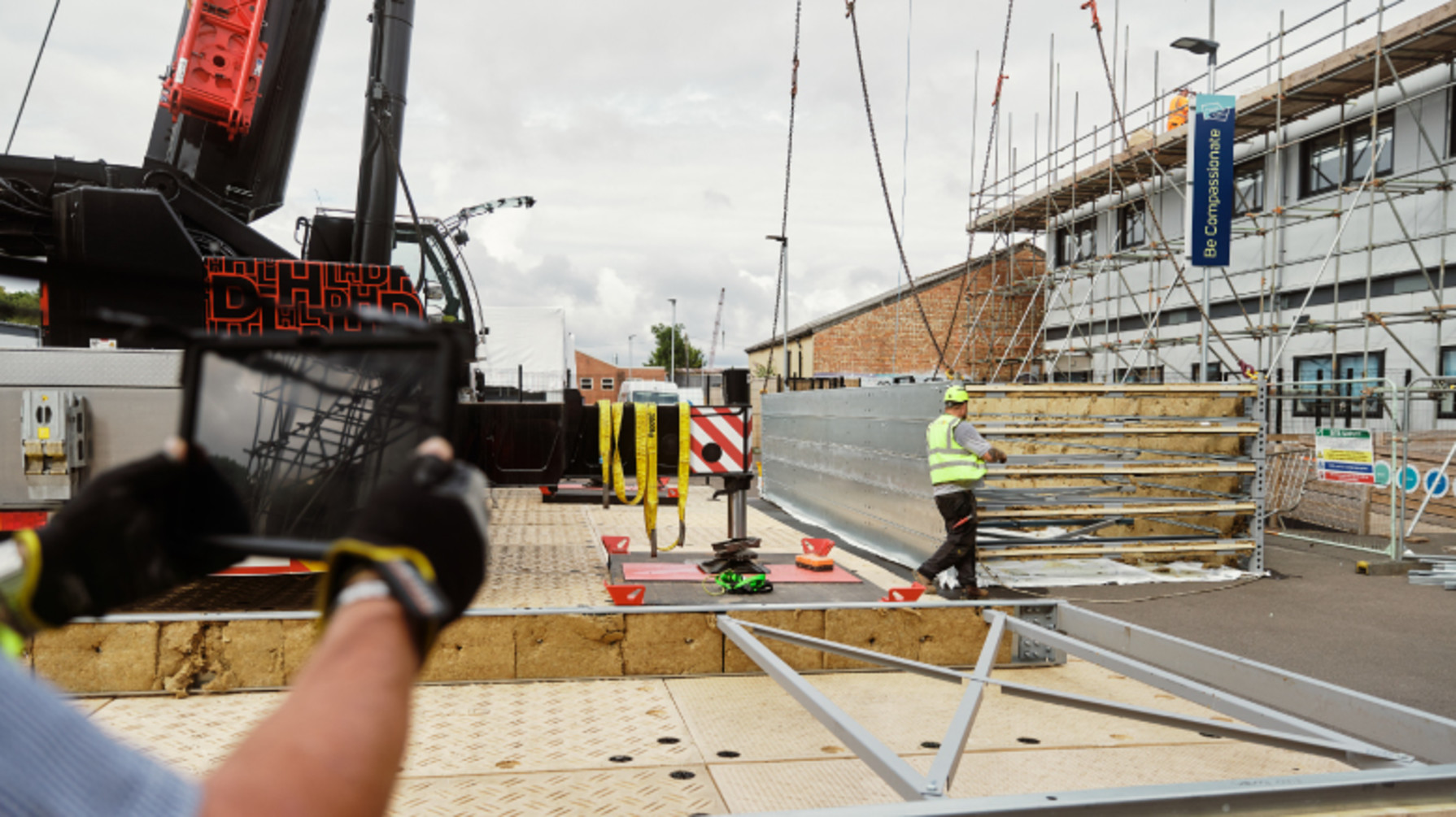
Programs like the Heavy Metal Summer Experience (HMSE) are bringing those pathways to life. Through hands-on learning, mentorship, and jobsite exposure, students get a firsthand look at what a career in construction can be.
For many, it’s the first time they see the trades not just as a job—but as a long-term, meaningful career.
And what they discover reflects how much the industry has evolved.
Today’s jobsites are collaborative, technology-enabled environments that require coordination, problem-solving, and digital fluency alongside craft expertise. The next generation of builders won’t just work with tools—they’ll work with data, systems, and connected platforms that help teams build more efficiently and with greater confidence.
The next challenge: Building better together
Meeting the demands of the future will require stronger alignment between education, training, and the realities of the jobsite — but also something less visible and just as important: cultural readiness.
Because the challenge isn’t just bringing in new workers or introducing new technology: It’s making sure teams are ready — and supported — to change how they work. Technology alone doesn’t drive outcomes. Team culture does — whether people are open to change, aligned in how they work, and supported through it.
At Procore, our focus is on helping the industry stay connected — so teams can coordinate more effectively, reduce friction, and turn shared experience into better training, safer jobsites, and stronger performance.
“The most sophisticated AI is powerless without the skilled hands required to build the physical world it lives in. We have to stop viewing the 'digital' and 'physical' worlds as separate entities; the workforce is the bridge between the two. This 'Trades Renaissance' isn't just about picking up a wrench — it’s about a new generation of builders who use data and technology to solve complex physical problems at a scale we’ve never seen. At Procore, we believe the industry’s success depends on ensuring these teams are connected and empowered, because the pace of innovation will always be dictated by the strength, digital fluency, and readiness of the people on the jobsite.”
– Irish Horsey, PhD, Director of Industry Advancement, Procore Technologies
Now, the most valuable resource on any jobsite isn’t just labor — it’s the experience behind it, and how well that institutional knowledge is shared across teams. As demand accelerates, the challenge isn’t just building more — it’s building better, together. That will require a workforce that is connected, adaptable, and ready to work in new ways.
Because while AI may power what’s next, it’s builders — and how well they work together — who make it possible.
Learn more about National Careers in Trades Week and Heavy Metal Summer Experience
Written by

Director of Industry Advancement, Procore
Tags
Wachsen Sie noch heute mit Procore
Unsere Tools machen jeden Teil Ihrer Prozesse menschlicher und unser Support-Team steht Ihnen engagiert zur Seite. Sie werden sehen, es war noch nie so einfach, ein neues Projekte zu starten.