
Types of Construction Delays in Projects

Last Updated Mar 26, 2026
Josh Krissansen
122 articles
Josh Krissansen is a freelance writer with two years of experience contributing to Procore's educational library. He specialises in transforming complex construction concepts into clear, actionable insights for professionals in the industry.
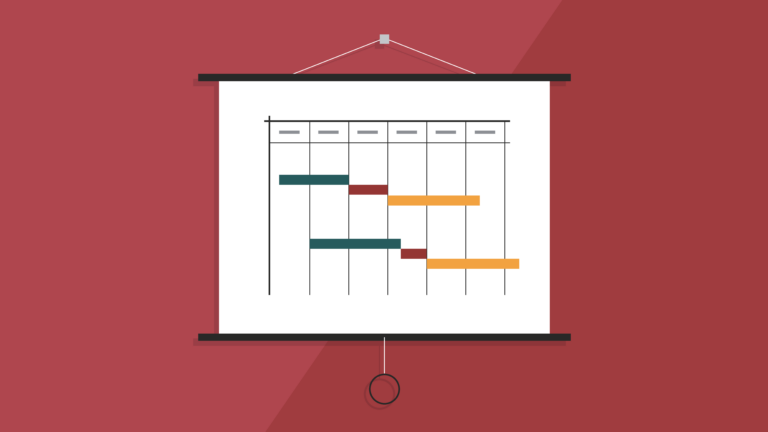
When a project is delayed, the party that ultimately carries the cost and the schedule impact depends on how the delay is classified.
Under Australian construction contracts, delays are classified based on responsibility and impact. That classification determines whether a contractor receives time relief, can recover delay costs, and where schedule risk ultimately sits.
When delay types are misunderstood or misapplied, contractors can lose contractual protections and take on delay exposure the contract never intended them to carry.
In this article, we break down the main types of construction delays recognised under Australian contracts, explain how classification affects entitlement and liability, and show why a solid understanding of delay types, why they occur, and who’s responsible is necessary for making early decisions, protecting claims, and reducing dispute exposure.
Table of contents
What are the Different Types of Construction Delays?
Construction delays are categorised by their impact on the project timeline and by entitlement to time relief or cost recovery
Australian contracts may also refer to principal-caused delays or neutral delays rather than using excusable or owner-caused terminology.
How something is classified directly affects whether a party can obtain a time extension, avoid liquidated damages, or recover extra costs. If delays are classified incorrectly, you can lose rights you’re entitled to or end up facing claims you could otherwise avoid.
Critical vs Non-Critical Delays
A critical delay affects an activity on the critical path, extending the project completion date. A non-critical delay impacts activities with available float but doesn’t affect the practical completion date.
A delay is considered critical based on the project’s position in the timeline.
As float is consumed by earlier delays, activities that were previously non-critical can become critical. Only delays that affect the critical path justify an extension of time. Non-critical delays do not support EOT claims, even where the underlying cause is excusable or compensable.
For example, a two-week delay to façade installation may initially be non-critical because internal fit-out activities still have available float. If earlier weather delays consume that float, the same façade delay can later sit on the critical path and extend practical completion. In that scenario, only the portion of the delay that impacts the critical path at the time it occurs would support an extension of time.
Courts and arbitrators rely heavily on an analysis of the project schedule using the programme at the time the events occurred, not one recreated later, in hindsight, to determine whether a delay affected the critical path at the time it occurred. This is referred to as contemporaneous programme analysis.
Excusable vs Inexcusable Delays
Excusable delays arise from events beyond the contractor’s reasonable control and without contractor fault. Inexcusable delays result from contractor-controlled causes, inadequate planning, or subcontractor default.
Common excusable causes on Australian projects include:
- Cyclones, floods, earthquakes, and other force majeure or exceptional event provisions under the contract
- Exceptional adverse weather for the region and season
- Latent site conditions not identified in contract and project documentation
- Principal-directed variations or late approvals
- Failure by the principal to provide site access
Common inexcusable causes include:
- Late mobilisation or inadequate resourcing
- Poor workforce scheduling or project management
- Subcontractor performance failures
- Defective work requiring rework
- Late submission of shop drawings or permits
Excusable delays relieve the contractor from liquidated damages through an extension of time. Inexcusable delays expose the contractor to liquidated damages and, in some cases, contractual or directed acceleration.
Compensable vs Non-Compensable Delays
Compensable delays entitle the contractor to both time and money. Recoverable costs may include extended preliminaries, site overheads, standing labour, and equipment hire.
Non-compensable delays provide either time relief or none at all, depending on the contract.
Neutral events such as weather or industrial action may be excusable but non-compensable, depending on the source and contractual treatment. Some contracts include no damage for delay clauses that restrict cost recovery for delay, subject to carve-outs and prevention principles recognised under Australian law.
Compensability directly informs commercial negotiation strategy and claim preparation, particularly where entitlement is contested.
For example, a delay caused by a principal-directed design change may entitle the contractor to an extension of time and recovery of extended site overheads and preliminaries. By contrast, a delay caused by unusually severe weather may only provide time relief, with no entitlement to delay costs.
Concurrent Delays
Concurrent delay occurs when two or more independent delay events overlap.
These situations commonly involve a combination of contractor-caused and principal-caused delays, making entitlement to time and cost highly contested.
A principal-issued design change might delay structural works while the contractor experiences labour shortages on site. Although both events overlap, entitlement depends on whether one delay is shown to be dominant or whether responsibility is shared during the same period.
Australian disputes involving concurrency often require forensic schedule analysis to establish causation and entitlement. Common approaches include granting time but denying cost recovery, apportioning time and cost between parties, or applying a dominant cause assessment.
Accurate documentation of delay start dates, duration, and the impact on the critical path is essential to defend or prosecute concurrent delay claims.
How to Manage Construction Delays
Effective delay management combines contractual compliance, programme control, and real-time site evidence. When delays are unmanaged, they quickly convert into schedule pressure, cost overruns, lost entitlements, and margin erosion.
On large Australian projects, where schedule and cost pressures frequently escalate together, time risk is almost always a form of money risk. In 2023 to 24, actual expenditure on major capital projects was 13.8% higher than budgeted, driven largely by transport and infrastructure works.
Establish Clear Notice and Documentation Workflows
Delay entitlement depends on strict compliance with contractual notice requirements.
Under AS 4000, contractors must provide notice of delay within strict contractual timeframes. Failure to comply can invalidate entitlement to both time and cost.
Centralised notice workflows reduce this risk by enforcing consistency and visibility. Delay notices, RFIs, and variations should be logged in a single system with timestamps and direct links to supporting evidence.
That evidence should include photos, weather data, correspondence, and contemporaneous site records.
Centralise RFIs, Variations, and Drawings
Email and spreadsheet-based workflows create approval bottlenecks and evidentiary gaps. Centralised systems enforce response deadlines, escalate overdue actions, and create a defensible audit trail.
Version-controlled drawings reduce rework caused by outdated information.
For example, when RFIs are logged in a central system with defined response timeframes, overdue design clarifications are automatically escalated to the superintendent or consultant team. This prevents site crews from proceeding on assumptions or outdated drawings, reduces idle labour and rework, and limits schedule slippage caused by late design information.
Improve Schedule Control and Recovery
Scheduling issues can easily become a major commercial risk, and it’s only increasing: Workforce shortages in regional areas alone are forecast to quadruple between 2025 and 2027, heightening the likelihood of labour-driven delays, resequencing, and cascading programme impacts.
To protect against such scheduling challenges, baseline programmes should include contingency floats for high-risk activities.
Resource-loaded schedules expose labour and equipment conflicts early, before they affect critical path activities.
Weekly updates using actual progress improve forecast accuracy and support earlier intervention. Look-ahead planning enables resequencing before delays become critical.
Effective planning and subcontractor management improve accountability and make constraints visible, allowing recovery options to remain.
Strengthen Supplier And Subcontractor Partnerships
Prequalification should assess delivery reliability as rigorously as cost. Early procurement agreements reduce exposure to supply chain volatility. Shared forecasts and coordinated delivery windows minimise site congestion, storage delays, and idle labour.
For example, sharing a rolling six-week programme with key subcontractors allows deliveries and labour crews to be sequenced to actual site readiness. This reduces double-handling of materials, prevents trades from stacking on site, and limits productivity losses caused by crews waiting for access or incomplete preceding work.
Apply AI-Driven Risk Detection
Predictive tools analyse schedule variance, weather forecasts, and resource utilisation to identify emerging delay risk. Early risk flags identify potential critical path impacts before productivity loss is irreversible.
Automated alerts support earlier corrective action, including resequencing, resource reallocation, or early time extension negotiation. Early intervention is significantly less expensive than post-completion dispute resolution.
Capture Field Evidence In Real Time
Daily site records underpin successful extension of time and cost claims.
Logs should capture weather conditions, labour headcount, work performed, and disruptions as they occur.
Geotagged and timestamped photos strengthen cause-and-effect proof. Real-time capture reduces reliance on retrospective reconstruction, which Australian tribunals consistently treat with caution.
Manage Concurrent Delay Exposure
Concurrent delays require precise sequencing and causation analysis. Principals frequently rely on concurrency arguments to deny cost recovery, even where time relief may be granted.
Keeping programmes up to date and backing them with real site evidence makes it much easier to pin down responsibility when delays arise. Spotting concurrent delay early gives teams room to resolve issues commercially, before positions lock in and disputes take hold.
Construction delays demand disciplined classification and proactive control
Construction delays affect entitlement, liability, and commercial outcomes long before disputes arise, making accurate classification and active management essential on Australian projects.
Clear delay classification, disciplined recordkeeping, and early action protect EOT entitlement, defend margin, and prevent disputes from escalating.
Categories:
Written by
Josh Krissansen
122 articles
Josh Krissansen is a freelance writer with two years of experience contributing to Procore's educational library. He specialises in transforming complex construction concepts into clear, actionable insights for professionals in the industry.
View profileExplore more helpful resources

Scaling with SIERA: Building for now and what comes next
SIERA Founder and Director Brent Thompson has always known that the right people, systems and hands-on approach are fundamental to scaling his business successfully. In Part 1, Brent and Head...
Getting Your Construction Data Ready for AI – What Every Business Needs to Consider Before Launching AI
This is the first of two articles. This part sets out the considerations: what clean and trusted data actually means, how to measure it, how the two systems most businesses...

The Contractor’s Guide to Concrete Inspections
Concrete: It’s the key building block of nearly every structure’s foundation — and it’s the world’s most widely used building material. For most head contractors, understanding how to assess concrete...

Computer-Aided Design (CAD): What It Is — and Why It’s Important
When most people envision a construction worker, they see a person at a construction site wearing a hard hat and a high-vis vest. Perhaps this person is putting up plasterboard,...